Wednesday, November 29, 2006

Asiago – Not just Cheese!

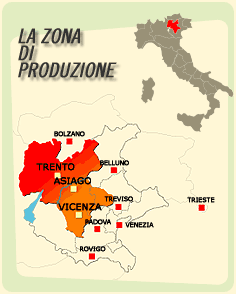
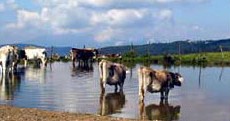
Italian Christmas traditions vary from region to region just as their culture, food and wine. Asiago is best known outside of Italy for the flavorful cheese that carries its name. Asiago is located on the high plains in the Province of Vicenza between the rivers Brenta and Astico. At an altitude of 1000 meters above sea level the plain precipitate on the Northern and Eastern borders into the Valley Valsugana.

The high Plains of Asiago are formed like a shell. The seven towns of Roana, Rotzo, Lusiana, Conco, Gallio, Foza and Enego are protected from the winter winds by the mountain range that reaches heights of 2,341 meters. The sun shines brightly on the snow covered lands for 8-9 hours a day during the winter months. It is the image of every winter snow crystal. Tranquility abounds as the snow sparkles in the day’s light.
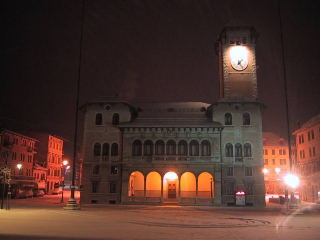
The history of Asiago is closely tied to wars and the defense of the Italian Penisula. Castles from centuries past and fortifications of wars as recent as WWII are open to visitors. The city is also home to the astrological observatory built in 1942 to celebrate the passing of Galileo, 300 years earlier. The night is so clear that two major telescopes were added in 1956 and 1965. The final and most impressive telescope, with a diameter of 182 cm., was added in 1973.
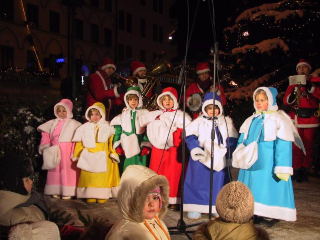
Asiago is Christmas from November through February. Evergreens covered in snow. Mountain homes with ice crystals lazily draped down across the windows and doors. Asiago has added a new activity to their Christmas winter attractions. Starting the 3rd of December, Asiago offers Christmas encounters and fairs. Christmas lights and trekking in the heavy snow are weekend activities.
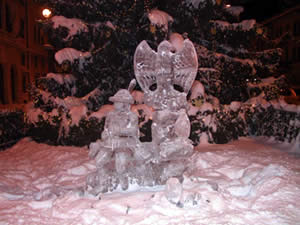
The International Ice Sculpture tournament has found a home from December 16 through January 15. The entire city will be turned into a show as artists create their visions in the squares and along the boulevards of the city’s center.

Christmas Eve is celebrated in the Duomo at 11 pm as the city’s inhabitants await the festivities of the birth of Christ. Babbo Natale (Santa Claus) and the Chorus of Asiago are the attractions of Christmas day. The final procession of Father Christmas is an evening stroll with candles through the city’s antique center on December 27.
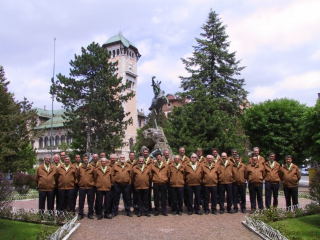
Asiago is not the first place one thinks of when traveling to Italy. Most likely it does not come to mind however Christmas in Asiago is truly Christmas.

Tags:

Labels: , , , ,

Read the Full Story...

Sunday, October 29, 2006

Milan – O Mia Bela Madunina che te Brilet de Luntan

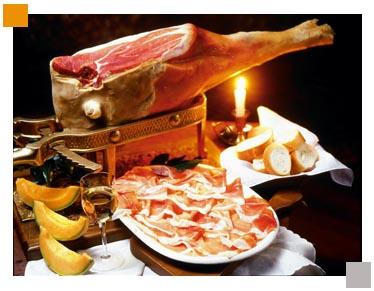
When you think about great vacation destinations in Italy many different locations come to mind. The warm sea breezes and quaint settings of Porto Ercole or Monte Argentario, the Truffle fairs of Alba, the chocolate of Turin, the wines of Friuli, the agriturismo in the rolling hills of Tuscany, the prosciutto of San Daniele, or the Carnevale of Venice are all places we dream of. Milan is busy, millions of people working in the financial markets, industry, software and fashion. Milan is cold in the fall and Winter, surely it would be more fun to visit Praiano on the Costiera Amalfitana and maybe take a swim well into the month of November.


Milan, l’e’ un gran Milan! Milan is vibrant! Milan is shopping. Milan is great food and wine. It is said that Milan has the best fish in Italy even though it is more than two hours from the closest port. Milan is where the money is. Distributors indicate that the best quality and the freshest fish is already on the trucks to the Milan markets before they begin unloading for the local seaside markets. I do not know if this is true but the fish is good in Milan although I prefer to eat fish in Palermo.

Milan has long been known as the business and industrial capital of Italy. The Americans bombed Milan almost as completely as Dresden, Germany during World War II destroying most of the city and even risking the Leonardo da Vinci’s “Last Supper”. The elderly tell stories of how they, as children, lived this period. “The midday sky turned black for the number of American bombers over the city,” was the recurring theme. Many still had their tin cups, with the name of the company they worked at etched into the side, on the mantle to remember those times.

Milan has a rich and long history. The De Medici family called Milan home; the renaissance was partially financed by the riches of the Milanese. Milan has been attacked and defended vehemently. Milan is the first major fortification south of the Alps. The conqueror that controls Milan can, sooner or later, conquer the rest of the Italian peninsula. Castello Sforzesco is a testament to the military importance of Milan.

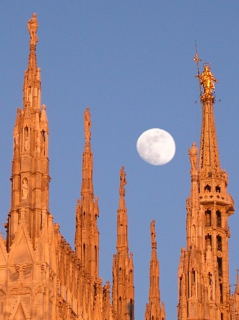
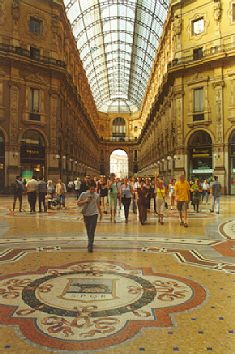
Milan has long been a center of culture. The Scala of Milan, the Galleria, and the Cenacolo testify to Milan’s attention to the arts. Milan is also one of the most important religious centers for the Papal state evidenced by the Duomo of Milan. The Duomo is considered the longest ongoing project of renaissance architecture.

Milan is the center of Italian business. One of the greatest worldwide hotels, the Principe di Savoia was constructed to serve the modern businessman. For our American readers, in the Italian timetable modern means the last 100 or so years.

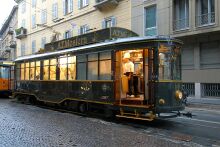
Milan has marvelous dining opportunities. Whether it be the Acanto dining with Royalty, Al Capriccio for fish, in the tradition of Milan at Al Matarel, true Milanese at Gran San Bernardo or Dining on a Tram, Milan offers a wide variety of traditional and contemporary dining.

And do not forget the shopping in Milan. From Via della Spiga to Corso Buenos Aires there are opportunities for every lifestyle and pocketbook. Perhaps you will visit for business or simply in transit to another destination but take the time, see the city, visit the Duomo and discover this treasure hidden by its economic prowess.

Tags:

Labels: , ,

Read the Full Story...

Thursday, October 26, 2006

Asiago – When Cheese Becomes a Work of Art

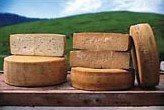
Born in the high planes of Vicenza, Trento and parts of Treviso and Padova, Asiago is an antique cheese that has adapted and modernized over the centuries. During the first millennium AD the fertile planes and valleys of the Vicentino territory were grazed by herds of Sheep. The Sheep were necessary to provide the quality wools for the local industry. True to nature the shepherds were not about to let the milk go to waste. They developed a method to conserve the quality of the milk without the bulk. The resulting cheese was similar to Pecorino prevalent in other areas of the peninsula. Over the next 500 years Asiago was well known as a primary market for its fine wools and unique cheese.

Progress cannot be stopped and by 1500 AD the sheep had given way to cows. The cattle grazed lands that could also provide hay and straw. The dominance of the wool market faded as the Serenissima lost power and cow milk was now used to create Asiago Cheese. Modernization took Asiago cheese to another level over the next 100 years. The cheese makers began pressing the forms allowing the cheese to be aged just 20 days. Asiago was an aged cheese, requiring 4-6 weeks before it could be consumed.

Often my visitors in Italy comment about the different taste of beef in Italy from the United States. In the US just about every piece of beef has the same taste while in Italy it changes from region to region. The primary reason is that the animals consume different grasses, each area has a different mineral make-up as does the water and the air. While this may not seem important to the novice it is a primary differentiating factor not only in cheeses and meats but also in wine. Italy, and now the European Union, protect the geographical denomination of alimentary products. In other words, you cannot make Asiago cheese anywhere, except in the high planes of northern Italy. This protects the quality and the taste. So, if you see Asiago cheese from California or Wisconsin, it may be great cheese but it is not Asiago.


While Asiago comes in two forms, fresh and aged, they are very similar in taste. Both are sweet and encompassing but the aged cheese has a bit of acidity absent in the fresh, or pressed, version. Asiago should never be bitter. The general flavors of yogurt, butter and warm milk are immediately released biting into cheese. The aged version will have a stronger odor than the pressed cheese. The consistency of the fresh is flexible and pliable while the aged version is compact although it should not crumble. The aged cheese will develop tones of walnuts and exotic fruits over the years.

Cheeses in general, and in particular Asiago, should be consumed at room temperature. It is a great compliment to vegetable casseroles and mushroom soups and sauces.

To accompany Asiago I would suggest:

Fresh or Pressed - Valpolicella classico, Vernaccia di San Gimignano, Biferno rosato, Franciacorta spumante brut.

Aged – Valpolicello Rosso, Valcalepio Rosso, Refosco, Franciacorta Rosso, and for a very aged Asiago, Amarone would be a great choice.


Tags:

Labels: , ,

Read the Full Story...

Tuesday, August 08, 2006

The Venice Film Festival – 63rd edition August 30 – September 9, 2006

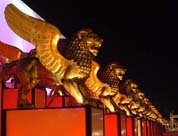
The 63rd edition of the Venice Film Festival will take place from August 30 to September 9, 2006. It will be articulated according to the established outline: the Venice 63 section will present the films competing for the Golden Lion, some of the most important works of the year will be shown Out of Competition, while Orizzonti will provide a picture of new trends in cinema.

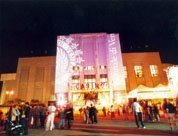
The Biennale di Venezia occurs every two years and is one of the most exclusive film shows exhibiting new and alternative producers from around the world. It is also an opportunity for film producers, actors, critics and film buffs to get together and discuss where things are going in the film industry. It is 10 days of films, showing in numerous theaters, and is probably the only occasion for us to see some of the productions.

If you are planning to visit the Venice Film Festival or are looking for products from Venice our friends from Venice Shopping Net have put together an offer for ViewItaly readers. If you indicate that you heard about their service from this blog they will waive the first year's subscription fee and discount their package prices. It is always helpful to have someone local when travelling and they have put together some interesting services that will help you find the unique products and services you are looking for.

The films competing this year are:

Barbara ALBERT Fallen Austria - 88’
Nina Proll, Birgit Minichmayr, Ursula Strauss

Gianni AMELIO La stella che non c’è Italy, France, Switzerland, Singapore - 103’
Sergio Castellitto, Tai Ling

Darren ARONOFSKY The Fountain USA - 96’
Hugh Jackman, Rachel Weisz

Allen COULTER Hollywoodland USA - 126’
Adrien Brody, Diane Lane, Ben Affleck, Bob Hoskins

Emanuele CRIALESE Nuovomondo (Golden Door) Italy, France - 120’
Charlotte Gainsbourg, Vincenzo Amato, Francesco Casisa

Alfonso CUARÓN Children of Men UK, USA - 114’
Clive Owen, Julianne Moore, Michael Caine

Brian DE PALMA The Black Dahlia USA - 120’
Josh Hartnett, Scarlett Johansson, Aaron Eckhart, Hilary Swank, Mia Kirshner, Mike Starr, Fiona Shaw

Emilio ESTEVEZ Bobby. Work in progress USA - 120’
Sharon Stone, Anthony Hopkins, Demi Moore, Lindsay Lohan, Laurence Fishburne

Stephen FREARS The Queen UK, France, Italy - 97’
Helen Mirren, James Cromwell, Michael Sheen

Mahamat-Saleh HAROUN Daratt Ciad, France, Belgium, Austria - 96’
Ali Barkai, Youssouf Djoro, Hisseine Aziza

Benoît JACQUOT L’intouchable France - 82’
Isild Le Besco, Bérangère Bonvoisin, Marc Barbé

KON Satoshi Paprika Japan - 90’
animazione

Joachim LAFOSSE Nue propriété Belgium, Luxembourg, France - 92’
Isabelle Huppert, Jérémie Renier, Yannick Renier

ÔTOMO Katsuhiro Mushi-shi Japan - 131’
Joe Odagiri, Makiko Esumi, Nao Omori

Alain RESNAIS Private Fears in Public Places France, Italy - 120’
Lambert Wilson, Sabine Azema, André Dussollier, Laura Morante, Pierre Arditi, Isabelle Carré

Jean-Marie STRAUB, Danièle HUILLET Quei loro incontri Italy, France - 68’
Angela Nugara, Vittorio Vigneti, Grazia Orsi

Johnnie TO Exiled Hong Kong, China - 98’
Francis Ng, Nick Cheung, Simon Yam, Anthony Wong

TSAI Ming-Liang Hei yanquan (I don’t want to sleep alone) Taiwan, France, Austria - 115’
Kang-Sheng Lee, Shiang-Chyi Chen, Atun Norman

Paul VERHOEVEN Zwartboek Netherlands, Belgium, Germany, UK - 135’
Carice van Houten, Thom Hoffman, Sebastian Koch, Halina Reijn

Ivan VYRYPAEV Ejforija Russia - 74’
Polina Agureeva, Maxim Ushakov, Mikhail Okunev

Apichatpong WEERASETHAKUL Sang sattawat (Syndromes And A Century) Thailand, France, Austria - 105’
Nantarat Sawaddikul, Jaruchai Iamaram, Sophon Pukanok, Jenjira Pongpas

Important films not competing:

Santiago AMIGORENA Quelques jours en Septembre France, Italy - 112’
Juliette Binoche, John Turturro, Sara Forestier, Nick Nolte

Kenneth BRANAGH The Magic Flute UK - 135’
Joseph Kaiser, Amy Carson, Benjamin Jay Davis, Lyubov Petrova, René Pape

FENG Xiaogang Yeyan China, Hong Kong - 131’
Ziyi Zhang, Ge You, Daniel Wu

David FRENKEL Devil Wears Prada USA - 110’
Meryl Streep, Anne Hathaway, Emily Blunt, Stanley Tucci

Pavel LOUNGUINE Ostrov Russia - 112’
Petr Mamonov, Dmitry Dyuzhev, Viktor Sukhorukov

David LYNCH Inland Empire USA - 168’
Laura Dern, Jeremy Irons, Justin Theroux, Julia Ormond

MIYAZAKI Goro Gedo senki Japan - 115’
animazione

Manoel de OLIVEIRA Belle toujours Portugal - 68’
Michel Piccoli, Bulle Ogier

Oliver STONE World Trade Center USA - 129’
Nicolas Cage, Michael Pena, Maggie Gyllenhaal, Maria Bello

Jaume BALAGUERÒ Para entrar a vivir Spain - 68’
Macarena Gómez, Adrià Collado, Nuria González, Ruth Díaz

CHAN Benny Rob-B-Hood Hong Kong, China - 134’
Jackie Chan, Louis Koo, Michael Hui

FAZLI Bayram Baaz ham sib daari? Iran - 90’
Zabih Afshaar, Leila Mousavi, Ali Yaagoubi

KUROSAWA Kiyoshi Retribution (Sakebi) Japan - 103’
Kôji Yakusho, Manami Konishi, Hiroyuki Hirayama, Joe Odagiri

Neil LABUTE The Wicker Man USA - 97’
Nicolas Cage, Molly Parker, Ellen Burstyn, Leelee Sobieski

RYOO Seung-wan Jakpae (The City of Violence) South Korea - 92’
Ryoo Seung-wan, Jung Doo-hong, Lee Bum-soo

Piotr UKLANSKI Summer Love Poland - 93’
Boguslaw Linda, Karel Roden, Katarzyna Figura, Val Kilmer

Tags:

Labels: , , , ,

Read the Full Story...

Tuesday, February 21, 2006

Montepulciano Tuscany

Montepulciano, Italy

Montepulciano is a beautiful town in the hills of Tuscany and a marvelous noble wine.
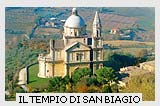
High on the hill overlooking the green and fertile valley, a medieval castle dominates the horizon. The massive city walls explode out of the mountain and lead to the antique castle with its tower. Outside the city walls the church Sant'Agnese is the primary structure leading to the gothic arched door to the city, porta di Gracciano built in the 1300s and restructured in the 1500s, from this point on to through the entire city center there are only buildings from the 1300-1500 period.

The streets and alleys are the home of numerous artisans, restaurants and small food stores; bread, milk, cheese, fruit, vegetables and meat shops exhibit their products, all fresh and inviting. Souvenir and gift shops have local products. Easily one becomes distracted while traveling these avenues from an era long lost.

The surrounding hillside and valleys are cultivated with Olive groves and Vineyards. This is the land of the super Tuscany wines and even the table wines are an experience not easily forgotten. The wines that carry the name of this area are “Nobile di Montepulciano” and “Rosso di Montepulciano”. Great with the meats, game, fowl and the hearty pasta dishes native to Montepulciano.

Nobile di Montepulciano is made with “Prugnolo gentile” a variety of San Giovese. This wine is granite red and dry perfect with the Cacio Pecorino, a cheese brought by the immigrants from Sardegna still produced with the same methods from the renaissance period. Complimentary to the local foods, the Pansanto (bread covered with cauliflower, olive oil and vinegar), la bruschetta (grilled bread with olive oil and garlic), la panzanella (stale bread with tomato, olive oil, onions, and basil), and a plate of “fagioli al fiasco” (cooked white beans with olive oil) but it is necessary that you try “Pici” a handmade pasta covered with a savory meat sauce.

There are various ways to lodge in Montepulciano, hotels, private homes and agriturismo. The agriturismo is a farm with a pensione in the complex where 55% of the products served in the restaurant must be produced on the farm itself. If you intend to stay just 1 night the best choice is a hotel but if the schedule includes a couple of days to visit the local vineyards then an agriturismo is definitely the path to follow. The owner will be able to indicate which vineyards he likes and will know the owner and most likely make a call ahead of time. The food at an agriturismo will not be as elaborate as some of the local restaurants but it will be genuine and fresh easily making this an unforgettable experience.

Montepulciano is also famous for its thermal spring spas. This is not the spa you find in the center of Dallas or New York. These are actual hot springs. The treatments range from nose and throat and lung therapies to skin care and physical therapy. The therapies also include yoga in the pool, anti-gravity massages, chocolate wraps and olive oil massages. Be pampered with genuine food, great wine, clean air, and a spa treatment.
Daily trips to the local vineyards is a must and in late February the presentation of the annual production. This will not be Nobile di Montepulciano that is widely known but is fantastic as a Novello or new wine. Several days can easily pass in the cellars of Villa S.Anna, Gattavecchi, Buracchi and Avignonesi. The days will pass and it will be time to return home before you know it.

Technorati Tags:

Labels: , , , , , ,

Read the Full Story...

Wednesday, January 25, 2006

Alba – Tartufo, Wine, and Beautiful Women

The heavy sweater is perfect tonight. The days are still rather warm but in the evening the air cools considerably. The air is filled with the perfume of tartufo. This is the season. I have always loved tartufo and during my years in Senigallia I had the opportunity to visit a very unusual restaurant. It opens in October and closes in May. The owner has decided that he will only serve the locals so he closes for the entire tourist season. In month of October he only serves plates with tartufo. The Marche have the red tartufo, it is great but does not have the same intensity of white tartufo. Still, I was hooked, risotto with tartufo, tagliattelle with tartufo, omelets with tartufo, and mushrooms with tartufo!

When I talk with most Americans about tartufo they talk about France and pigs, but the true home of white tartufo is Alba. The Italians use tartufo dogs, not pigs, to find their tartufo. This is such an important event that there are 3 weeks of festivities around the fair of tartufo. The international market for tartufo has its base in the fair of tartufo in Alba. “I trifolao”, or “those who search for tartufo” for us non Torinesi, survivors of nights deep in valleys and secret caverns present their white gold on the tables of the markets of the fair. These treasures of the earth are ready to excite our senses and accentuate the flavors of typical piemontese cuisine.

The week before the fair of tartufo there is the contest of “La Bela Trifolera”. We have been doing some window-shopping in the city center while we wait for the local beauties to show their stuff. The parade continues through the antique city center. The air has a bite to it and every once in awhile a shiver runs down my side. Alba is a beautiful city, the buildings near the castle are hanging the banners from the 1600s when Alba was the most powerful town in the region. You can see the influence of the kingdom of Genova with whom the Albesi had a close commercial and military relationship.

We decide to walk to dinner, taking in the remnants of Roman architecture from 100 BC. The wealth of this medieval town is evident in the rich architecture spanning 700 years, the castles, the churches with breathtaking affresco, and the exclusive shopping. The annual fair of tartufo does not start until next week but the restaurants are all serving local specialties. We choose a small osteria in piazza Savona. The waiter brings us the menu’ however we immediately let him know that we want whatever they feel is best.

“Tajarin”, a local pasta, with a delicate mushroom sauce and grated tartufo followed by “Coniglio all’Arneis”, rabbit in an Arneis sauce. We choose, to accompany this delicate, yet savory meal, a 1997 Barbaresco. We have eaten too much, fortunately the hotel is just down the street in Corso Asti; we need our rest. The weekend holds visits to the wineries of Barbaresco, Barolo, Barbera and Roero Arneis and next week the Fair of Tartufo. This is the way to visit Piemonte, late September and early October in Alba, the fair of tartufo and visits to the wineries, life is tough…

Tags:

Labels: , , , ,

Read the Full Story...

Thursday, January 05, 2006

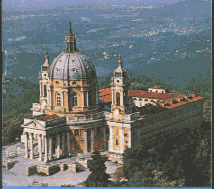
Turin Overview

Turin is nestled at the base of the Alps in the northwestern corner of Italy. During my first year in Italy, 1980, I lived for about six months in this beautiful city. I must specify, at that time I was a missionary for my church, so I was very poor. The living conditions were pretty terrible but the apartment, a 5th floor loft with no heating, was located right on the river on the east side of the city in Corso Casale. The stone floors would create dust, no matter how often you cleaned them, and Turin can be VERY cold.

FIAT, the car manufacturer or as they say in New York “Fix It Again Tony”, was still a big company at that time. They were the major employer and 50% of the city’s territory and 90% of the businesses, directly or indirectly, worked for FIAT. The FIAT plants are just huge warehouse like structures, really ugly, and go on for several city blocks.

I lived through this experience and over the years have learned to appreciate Turin for its great culture. In the 1800s Turin was the capital of Italy. One of the 3 primary Italian royal families also called Turin home. Remember that Italy has had several kingdoms thus the royal families are rather prevalent. If you add in Napoleon, who was born in Corsica that was Italy until he, as emperor of France, annexed the island to France.

Today FIAT is less important, after they milked GM for 5 billion, yes billion, dollars they have just about exited the automobile industry. If GM had asked me I could have saved them a lot of money. Turin, once part of the “Iron Triangle”, is no longer the industrial power it was. Turin is dedicating more attention to tourism and that makes Turin, and the rest of Piedmont, a great place to visit. Although my experience may not be 360 degrees, if you like to Ski, visit castles turned into hotels and resorts, eat and stay at Agriturismo (farms where you can eat what is produced directly on the farm), or like to visit wineries, Turin is a great place to go.

Over the next weeks I will talk about the Olympics and make a round of the various wines produced in this area. A word about the people from Turin, there is a saying “Torinese falso cortese,” or “Torinese is double faced.” Watch your Ps and Qs.

Tags:

Labels: , , , , ,

Read the Full Story...

Sunday, November 27, 2005

Como

“Quel ramo del Lago di Como…,” famous first words of Manzoni’s Promessi Sposi, that is Romeo and Juliet. I could do no better, and most likely much worse than Manzoni in the first two paragraphs of his masterpiece:

“THAT branch of the lake of Como, which extends towards the south, is enclosed by two unbroken chains of mountains, which, as they advance and recede, diversify its shores with numerous bays and inlets. Suddenly the lake contracts itself, and takes the course and form of a river, between a promontory on the right, and a wide open shore on the opposite side. The bridge which there joins the two banks seems to render this transformation more sensible to the eye, and marks the point where the lake ends, and the Adda again begins—soon to resume the name of the lake, where the banks receding afresh, allow the water to extend and spread itself in new gulfs and bays.

The open country, bordering the lake, formed of the alluvial deposits of three great torrents, reclines upon the roots of two contiguous mountains, one named San Martino, the other, in the Lombard dialect, Il Resegone, because of its many peaks seen in profile, which in truth resemble the teeth of a saw so much so, that no one at first sight, viewing it in front (as, for example, from the northern bastions of Milan), could fail to distinguish it by this simple description, from the other mountains of more obscure name and ordinary form in that long and vast chain. For a considerable distance the country rises with a gentle and continuous ascent; afterwards it is broken into hill and dale, terraces and elevated plains, formed by the intertwining of the roots of the two mountains, and the action of the waters. The shore itself, intersected by the torrents, consists for the most part of gravel and large flints; the rest of the plain, of fields and vineyards, interspersed with towns, villages, and hamlets: other parts are clothed with woods, extending far up the mountain. “

Over the years Como has been one of the favorite destinations for the well to do across Europe. Located on the Swiss border the small city has been a vacation retreat since the times of the Roman Empire when Julius Cesar would bring his troops for rest in the summer time. The rich and famous would build Villas to vacation away from the big cities of the north building vacation home that parallel the great palaces of Milan, Monza, Torino, Florence and Rome. Today is not much different. Just recently several movie stars have decided to purchase properties on the lake and spend a good part of their time there.

Just about anywhere along the lake shores you go you can find villas with palatial parks, marvelous buildings, incredible architecture, finished with heavy dark wood, gold inlays, walls covered with heavy cloth, tapestries and beautiful drapes. Most of the lakefront properties have a boat garage directly on the lake making access discreet and comfortable. Public transportation uses ferries to connect the towns scattered around lake Como to the city itself and run about every 15 minutes.


Athena has not really liked riding in the car except when very small. When she was just over one year old, every time she got into the car she would throw up. What a difference from when we brought her home from the hospital. She would never sleep… Either she nestled into my chest, her tiny hands gripping my chest hair (it is amazing how strong babies are), or she had to be in the car. As long as the car was moving she would sleep through anything. Put her down for a second and her eyes would be as big as a lighthouse beacon and twice as bright.

Things have changed very little over the years, as we wind through the little towns on the final stretch to Como from Bergamo I am thinking about the fantastic cheeses in this area. I can see Athena in the rear view mirror barely holding on. Fortunately we are in the last few minutes and shortly we will descend into Como. As we break out of the wooded area the abandoned mental hospital is on the right. At one time this had been a normal hospital but was converted to a mental hospital in the late 60s only to be completely abandoned when legislation made mental interment illegal. I never could figure that one out but it saved the government a lot of money.

Just after the hospital the road starts descending quite quickly and follows the mountain to the right. Close eyes on Athena to make sure she does not lose it. There is absolutely no safe way to stop on this road. A few more minutes and we arrive in the main square. There is a public parking facility right next to the primary square in front of the lake.

The sun is strong but it is still quite cool. September in Como rarely gets above 65 degrees and the humidity off the water makes it seem a bit cooler. At night the northern breeze from the Alps drops the temperature into the high 40s. Not really cold enough for a coat but a light jacket or sweater is a good idea both day and night.

As we park the girls are excited to get out of the car. It has been almost an hour because of the increased tourist traffic on Sunday morning. First stop is the cemetery, the girls' grandmother is buried there and we stop in on a regularly to change the flowers and clean things up. The Funivia, kind of an elevator on a slant, is anchored close to the parking lot and stops very close to the cemetery. We could take the steps but it is quite an endeavor.

As most cemeteries in Italy the cemetery of Como has numerous works of art, primarily sculptures, but the girls want to see their grandmother and get back down to the lake. A quick stop and we are ready for a fun day. Georgia immediately spots the “Pedalo” manual powered paddle boats and wants to go for a ride. Go for a ride means Daddy peddles and everyone else rides as they quickly tire. My mind raced to the time we had peddled well past the port’s protective wall and everyone became extremely tired and cranky. It had been about 45 minutes out there so the return was quite the feat.

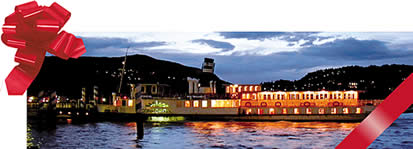
Fortunately, it is a bit chilly to hit the paddle boats and I steer the family towards the hydroplane boats. We sign-up for the complete trip around the lake. It takes a couple of hours and they serve lunch on board. This is definitely something worth doing. As we leave the port we pass in front of villa Olmo just before Cernobbio. There are so many beautiful villas. Rachele asks why the houses have part of the house that jets out into the water. Just about that time we pass by one of the open extensions and she can see the water inside the structure. I explain that this is actually the garage. Most people who live right on the lake have a boathouse for their boat. Most of the time it will be the primary method of transportation. She looks on with awe as we pass one with doors open.

The food is pretty good on the boat but not the reason to take the hydroplane. The Lake of Como is huge and sits between the mountains. The views are spectacular with the Alps jetting straight up out of the water. The numerous towns along the lake are somewhat cutoff and you can find everyday life situations that seem reproductions from the 1800. As we pull back into port the traveling fair has started opening its rides. The sun is starting to set and the city is lighting up.

A few rides, some cotton candy, and we are off to the main square. By this time the kids are really tired but before we head home I wanted to see the new silk products. The silk from Como is famous around the world. The city has a silk museum, hosts many trade fairs and has over a thousand companies that work directly with the silk industry. A quick walk through the main square and down via Volta. The colors are vivid and highly contrasted. They do such beautiful work.

Silk scarves are one of my favorite presents to give. They are usually appreciated by women of all ages so I buy them when I find something I like. Today is no exception, a gold chain pattern on a sky blue background with cobalt blue medallions. Right now I have no idea who will receive this but I like it and I am confident I will find the proper occasion.
The day has gone. The kids are happy to pile back into the car. This time they will not even perceive the length of the trip. Tired and happy they will sleep the entire way home.

Tags:

Labels: ,

Read the Full Story...

Monday, October 17, 2005

18 days in Italy – Part 5 of 5 – Cinque Terre

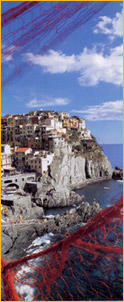
The Cinque Terre, 5 lands, are Monterosso, Vernazza, Corniglia, Manarola, Riomaggiore. Located to the east of Portofino and just to the west of La Spezia, they have been cut off from the world in various occasions. Originally the Etruscans built forts protecting sea access to the Italian Peninsula. After the fall of the empire the road deteriorated for lack of repair. The only way to interact with the outside world was by boat. The Romans repaired the Etruscan roads and the Cinque Terre grew in importance however the Genoa Empire again closed the road cutting off the local inhabitants.

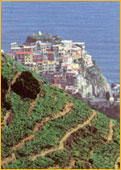
The characteristics of the terrain that made the Cinque Terre great forts was a tremendous hindrance to people’s survival. Mountains that fall off straight into the sea do not easily permit farming. Supplies arriving by sea would have to be carried up the steep mountain slopes and without the road travel by land is nearly impossible. Over the centuries the inhabitants have sculptured the mountains, conquering the treacherous slopes, cultivating their staples in small terraces carved into the mountain. Supplies are brought in and produce brought out with wicker baskets pulled or lowered from terrace to terrace. Things are not much different today. Farm equipment is just too big to work in the terraces.
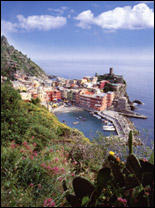
You can enter the Cinque Terre in 3 ways: by train, by car along winding roads, or by boat. Although the views are incredible I would suggest you lodge in La Spezia and take day trips to the various Cities by train. On one occasion you will also want to take a boat trip to visit San Frutuoso, Chiavari and Portofino, favorite port of the international VIPs. San Frutuoso is a small town built in a ravine and has a little bay. It is famous for its crystal clear waters and an undersea church with a Madonna at about 3 meters under the surface. Chiavari is a great shopping place with great food and in Portofino you can sip coffee in the afternoon at the café on the shoreline while the sailboats and yachts of the rich and/or famous troll by.

The Cinque Terre are famous for Trofie, a rudimentary pasta made from chestnut or wheat flour. Pesto is the sauce of choice however the version from the Cinque Terre does not include garlic. The handmade tagliatelle pasta is a slightly wider version than the original in Emilia Romagna. Fish and mollusks are the primary staples of all local main courses and the vegetables, zucchini, Swiss chard, artichoke and leeks, along with herbs that grow wild on the mountain slopes. A local favorite is stuffed anchovies, anchovies stuffed breaded and fried and “bianchini”, not the kind from Friuli which is a small glass of white wine but baby sardines fried and eaten whole.

The wines of this area are quite unique. The vineyards all face south, toward the sea. They are all terraced into the mountains so when the wind blows or a storm comes up everything exposed to the south is covered in the salty sea mist. The plants, fruits, vegetables, olives, land, people, … everything. The wine of this area exalts that flavor. This area also produces olive oil. The moderate year round temperature and the sea mist produce an olive that is smoother and less acidic making this a great oil to use for salads, bread and just poured straight on fresh tomatoes.

Tags:

Labels: , , ,

Read the Full Story...

Sunday, October 16, 2005

18 days in Italy - Part 4 of 5 – Venice

From Florence to Venice, again I would take the train. It is about a 1 hour ride and you will see the beautiful country side, pass through Bologna and have the opportunity to relax. Venice is a unique city. One of the great powers in the 10th to 16th century, the Venetians built their city on an island in the middle of the bay as a defensive measure.

However this location provided a few difficulties. The city was, and still is, sinking. Every few hundred years a new city was built on top of the old one. Not by some strategic plan, just modernization. The Venetians would use the existing structures as a foundation and raise the new buildings 3 or 4 feet. Following the renaissance this was no longer possible as it would result in the loss of irreplaceable architecture, affreschi, and sculptures. To put this into perspective think of New Orleans where the streets are not paved but water channels. The bridges that connect the buildings together are slowly sinking to the level of the water. To combat this a wall of concrete baffles has been installed around the city. When the water rises because of high tide or storm surge the baffles are raised then as the water surge decreases the baffles lay down on the sea’s floor.

Venice is a tourist city. Very few Italians actually live there. The influx of tourism has been so great that the city limits the number of tourists that can enter Venice at any given time. This means that Venice is one of the most difficult places to find a good hotel or a good meal at a reasonable price. It is easy to find poor food and poor service at a very high price.

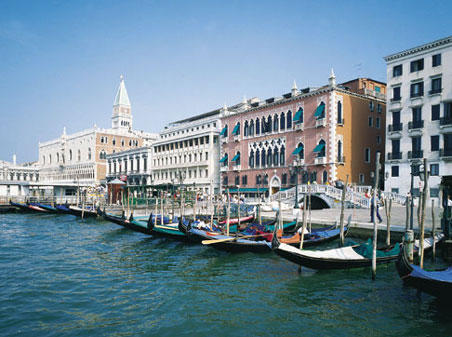
Stay in Mestre!!! Mestre is the residential and industrial section of Venice. The only exception to this would be to stay at the hotel Danieli http://danieli.hotelinvenice.com/ on canal grande. You can arrive in by train in about 15 minutes, spend the day in Venice and then return to a wonderful hotel and some great restaurants that will not cost you an arm and a leg. I would stay at the hotel President http://www.hppresident.com/, walking distance from the train station in Mestre and right next to the hotels entrance is a marvelous upscale restaurant with great seafood, a vast selection of wine and fantastic service. There are also many interesting restaurants in Corso del Popolo.

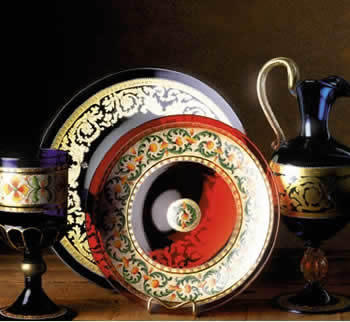
The traditional tourist routes in Venice just include Venice and Murano. This area has many fantastic things to see. So after you have seen Murano, the Museo del Vetro, Museo Fortuny, Palazzo Ducale, Palazzo Mocenigo, the Torre dell’Orologio and taken the motorboat taxi ride through the canals of Venice consider a day trip to San Daniele del Friuli http://www.infosandaniele.com/ , birthplace of the best prosciutto crudo. Portoguraro and the small towns along the coast are definitely worth a trip for an experience in seafood. Treviso, once the summer vacation spot of Italian nobility, is a laidback city with beautiful architecture, affreschi, and sculptures.

Venezia-Giulia-Friuli, the region of Northeastern Italy, is also the land of great white wines. In the morning it is not uncommon to have a bianchino, a glass of white wine, with breakfast or to correct your coffee with grappa, distilled wine. The vineyards of Toccai, Collio, and Refosco are all here. Whites and reds are crisp and flavorful, perfect with antipasti, dried meats, fish and most vegetables. Don’t be shy; try the local dishes. If you want a true culinary experience without precedence this is the place!

Tags:

Labels: , , , ,

Read the Full Story...