Thursday, June 14, 2007

Men’s Fashion Shows in Milan June 2007

Ladies, if you are interested in statuesque men with marbled features then Milan is the place for you. The 2008 Spring – Summer men’s fashion shows will all be in town during the weekend of the 23rd to the 27th of June. Over 50 designers will be presenting in various locations starting Saturday. I believe my female readers will be interested in knowing that over 5,000 young, very fit, good looking, eligible men will be strolling the streets of Milan and visiting the numerous nightclubs. This is obviously in addition to the great Milanese already in the city.

The 5 day calendar starts Saturday June 23 with Jill Sander at 11 AM. In the same day she is followed by Costume National Homme, Gaetano Navarra, Missoni, Burberry Prorsum, Gianni Versace, J. Lindeberg, Denis Simachev, and the two Belgium designers Les Hommes e Dries Van Noten. The most buzz is about Dries Van Noten, the only first timer of the week.

Sunday the 24th Bottega Veneta, Antonio Marras, Frankie Morello, Gianfranco Ferrè, Salvatore Ferragamo - first time back with men's shows after many seasons - Vivienne Westwood, Carlo Pignatelli Outside, Emporio Armani, Neil Barrett, Daks, Prada and Alexander McQueen hit the runway.

Monday the 25th continues with Dsquared2, Valentino, Dirk Bikkembergs, Alessandro Dell´Acqua, Biagiotti Uomo, John Richmond, Moschino, Krizia Uomo, Gucci, Gazzarrini, Giuliano Fujiwara, Intuitive and Roberto Cavalli.

Tuesday the 26th, second to last day of the show, features Marni, Iceberg, Trussardi, Fendi, Etro, D&G, Messori, Calvin Klein Collection, Giorgio Armani (the only designer with 2 shows at 5 and 6 PM), Belstaff and Haute.

Wednesday the 27th brings only 5 shows: Romeo Gigli, Enrico Coveri, Byblos, M+F Girbaud and, to close, Roen, the Japanese designer.

Tags:

Labels: , , , ,

Read the Full Story...

Thursday, May 17, 2007

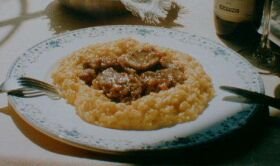
Osso Buco with red sauce

I know that most just want to read the recipe, know where it came from or why there are several versions of the same dish but I think food is part of life. As if our existence had several crossed together with weights on the ends. There we are, in the middle, trying to stay upright while the platform tilts one way or another. Food, wine, friends, work, travel, culture, education and relax are all things that make the platform swing. Recipes are tied to events, dinners with friends, or just time when we can quietly enjoy rich flavors and each other’s company. We are from Milan. In our section of the woods Osso buco is made with a white sauce and served with a bit of Risotto alla Milanese. When we told our cooking buddies that we intended to make Osso Buco, they immediately told us of how much they loved Osso Buco and the marvelous, velvety red sauce.

This is a sacrilege, although the traditional Milanese Restaurant Gran S. Bernardo prepares Osso Buco with red sauce. We cook, more than for the pleasure of preparing the perfect recipe, more for the enjoyment of our friends. Thus, out comes the Cucchiaio di Argento, the bible of traditional Italian recipes, and we look for a version of Osso Buco with red sauce. Several recipes were scanned and after a bit of discussion and hodge podge mix and match we came up with something we felt we be appropriate. No it is not significantly different from our traditions. Lemon is not part of this recipe and a bit of tomato sauce is added.

Ingredients:

4 Osso Buco
Flour to cover the Osso Buco
Salt
Pepper
50 g ( ½ stick )Butter
1 Onion
1 Carrot
1 stalk Celery
2 cups Full Bodied Red Wine
2 cups Chicken or Beef Broth
8 oz. Tomato Sauce
50 g dried Mushrooms (250 grams fresh mushrooms)

Preparation:

Flour the Osso Buco and set aside on a pan.

Dice the Onion, Celery and Carrot. Melt the butter in a large skillet over medium heat. Sauté the onion, celery and carrots until the onions are transparent but have not begun to change color.

Turn the heat to medium high. Add the Osso Buco. Cook for about 3 minutes on each side to give the meat a lightly brown color. Add the red wine. Reduce the heat to medium and add the tomato sauce, the mushrooms and ½ the broth. Salt and pepper

Once the liquid comes to a slight boil, reduce the heat to low. The Osso Buco should just simmer. Turn the meat every 15 minutes and cook for about 2 hours. Add broth as necessary. Taste occasionally for salt and pepper.

Remove the Osso Buco from the skillet. Pour the sauce into a mixer or use a soup mixer (boat motor) to reduce the mushrooms and any other vegetables still intact. Return the sauce to the skillet along with the meat and simmer for another 5 minutes.

Presentation:

Serve on a bed of Risotto alla Parmigiana or alla Milanese and sprinkle with chopped Italian Parsley (not necessary but look good).

Serve with a complex, full bodied red wine. Some great choices are Barbaresco, Barolo, Nebiolo, Amarone, or Refosco.

Tags:

Labels: , , , , ,

Read the Full Story...

Wednesday, February 28, 2007

Historic Designs of Armani at the Triennale of Milan until April 1, 2007

Milan, Gran Milan, is hosting a show for those who own, or want to own, an Armani creation. The Triennale in Milan opens its doors to the public from February 20 through April 1, 2007 with the historic creations of Giorgio Armani. Fashion recognized as art. The Armani show at the Triennale is an opportunity to know and understand the designer and his passion. The show boasts over 600 outfits and designs. Each exhibit is supported by audiovisual presentations explaining the moment in time, the tools of the trade and the historic perspective of each representation. Interestingly, the designs are coordinated with all of the accessories. This is a unique opportunity to view the world of fashion through the eyes of one of the masters.

The show is an interesting mix of fashion design and history. The theatrical producer and visual artist, Robert Wilson, designed the environment. Walking through the Armani creations scenes of famous films, important political moments, and people who have influenced our lives flash before our eyes. Armani has always been the definition of elegance. Each design evidences the progression of time.

Continuing through the scenic forest environment the viewer is taken into a world of dreams. The bridal exposition, with its luxurious hand embroidered fabrics, intricate laces, and gem studded dresses invokes images of princes and princesses exchanging vows in romantic castles, with horse drawn carriages and national celebrations. They are still life images of fairytales.

Evenings with the American Gigolo or a night with James Bond spring to life as the evening gowns take center stage. Opulent black silks and satins, with lace shawls and diamond studded hairnets take us into the period of the “Bella Vita” in via Veneto. Grace Kelly, Marilyn Monroe and the Prince of Monaco enjoying a glass of Prosecco while a cool Roman sea breeze flows caresses their cheeks remind of majestic times past and hope for the future.

While Woman’s fashion is dominant, Men’s fashion has not been forgotten. An entire hall is dedicated to the traditional Armani man. Black silk shirts, soft jackets and the dark slacks adorn the exhibition. Their progression over time evidences the subtle changes of the man’s role in today’s world as the designs change, ever so slightly, from year to year.

Perhaps this exhibit is an example of how our world is changing. Fashion representing recent anthropology. The changing role of men and women as seen through what they wear. In this case, “l’abito fa l’uomo”, you can judge a book by its cover. This is not the destination for the traditional museum visitor but it is an interesting way to see who we are and where we have come from.

Tags: href="http://technorati.com/tag/Fashion" rel="tag">Fashion

Labels: , , , , , , ,

Read the Full Story...

Monday, February 12, 2007

Italian Women’s Pret a Porter Fashion Spring-Summer 2007 – Salvatore Ferragamo

It is just not fair. Women’s Fashion is always more interesting than Men’s Fashion. The Spring-Summer Pret a Porter 2007 presented in Milan is no different. Just about everything presented for the Spring – Summer 2007 Women’s Pret a Porter is pretty great. Some designers have excelled. Salvatore Ferragamo, the designer who originally cut his teeth in the shoe market, has a clean elegant line, with pastel colors and a few intricate patterns. The skirts are above knee length with just a hint of a flair at the hemline. The entire line says sun, carefree days in warm climates, and comfortable movement in just about any environment. These outfits will be great for the office, a day on the sailboat, an evening with friends at the local restaurant or strolling the boardwalk on the most in beaches.

While they are fun and full of life they retain the elegance of high design and fabrics. Accessories and heels take the look to the next level. Light colors, remember the pastels, are important for both shoes and purses. White accessories for the beachwear are a perfect balance.

Polo shirts and flowing skirts start the look. Thin contrasting stripes and a tight, slightly elastic fit accentuate the upper body. The pastel colored skirts, both the form fitting tube and the pleated portafoglio, balance the tops and give a light and happy air to the look. I could also see the return of last year’s wide rimmed light colored hats.


Bare shoulders and sleeveless dresses with elaborate patterns and light fabrics are the solution for hot summer days, window shopping or perhaps sipping a Mint Julep, or cool Prosecco, in the garden with friends. A more casual look, these outfits could are most appropriate for the vacation or weekend outing however they could also be employed in a more casual work environment. The elegant fabrics and prints give an air of class but they definitely say that you are thinking about having fun and relaxing.


Ferragamo also presented a series of Baby-Doll outfits. While they may work for some there is a risk that others may think you are trying to hide something. Obviously these are marvelous for those pre and post pregnancy while working to get the figure back. The risk for these is that those who choose the Baby-Doll and are not in this category may get others thinking that you are.


I love the shorts outfits and the bathing suits. They are classy and feminine. I will never complain about a “let it all hang out bikini” but I do appreciate the seduction of shorts and one-piece bathing suits. Somehow more cloth stimulates the imagination and I love to daydream.


Finally these are my favorites. They jumped out at me. They are vibrant, feminine, sexy and fun. I see them as perfect for just about every occasion and extremely versatile. This is important for me since I carry the suitcases.


Tags:

Labels: , , , , , ,

Read the Full Story...

Friday, February 09, 2007

Filetto al Gorgonzola – Filet with Gorgonzola

Simplicity and great, fresh ingredients are the elements to some of the best recipes. A beef or veal filet, seared on both sides in dark butter and a sauce made with Gorgonzola, chopped walnuts and gin. The sauce reduced just to the right consistency velvety smooth, rich in flavor and a perfect balance with the succulent filet. Food is an important part of our life. We discuss new recipes and old favorites after dinner. Comments about the wine, can it be consumed alone or does it need food. Was this wine perfect with the meal or would something else be more appropriate? The dinner table adorned with a meal of balanced flavors and wines that accentuate the tastes facilitates great conversation.

The Filet with Gorgonzola is a dish that has developed in recent years in the areas around Milan where both the Filet and Gorgonzola are local favorites. It is a simple but exclusive recipe because the Filet must be top shelf and cooked to perfection. It is the perfect dish for special occasions when you want to make your partner feel like they are the most important person in the world. This is the perfect for Valentine’s day, anniversaries or just to say, “you are the greatest!”

Great wines with Filet with Gorgonzola: Amarone, Barbaresco, Barolo or Nebbiolo based Piemonte wines. John the Baptist of Italian wines suggests La Scolca Pinot Noir from Lombardia.

Ingredients:

4 ¼ lbs Beef or Veal Filets
½ stick (50 g) unsalted Butter
3 tbsp Gin
½ cup (50 g) chopped Walnuts
1 cup (100 dl) Heavy Cream
¼ lbs (100 g) Gorgonzola (crumbled)
4 tbsp Port
Salt and Pepper to taste

Preparation:

Preheat the oven to 150 degrees.

Use a large frying pan or skillet. It is imperative that the meat sit evenly on the surface. Add the butter and a few turns of fresh cracked pepper. If your grinder can change the grind use a slightly larger grind. Over Medium low heat sauté the butter until it turns nut brown.

Turn the heat to medium high. Place the filets in the skillet and sear on each side for 2 minutes (this will be rare), about 3 ½ minutes for Medium-rare.

Move the filets to a baking pan. Sprinkle the filets with gin, salt and pepper and flame. Cover with aluminum foil and place in the warm oven.

Reduce the heat under the skillet to medium low. Add the chopped Walnuts, the Heavy Cream and the crumbled Gorgonzola to the skillet. Stir together well.

While stirring add the port. Continue stirring until the sauce is reduced.

To serve, place the Filet directly on the plate. Dribble a bit of sauce on the meat and place a dollop of sauce on the side of plate.


Tags:


Labels: , , , , , , ,

Read the Full Story...

Tuesday, January 16, 2007

Italian Carnival Sweet Treats - Tortelli di Milano

Do not let the name fool you. Tortelli di Milano, “Tortei de Carnevaa a la Milanese” in the dialect from Milan, are not your pasta tortelli filled with meat or cheese. They are fried sweet dough, similar to doughnuts, covered with sugar and cinnamon. Many Italian Carnival holiday traditions include a sweet version of an everyday dish as if to imitate the concept of Carnival where things are never what they seem to be. These bite size delights appear in the middle of January and are gone by the end of February. They are perfect for mid morning or early afternoon snacks. I first experienced these desserts on a cold January evening in Milan while waiting for the tram after a long day at the office.

The air was cold, the wind strong and the fog had established its control for the night. That wet cold penetrates your bones no matter how many layers of clothes and sweaters you are wearing. While others were already at home getting ready to sit at the dinner table I was, as usual, waiting for the first leg of my 1 ½ hour trip home. Fortunately the tram stop was right in front of a bar, not an unusual occasion considering the number of bars in Milan. Before catching the tram I would drink a “China Calda”, a steaming hot orange flavored liquor. I walked into the bar, greeted my good friend behind the counter, and saw a tray of these puffs with cinnamon and sugar.

I decided it was time to change my usual routine. I ordered a hot chocolate, thick and gooey steaming hot chocolate and a couple of the pastries. They were sweet, soft, and the cinnamon created a beautiful sensation of flavors. Chocolate and spices is a marvelous combination. I completed the long trip home, still warm inside and decided this was a new addition to my favorite traditions. Just as quickly as they had arrived on the scene they disappeared a couple of days after “Giovedi Grasso” and China Calda returned to its previous place as before. Without a doubt Carnival is one of my favorite holidays and I look forward to those cold days when the Tortelli di Milano make their appearance in the bars and pastry shops.

Ingredients:

1 ¼ (150 g) All-Purpose Flour
½ stick (50 g) Butter
¼ cups (50 g) Sugar
2 ¼ cups (500 ml) Milk
4 Eggs
2 tsp (12 g) Double Acting Baking Powder
1 Lemon Peel
½ tsp Vanilla
1 tbsp Rum
Olive Oil to fry with (or preferred frying oil)
Powdered Sugar

Preparation:

In a large pot, mix together the sugar, vanilla, milk, 2 1/4 cups (500 ml) of water, the butter cut into pieces, the peel of 1 lemon.

Bring the mixture to a boil.

In a separate bowl mix the baking powder and flour.

Remove from the heat and remove the Lemon Peel. Add the flour mixture to the liquid stirring briskly. Place the pot on the heat again and cook for 10 minutes continually stirring. The sough will separate from the sides of the pot, similar to the procedure for Bigne. Remove from heat and allow the dough to cool for about 5 minutes. Add the whole eggs, one a time, working with your hands if necessary. Add the Rum. Set aside.

Heat the frying oil in a heavy skillet or deep fryer. Test the oil temperature by placing a small amount of dough and watching it fry. The oil should not smoke and the dough should take on a golden color.

Use a tablespoon to create small balls of dough. Add them directly to the oil. Cook on both sides until golden. Remove from the oil and allow the Tortelli to drain on a wire rack. Serve hot with powdered sugar and cinnamon.


Cakes Available online


Tags:

Labels: , , , , , , , ,

Read the Full Story...

Thursday, January 04, 2007

San Biagio – Holiday Tradition in Milan – Panettone and more Panettone

Strolling along the streets of Milan, during the early days of February, Panettone, the Christmas bread of Milan, is sold with steep discounts. While not all stores will offer such heavy discounts the tradition is “two Panettone for the price of one.” Many think that this is an end of season sale to eliminate the remaining inventory of Panettone, instead nothing could be farther from the truth. This tradition is deeply routed in Milan’s culture. The 3rd of February is day where all Milanesi eat Panettone. This is the day of San Biagio.

San Biagio was born in Armenia at the end of the III century AD. He was a prominent doctor and the people of Armenia wanted him to become Bishop. He did not want to accept the position. He felt he was not worthy. He did finally accept however he continued to practice his profession of physician.

During a religious function a woman approached him carrying her son who was choking. The child had swallowed a fishbone and it was stuck in his throat. The Bishop threw aside his religious duties, realized the boy’s difficulty and shoved a piece of consecrated bread in the boy’s mouth and made him swallow. The bread carried the fishbone into the boy’s stomach allowing the child to breathe. The congregation cried miracle. The Bishop attempted to keep a low profile but word of his miracles reached the governor of the Roman province who did not like the public appeal of this upstart religious man.

Agricola, the Pretore, was convinced that the best solution was to kill San Biagio and that his following would soon disband. Agricola summoned San Biagio to his court. San Biagio was skinned alive with iron combs and then decapitated in a show of power of the Roman Empire. The error was fatal to the Pretore’s political career. San Biagio first became a Martyr and later Saint. San Biagio is the Protector Saint of the Throat.

The question remains what does this have to do with the Milan. San Biagio never visited Milan. We must advance several centuries. The Catholic church is now the official religion of the state. Panettone is prepared for the Christmas holidays and as all things related to the religious culture a matriarch took her Panettone to the local priest, Desiderio, to be blessed. Desiderio was very busy for the holidays and suggested that the lady leave the Panettone and he would bless it as soon as he could. She could then visit and take the Panettone home. The woman forgot her Panettone and the days passed but the priest had not forgotten the delicious sweet bread.

Every day he would walk by the Panettone and break off a small piece to eat. The days passed and the Panettone became smaller and smaller until it was completed consumed. The matriarch finally remembered her Panettone and went to visit Desiderio on the third of February. Slowly the priest went the corner where the Panettone should have laid inside its shiny wrapping. Much to his surprise the wrapper was filled with a Panettone twice the size of the original. Out of relief he cried, “Miracolo, deve essere stato San Biagio!”

The woman convinced that he spoke of the increased size of the Panettone told her neighbors and the following year many more Panettone arrived to be blessed. Desiderio explained that miracles are not so easily achieved but that each family should keep the blessed Panettone at least through the third of February. The Panettone should be consumed instead of blessed bread and that San Biagio would protect them. Since San Biagio is the Saint Protector of the throat today, it is believed by old and young alike, that eating Panettone on the 3rd of February will protect them from illness in the cold hinterland winter. The two for one sale is because of the Miracle of the Growing Panettone!

If Panettone goes on sale at your local store, buy one and set it aside for the 3rd of February. It may not be as effective as the flu shot but it surely is more tasty!

Tags:


Labels: , , , ,

Read the Full Story...

Friday, December 15, 2006

Mostarda di Cremona – Christmas means Hot & Spicy Fruit

Mostarda di Cremona, as many specialty regional dishes, becomes a protagonist during the Christmas holidays. That is not to say that it is not available year round just that during the holidays it is a must have in the families of Lombardia (Lombardy). It is spicy hot fruit. I think of it as the ultimate sweet and spicy dish. This interesting luxurious treat finds its origins in the same town that brought us Torrone.

From the days of the Roman Empire numerous citations of sweet fruit conserved in a spicy mustard seed sauce but it is not until the XIV century that the Mustard seed sauce is officially recognized as way to conserve fruit. In centuries past fruit was a prized commodity but without the preservatives widely used today fruit was available only during brief six week periods when the fruit would mature. Numerous methods were developed to conserve foods for the coming winter months including making jams, jellies and drying the fruit. The official recipe of Mostarda di Cremona was published in 1780.

Do not confuse Mostarda with mustard. While both have mustard seeds as part of their ingredients, mustard comes from the French word moutarde while Mostarda derives from the Latin word mustum meaning grape must which is an integral part of the original recipe. The reason we associate Mostarda di Cremona with Christmas comes from the method of production. Mostarda is made from the grape must used in making wine and usually is available in the month of November. Once prepared, Mostarda needs to sit at least two weeks. Thus Mostarda comes ready right in the period of the holidays.

The custom of preparing the fruit for the winter months was developed alongside the use of must, vinegar and mustard as a condiment and preserving agent, so combining the sugar with the antioxidant and energetic properties of this spice. The Italian Mostarda as we know it today is characterized by the presence of candied fruit in a syrup which has been spiced with a variable quantity of mustard seed. Although regional Italian traditions have given rise to various versions, the most famous is the Mostarda of Cremona.

Most northern Italians will buy Mostarda at the local Deli or Pastry shop. This is prepared by the storeowner or sometimes prepared at home by local families. Sperlari made its name with Mostarda di Cremona producing the Spicy Sweet fruit since the early 1800s. Today there are numerous industrial products available even here in the US but these versions are tend to be sweet with only a hint of spicy. Try this recipe, you will love it or hate it, there is no middle ground with Mostarda!

Mostarda di Cremona is usually a side dish served with boiled meats.

A word about the fruit: Apricots, peaches, pears, small apples, tangerines, cherries, quinces, and figs. If the fruit is small sized, the presentation is much nicer if you leave the fruit whole (pit what needs pitting), or at the most cut in half lengthwise. If you instead use larger fruit, cut it up as necessary.

Ingredients:
4 ½ lbs (2 kg) peeled, cored and cleaned fruit.
2 ¼ lbs (1 kg) sugar
2 oz (50 g) ground mustard seed
1 glass dry white wine

Preparation:

In a large mixing bowl add the sugar to the fruit, mix together, cover and let sit in the refrigerator for 24 hours.

Strain the fruit over a medium sized saucepan. Return the fruit to the bowl. Over medium low heat reduce the liquid for about 30 minutes. Do not allow the liquid to caramelize reducing the heat if necessary.

Return the reduced liquid back to the fruit. Leave uncovered and let sit for another 24 hours. Do not refrigerate.

Strain the fruit again over a medium saucepan. The syrup will draw additional water from the fruit. Return the fruit to the bowl and reduce the sauce again for at least 15 minutes. Return the syrup to the fruit and let it sit for another 24 hours. Remember do not cover the fruit mixture. Condensation will ruin the Mostarda.

Strain the fruit again. Over low heat reduce the syrup.

Prepare the mustard flavor. In a small saucepan mix the ground mustard seed in a glass of white wine. Over medium heat reduce the mustard wine mixture.

Sterilize 2 1-pint jars.

Fill the two jars with the fruit. Add the reduced mustard-wine sauce in equal amounts. Finally cover the fruit with the syrup to the top. Tap the jars numerous times while filling with the syrup to remove any air bubbles. Press the fruit down and close.

It is not necessary to heat seal the jars. The sugar content is high enough to prohibit the formation of bacteria.

Set on the shelf and let sit at least two weeks.

Tags:

Labels: , , ,

Read the Full Story...

Sunday, December 10, 2006

Provolone Valpadana – String cheese from Valpadana

Provolone Valpadana DOP cheese is known throughout the world. There are many imitations and the origins are contested. Throughout Europe and some parts of North America Provolone cheese is used on pizza instead of Mozzarella. While Mozzarella is a fresh cheese, best if consumed within days of production, Provolone is an aged cheese. Before reaching the store it ages for 3 to 12 months and has a considerable shelf life. The method of production erroneously leads many to think that Provolone is a Southern Italian cheese but the truth is far more complex and 1000 years of history play their role.

In 300 BC the Romans arrived in Lombardia. Until that time the great plains of the Valpadana, from Milan to Bologna, were forests. The Romans gave land to the legionnaires, heads of the Roman armies, in Lombardia to compensate for their loyalty and to create a first line of defense from invading armies. The Legionnaires changed the face of the land, clearing sections of the forest for farming. This process of transforming the forests to great farms continued after the fall of the Roman Empire. The ensuing Greco-gothic wars and the invasion of the Lombards reduced the cleared lands to wasteland. In 1100 AD the Pope established monasteries throughout northern Italy. The Monks began an aggressive project to reclaim the lands. The abundant water from the rivers and natural springs in the plains created a flourishing agricultural based economy.

The Monks began raising Dairy Cattle and over the next 200 years the cheeses of the Valpadana became famous throughout the world. The economic expansion created a new breed of entrepreneurs. The businessmen figured out that they could allow farmers to produce the milk while they specialized in just making cheese. By the end of the Renaissance, in the late 1600s, cattle and cheese were the primary economies of the Valpadana. In the 1700s further specialization took place separating the dairy from the cattle. The Dairy would process the milk and the farmers would produce the milk.

By the 1800s the Valpadana was the most efficient region for dairy based products because of the significant production of Raw and Processed milk. Because of the availability of the raw material, milk, cheese makers from all over Italy moved their businesses to the Valpadana, including cheese makers from Campania.

The cheese makers from Campania used a different process to make their cheese. It included pulling the milk paste instead of pressing. The production process is the reason Mozzarella and Provolone are considered string cheeses. When the cheeses melt they hold together creating long strings that become thinner and thinner instead of breaking off in chunks. In the 1800s, the southern Italian cheese artisans were able to convince their employers to knead and pull the cheese instead of using the traditional method. Thus, Provolone was born. It is native to the Valpadana but it ancestors are surely southern Italian.

Do not be fooled, Provolone Valpadana is only produced in the plains from Milan to Udine. There is also a Provolone cheese made in the areas around Naples called the “Provolone del Monaco.” If it comes from anywhere else it is a fake. Even when produced in these regions there is a difference between the industrial crap and true Provolone. Provolone will be in its traditional form. The traditional shapes are large Salami, Pear or Melon, truncated cone (for sizes above 100 lbs) and the wine bottle. Your Deli should have the Pear/Melon shaped Provolone.

There are also two basic types of Provolone: mild and spicy.

The Mild Provolone is considered sweeter and will not age more than 3 months. The Spicy will age at least 3 months and will have a “bit of a bite”. Either version may be smoked, indicated as “Affumicata”.

Provolone is great both as a primary ingredient in Italian recipes and as a standalone meal. Wine is perfect with Provolone and the best combinations would include:

1) Wines that come from the same area as the Provolone. This is because the cow’s milk absorbs the same minerals from the plants it eats as the grapes absorb from the ground.
2) A contrasting wine. For example a spicy wine with a mild Provolone.
3) Young and fruity wines, Novello, Barbera, Valcalepio etc. with mild Provolone. Aged and structured wines, like Amarone, Valpolicella, Refosco, and Barbaresco with aged Provolone.


Tags:

Labels: , ,

Read the Full Story...