Tuesday, June 12, 2007

Virtual Tour of the Eternal City

Vacationing in the city of Rome is about to become much easier. Just think about wandering into the Senate, the Forum, the Pantheon and the Coliseum as they were in 320 AD. While strolling via Giulia you will overhear a private conversation between the Senators or you may meet a street vendor selling sandals. The technicians have recreated 31 monuments and 7,000 buildings. Characters have been diligently researched and personalities created to interact with the audience.
The city and several private interests have teamed up to create a virtual tour of Rome during the Roman Empire. A theater and 3D glasses are the forum for this look into Rome as it was. This project is the end result of 10 years of study and covers 19 km of ancient Rome inside the Aurelia Wall. The show is called “Rewind Rome” and can be seen starting the 21 April in the restructured theater of via Capo d’Africa.

This is a great way to see Rome for the first time. Before tracking around the city this half hour virtual tour will give great insight into what you are seeing and how it originally looked. It is also a marvelous insight into the citizens of Rome and how they see the world they live in. The show is expected to attract 12 million visitors a year and is just the first of numerous initiatives by the city of Rome to increase tourism.

Tags:


Labels: , , , , ,

Read the Full Story...

Friday, June 08, 2007

Things to do in Venice Summer 2007 –San Lazzaro degli Armeni

The biennale of Venice gets under way this week. If you are not into sitting through numerous several hour showings of “Artistic” films you will be looking for other things to do while visiting the romantic city of Venice.

How about a ride on a motorboat to the island of San Lazzaro degli Armeni?

The island is located in the lagoon of Venice and inhabited by Monks. In reality, the monastery is the only thing that is on the little island. The building and gardens are tediously perfect, beautiful and balanced in color and form. The monastery is open to the public from 15:00-17:00 (that is 3-5 pm for our American readers) every day and is worth a visit. It is a bit different than everything else in Venice. While the monks charge a fee to visit the monastery, the funds are used for maintenance and charitable work. The monastery is an opportunity to see Venetian architecture without the touristy, pushy atmosphere that penetrates most places in Venice.

San Lazzaro is named after St. Lazarus, the patron saint of lepers. It was a leper colony from the 12th to 16th centuries, then was abandoned until Mechitar fled his Turkish persecutors in 1715 and came to Venice. The Venetian government obligingly gave San Lazzaro to Mechitar, who founded an Armenian order on the island. Mechitar and his 17 monks built a monastery, restored the crumbling lepers' church, and quadrupled the tiny island's area (originally 7000 square meters, or about 1-3/4 acres).

It is also host to a show of XX century artists for the entire summer. Among the many exhibits timed to coincide with the start of the world-renowned contemporary art fair on Sunday, five artists are being celebrated in personal shows exploring different aspects of their work.

The ideas of prolific German artist Joseph Beuys (1921-1986) are the focus of an exhibition opening on June 10 in the Arsenale Novissimo.

Entitled Difesa della Natura - The Living Sculpture (Defending Nature - The Living Sculpture), it is based on a piece of the same name by Beuys, dedicated to promoting human harmony within the universe.

The event runs for 100 days, featuring art, video and conferences with the participation of humanitarian, social and environmental groups.

Curated by Lucrezia De Domizio Durini, the exhibit will be centred on a Living Sculpture created with people of different religious, ethnic and social backgrounds.

The influential ideas of the US conceptual artist Joseph Kosuth (b. 1945) are explored in another show opening June 10.

Entitled Il Linguaggio dell'Equilibrio (The Language of Balance), the exhibit has been designed to reflect the tranquillity of its location, the monastery island of San Lazzaro degli Armeni.

The Monastero di San Lazzaro degli Armeni has an extraordinary collection of treasures, including:

- A 150,000-volume library.

- More than 4,000 Armenian manuscripts, some nearly 1,300 years old.

- A Koran created after the death of Mohammed.

- An Indian papyrus from the 13th Century.

- A Egyptian sarcophagus and mummy from the 15th Century B.C.

- Thrones, tables, statues, paintings, tapestries, gold, silver, jewels, and other items that the monks either bought or received as gifts over the centuries.

Tags:

Labels: , , , ,

Read the Full Story...

Wednesday, February 28, 2007

Historic Designs of Armani at the Triennale of Milan until April 1, 2007

Milan, Gran Milan, is hosting a show for those who own, or want to own, an Armani creation. The Triennale in Milan opens its doors to the public from February 20 through April 1, 2007 with the historic creations of Giorgio Armani. Fashion recognized as art. The Armani show at the Triennale is an opportunity to know and understand the designer and his passion. The show boasts over 600 outfits and designs. Each exhibit is supported by audiovisual presentations explaining the moment in time, the tools of the trade and the historic perspective of each representation. Interestingly, the designs are coordinated with all of the accessories. This is a unique opportunity to view the world of fashion through the eyes of one of the masters.

The show is an interesting mix of fashion design and history. The theatrical producer and visual artist, Robert Wilson, designed the environment. Walking through the Armani creations scenes of famous films, important political moments, and people who have influenced our lives flash before our eyes. Armani has always been the definition of elegance. Each design evidences the progression of time.

Continuing through the scenic forest environment the viewer is taken into a world of dreams. The bridal exposition, with its luxurious hand embroidered fabrics, intricate laces, and gem studded dresses invokes images of princes and princesses exchanging vows in romantic castles, with horse drawn carriages and national celebrations. They are still life images of fairytales.

Evenings with the American Gigolo or a night with James Bond spring to life as the evening gowns take center stage. Opulent black silks and satins, with lace shawls and diamond studded hairnets take us into the period of the “Bella Vita” in via Veneto. Grace Kelly, Marilyn Monroe and the Prince of Monaco enjoying a glass of Prosecco while a cool Roman sea breeze flows caresses their cheeks remind of majestic times past and hope for the future.

While Woman’s fashion is dominant, Men’s fashion has not been forgotten. An entire hall is dedicated to the traditional Armani man. Black silk shirts, soft jackets and the dark slacks adorn the exhibition. Their progression over time evidences the subtle changes of the man’s role in today’s world as the designs change, ever so slightly, from year to year.

Perhaps this exhibit is an example of how our world is changing. Fashion representing recent anthropology. The changing role of men and women as seen through what they wear. In this case, “l’abito fa l’uomo”, you can judge a book by its cover. This is not the destination for the traditional museum visitor but it is an interesting way to see who we are and where we have come from.

Tags: href="http://technorati.com/tag/Fashion" rel="tag">Fashion

Labels: , , , , , , ,

Read the Full Story...

Thursday, February 15, 2007

Valle dei Templi Agrigento – Valley of the temples Agrigento Sicily

Sicily has been one of the stages of human development since history has been recorded. Still today, visual monuments to man’s ingenuity and ability to adapt to his antique environment remain. Sicily is home to one of the great marvels of the Greek Empire, the Valley of the Temples of the Gods. Outside of Agrigento, on the road to Caltagirone, in a ridge depression, erroneously called a valley, stand the remains of temples to Zeus and other Greek gods erected in the VI century BC.
The edifices are truly marvels. One that immediately stands out for its engineering and architectural genius is the Temple of Concordia. When standing close to the structure the viewer notices a slight bulge in the structure beginning at 2/3 the height. Close inspection reveals that the front columns are also slightly tilted inwards toward the body of the structure. When traveling toward the temple from afar the temple stands perfectly erect and geometrically pure. The architects understood the effects of distance and perspective. They built this temple to compensate for depth and distance 1500 years before the same techniques would appear in painted art.

The Valley of temples continued throughout the centuries to be a holy place. During the Christian prosecution, the catacombs were used as safe havens and hiding places. Guided tours carry the tourist through the difficulties and sacrifices made during those trying times. The valley is also a visual calendar of the beliefs of man and his rapport with the deities.

For many this will simply be a walk in the countryside with some big rocks strewn around and old buildings located in the middle of nowhere. For others this will be a vision in time, it will generate a feeling of awe and pride for the accomplishments that mankind. It will stimulate the imagination and the creative being inside their soul.

Tags:


Labels: , , , , , ,

Read the Full Story...

Tuesday, February 13, 2007

Pizzi di Burano – Linens and Lace Burano Venice

It takes time to create beautiful things. Sometimes it takes decades or centuries of experience passed on from generation to generation. It is a way to see the world. A machine can attempt to copy a work of art but somehow, no matter how perfect the copy, it is still a copy. The final product lacks soul. For many this is not important. All that matters is the look but for those who are looking for meaning in life the human touch makes a difference. The embroidered linens and laces from Burano capture the soul of the artisan. Their designs and workmanship are part of a local culture dating back to the XV century.

A local story tells of a young fisherman cleaning his nets. He finds an intricate weave of dried seaweed entangled in the web. It strikes him so that he is convinced that a mermaid has woven the beautiful design. The young fisherman is soon to be wed and gives his precious find to his bride to be to show his intent. The young girl jealously cares for the gift while her fiancé is out to sea. Day after day she longs for her love. Her only comfort the gift he left.

She realizes that seaweed is a living plant and could easily wither and die thus she decides to recreate this sign of her love with thread and needle. As time passes, the miracle is realized and the Laces of Burano are born.

The laces and embroidered linens of Burano have been part of the ceremonies for the coronation of kings and queens since Luigi XIV when Maria di Tudor and Caterina de’ Medici wore Burano Lace Nets to hold their hair. There are other beautiful laces created in Venice and surrounding area but the Laces of Burano are unique. The knot tied, called the Burano knot, is tied mid air. No, I am not able to show how it is done but it is a wondrous thing to see.
Burano is famous throughout Europe for its excellent craftsmanship. The little island, located in the Laguna of Venice, is also famous for its eclectic colors. Houses of bright reds, blues, oranges and yellow intermingle without any specific order or design evidencing the artist nature part of everyday life. This is a happy town, a marvelous place to visit, and the locals are open and inviting. The foods are those of Venice and the wines marvels of Friuli-Venezia-Giulia. There are local museums and the artisans will allow you to visit their laboratories if scheduled in advance. Your hotel will be able to give you the best contacts and arrange travel.

Tags:


Labels: , , , , , , ,

Read the Full Story...

Tuesday, January 23, 2007

Ceramics from Caltagirone – Artisan work’s of Art and Passion

There is a heated debate progressing in the wine world. The question in discussion is that large mega producers want to use varieties of grapes from different geographical areas and still label their wines as if they were grown and produced in the specific region. They argue that their production processes are such that the consumer would never know the difference. In this way even when the weather of a certain area does not cooperate they can produce the same mediocre wine every year. The opponents say that by maintaining labeling restrictions smaller quality producers will be able to continue to produce even in years when they lose money. The real question is quality over quantity. Do we want the McDonald’s franchise concept of wine or can we accept a wine with character and flavors that are not always perfect resulting in some marvelous works of art and some just ok vintages.

To the masses, it really does not matter. The passion of good food and wine is something that comes over time. Understanding balance and moderation is an acquired talent for most people. The side you will take depends on whether or not you want to be like everyone else, deprived of personal tastes, or if you are a unique individual. You know what you like and it does not matter what Robert Parker says you should like. But what does this have to do with Ceramics from Caltagirone, a city on the island of Sicily over 6,000 miles away?

In today’s world of outsourcing and productivity through the assimilation of the masses you can find ceramic materials produced in China that look incredible from far away. The “Wow” factor is obtained. The same designs will be in every third house depending on the latest trend and you will be cool, just like everyone else. The only problem you have to worry about is how to pay as little as possible for whatever theme of the moment you are looking for. In a few years when something else is trendy you can simply throw the junk away or sell it to some unsuspecting soul at the local garage sale.

If this is the case the ceramics of Caltagirone are not for you. Each piece is a work of art. Families will jealously guard these keepsakes and pass them on from generation to generation just as the Artisans who make these pieces learned their profession from their fathers, and their fathers learned from their fathers. The tradition continues, since the times of the Roman Empire. No two pieces are exactly alike even from the same artisan. As his mood changes during the day the colors may be more or less intense, the lines sharper or blurred, and simplicity may turn into an elaborate web of color and images.

This is not to say that the industrial revolution has not improved the process, simply that the tools of productivity are just that, tools. They serve the master artisan to help him express his creativity but they could never replace him. Like the glass blowers of Merano the artisans of Caltagirone mold and shape inert materials and give them life, making them things of beauty that can inspire, calm or excite. They are no less than the tenor singing the Traviata, or the painter combining oils and pigments to capture the intrinsic emotion of a farmer and his wife working the land.

The clay is worked by hand, molded and shaped in the same way as their ancestors did. Each piece is hand painted and while some basic designs are reproduced over and over again no two pieces are exactly alike. There is the hand of the gods in the work of the Artisan. Just as no two snowflakes are ever the same, each ceramic piece is unique. It can never be replaced. Yet each piece made by the Artisan can be identified. The way he molds the clay, the brush stroke and the amount of color define the soul of the Artist as much his DNA defines his biologic form.

Are you the right person to have the ceramics of Caltagirone in your home or office? This is not a question that I can answer. It depends on your passion. It would be a sin to offer a Sori Tildin to someone who “just loves” Yellow Tail. You have to ask yourself, “does this piece say something to me or does it just to fill the space?”

Tags:

Labels: , , , , , ,

Read the Full Story...

Friday, October 20, 2006

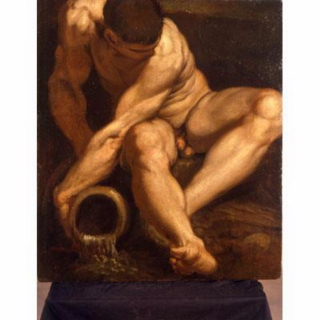
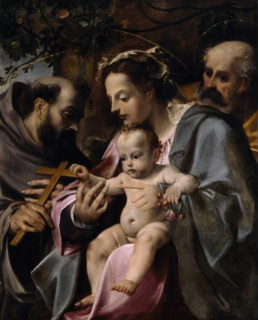
Annibale Carracci – Bologna through January 7, 2007

Bologna is a beautiful city in central Italy. It is known for its voluptuous women, fresh pasta, tortellini, fast cars, industry and the University. For many years Bologna was the center of the Italian communism and is home to one of the largest Universities in the world. Museums and other cultural centers are an important part of life in Bologna. Bologna is often overlooked as a vacation destination yet there are numerous things to see and do including a visit to Ferrari, Lamborghini and Maserati.


Bologna has brought together some of the works of Annibale Carracci at Museo Civico Archeologico of Bologna, September 27, 2006 through January 7, 2007. The admission to the show includes access to several other museums in Bologna during the same period. If you intend to be in the area this fall this could be an interesting way to spend a couple of hours before a great dinner of Tortellini alla Bolognese.


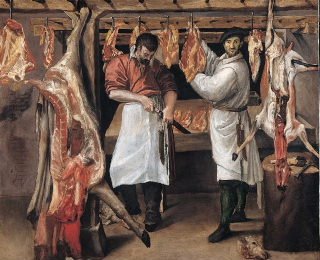
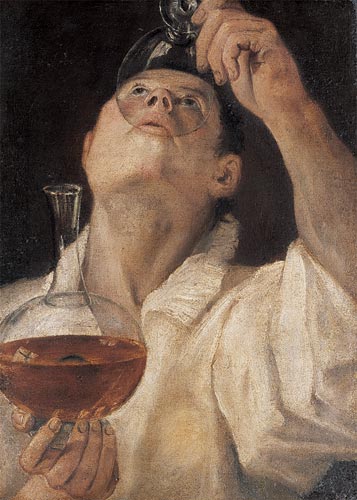
Annibale Carracci was born in Bologna in 1560. His early works include the Bottega del Macellaio, the Butcher's Boutique permanently housed in the Kimball Museum in Fort Worth, and Mangiafagioli, the Bean Eater. These illustrations are appreciated for their dominate realism. Additional works from this early period are also found in the Galleria Nazionale of Naples, the Uffizi in Florence and the Pinacoteca in Brera (Milan).


His first works, the Baptism of Christ, the Madonna and the Saints, the wedding of Saint Catherine and the Assumption of the Virgins, appear from 1583 when he was traveling in Tuscany and Venice. During this period he experimented with brilliant colors and contrast. He then worked on the affreschi in Palazzo Magnani in Bologna. In 1595 he was called to Rome to decorate the camerino of Palazzo Farnese with the stories of Hercules and Ulissis. Walking in front of Palazzo Farnese in the evening the lights of the first floor shine through the windows (the first floor in Italy is the second floor in the US). Brilliant colors on the high ceilings are clearly visible. These are the works of Annibale Carracci!


He continued working on his single paintings while employed in the realization of numerous domes of the primary churches of Rome and Naples. Today his paintings are found in Museums across Europe and his affreschi in numerous churches.

Annibale Carracci died in Rome in 1609.

Tags:

Labels: , , ,

Read the Full Story...

Thursday, October 19, 2006

Culture – Is it ever too late to appreciate the works of mankind?

One of the advantages of living in Italy, or the rest of Europe for that matter, is that just about any time of year, in just about any city, there are opportunities to visit museums or shows of the great artists. On many an occasion, I would arrive several hours early in a city or have several hours to kill before leaving. A quick call to the city hall, or in later years through SMS concierge services, and a list of possible adventures was readily available.

An important part of my profession is to be able to talk, with relative understanding, about a wide range of topics. Unfortunately, I cannot say that I acquired this capability from my US based education. Instead, over the years, a couple of hours here and a couple of hours there, of playing video games on a handheld device in some airport I would take the dead time and walk through a museum, a tradeshow, or just go into some church along the way. Curiosity over what I had seen would then push me to find out more about the artist, designer, food or wine.

I am not indicating that visiting museums should be primary activity on a vacation in Italy but, while you are appreciating the great food, wine and destinations, it may be interesting to just walk through some of the historic or cultural exhibits that may be open in your area. Think about visiting the vineyards of Capezzana and the local museum that shows the tools, equipment and processes used in the past to create these fantastic wines. It will help you understand why pushing facilities to their theoretical maximum capabilities and hiring lower wage unskilled workers is a failed business model. The same way to express this concept is to ask why Italian companies can compete, and in many cases, dominate world markets when their employees make twice that of their US counterpart, have 6 weeks paid vacation a year, national health coverage, and if they get sick continue to receive 80% of their salary.

Over the next couple of weeks I will publish articles about some events open through the end of the year. I hope you will find the opportunity during your next trip to check them out.

Tags:

Labels: ,

Read the Full Story...

Wednesday, August 09, 2006

See Naples through its history – Music, Literature and Wine

The Cities of Naples and Ercolano together with the Archeological Museum are presenting a view of Naples and the surrounding area with an exposition of works by local authors, music and wines produced in the region. Fuoco Vitale, of Life-giving Fire, will be open to the public from September 22 through September 30, 2006 at CIVES in Ercolano, via IV Novembre. The fair is spread over 4,000 sq. ft. and is divided into the three primary areas of Literature, Music and Wine.

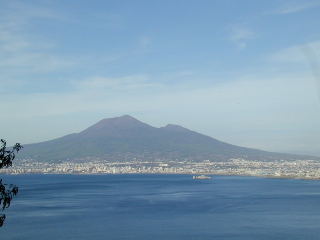
The area around Naples is rich in culture and folklore. Naples is passion to the extremes. It expresses great appreciation for the arts and for the land. Fuoco Vitale is an attempt to visualize this passion using historic events and products. The show is intended to represent the magma flowing from Vesuvio, the active Volcano on the gulf of Naples, its life-giving power and capacity of destruction.

This is a unique opportunity to understand local culture, to live their experiences and to be, if only for a short time, Napolitano.

Tags:

Labels: , , ,

Read the Full Story...

Sunday, July 09, 2006

Duomo di Firenze – The Cathedral of Florence

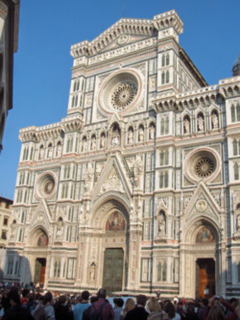
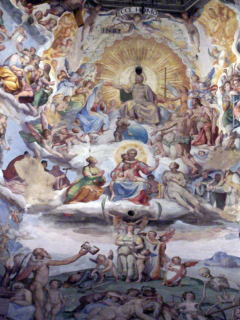
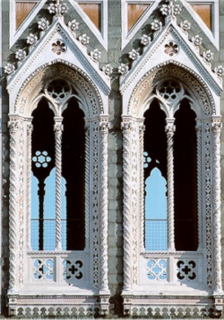
The Duomo di Firenze is one of the most frequented and popular tourist sites in Florence. The structure was built in the 1400s and the numerous works of art decorating the internal walls were executed in the 1500s. The most complete collection of stained glass from the 14th and 15th centuries is found in the Duomo di Firenze.

For many years we had a store just up the street from piazza Duomo. From Corso Cavour entering the piazza it is impossible to just walk by. Even from several hundreds yards across the piazza the beauty and artisan workmanship of the great masters is striking. From that distance the finite details are not evident but the harmonious lines and colors inspire a sense of awe. The list of master painters, architects, sculptures and stained glass artisans is impressive. Brunelleschi, Giotto, Ghirlandaio, Vasari, Zuccari and Bandinelli are just a few of the renaissance artists contributing to this massive accumulation of art and culture.

Visiting the Duomo di Firenze, the Battistero and the Torre di Giotto should not be attempted in one day. Even a most superficial walk through of each building will take several hours and will not allow time to absorb the beautiful subtleties of these masterpieces. I would split over two days the visits and definitely avoid the weekends. There is just so much to see that one can easily be overwhelmed. A guided tour of each of the buildings is the best way to go. Split the visits between two days and try to arrange a visit to the tower in evening. The view is magnificent.

The official site of the Duomo di Firenze is a great source of additional information although it does tend toward the religious side of things.

Tags:


Labels: , , , , ,

Read the Full Story...

Thursday, July 06, 2006

Palazzo Pitti Florence – Grandeur of a Royal Palace – Destination of Wonder

Palazzo Pitti is one of the marvels of Florence. It is a marvel for the unique and rare works of art it contains and it is a marvel for its grandeur. Over the centuries occasionally the numerous great talents of mankind find themselves working on the same project. Palazzo Pitti is one of these wonders. In 1440, Palazzo Pitti was designed by Brunelleschi for the Florentine trader Luca Pitti. This amazing work continued for 5 centuries. It was purchased by the De’ Medici Family in the 1500s and the Savoia family in the 1800s. During the Savoia family rule it served as the royal palace. Finally the palazzo was transferred to the State of Italy upon the creation of the republic.

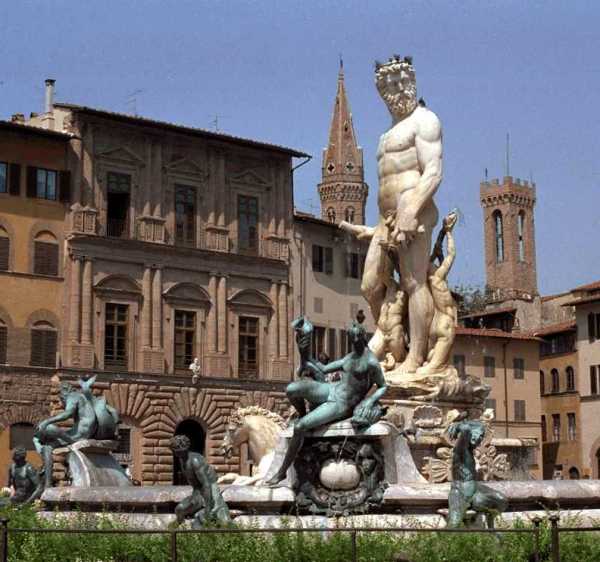
The Florentines rarely refer to Palazzo Pitti the royal palace by. They felt this diminished its true grandeur. Grand it is, covering 24 hectars, Palazzo Pitti houses numerous museums and galleries. The building itself is one of Brunelleschi’s architectural works of art. Raffaello and Tiziano adorned the walls with intricate and colorful mural. Boboli’s statues watch thoughtfully the gardens and halls and Studoli Lorenzo’s bronze Neptune commands reverence. Palazzo Pitti houses one of the greatest symbols of sensual persuasion, Giambologna’s Venere nuda.

Any trip to Florence should include a visit to Palazzo Pitti but for those with a true passion of art Palazzo Pitti could be a primary destination. Many afternoons I have spent meandering along the halls and in the gardens, each time amazed at how much I had missed the time before. Often I have found myself mesmerized by the use of color in this or that painting or amazed by the detail and insight of a sculpture. Florence has much to offer, Palazzo Uffizi, the Duomo and Battistero among others, but Palazzo Pitti is a “must see” destination.


Tags:


Labels: , , , ,

Read the Full Story...

Wednesday, July 05, 2006

Fun in Rome – Castle San Angelo Summer Fest

Rome is pulling out all the stops again this year organizing the fourth annual summer festival. Castle San Angelo in the city center opens its doors every night turning this once refuge of the Pope into an omni-theatre of nightlife activities.

Castle San Angelo has some of the most breathtaking views of Rome and on every level courtyards, terraces and rooms are the backdrop of family oriented events including circus acts, mimes and fire-eaters. Every night through the 15th of August the city has scheduled a non-stop flow of concerts, plays and shows.

The castle has numerous restaurants, bars and gelaterias offering an opportunity to experience true Roman life in this scenic setting. The last act of the opera Tosca will also be performed on the roof terrace with a full 360 degree view of the rooftops of Rome.

An exhibition of Baroque art currently being held in the castle and featuring works by Bernini, Borromini and Pietro da Cortona will remain open to nighttime visitors, as will another important show devoted to Roman jewelry. This includes rare antique items such as a bracelet from the third century B.C. depicting the Emperor Gordius .

This is a great opportunity for those in the city those in the city to experience a wide range of cultural and gastronomic activities in one place and in a very short period of time.

Tags:

Labels: , , , , ,

Read the Full Story...

Monday, June 05, 2006

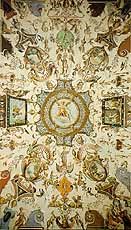
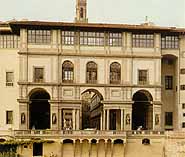
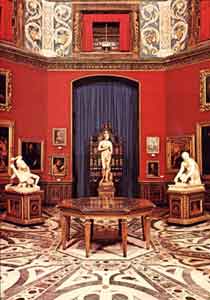
Palazzo Uffizi - Wealth and Power of Florence

Florence is a beautiful city. A new treasure is waiting behind every corner. Churches, Museums, parks, normal buildings even your local pizzeria can hold some treasure if you keep your eyes open. Once a nation itself, a global powerhouse, great treasures from the 15th to 19th abound. It is only fitting that the public offices, or Palazzo Uffizi, from that period reflect the opulence of the period.

Designed in 1559 by Giorgio Vasari and completed in only 5 years, the horseshoe shaped palace connects Palazzo Pitti and Palazzo Vecchio and with a scenic view of the Arno, the river that runs through the center of Florence. This building was designed to hold the offices of the 13 divisions of the court. The entire first floor held offices for the artisans who masterfully worked metals, precious stones, tapestries, ceramics, and glass. The west end of the building contained the Treasury where the legal tender was produced and the Pharmacy where the tables of numerous medicines and poisons were painted on the walls and still visible today.

Many existing building were demolished to make room for Palazzo Uffizi however Vasari incorporated the small church from the Roman Empire into the new building. During the restoration of 1971 murals hidden under centuries of plaster and paint reveal images of the Florentia Romana, a local tavern, and a church of the Longobardi. Additional works of Botticelli (1481), and Andrea del Castagno (1450).

Following the death of Vasari the Gran Duca ordered that the corridor connecting Palazzo Pitti be adorned with murals depicting his growing dominance of Tuscany. Humongous murals, floor to ceiling, by Buontalenti, run the entire length of the corridor and later Buontalenti convinced the Gran Duca to allow him to paint the 3rd floor apartment. Two famous works, la Tribuna (1584) e il Teatro Mediceo (1586), were painted in these apartments.

Most recently the Friends of Florence Foundation, a group of American donors, paid for the restoration of Uffizi Gallery's finest rooms and its most striking sculptures. The Niobe Room's original 18th-century layout and opulence have been recreated over two years to produce a majestic international beauty that gives us the impression of being in Vienna or St Petersburg.

Its centerpiece, the statues of tragic mythical mother Niobe and her doomed family the Niobids, was found in Rome in 1583. Advisory members of the Friends of Florence Foundation include Zubin Mehta, Sting, Mel Gibson and Franco Zeffirelli.

Florence has so much to offer, great food, wine, fantastic people, and probably the highest concentration of art works in the entire world, so why spend the time to see some governmental offices. If it is true that our past molds our future, this building, that is a symbol of a dominant world power of over 400 years, can give us insight into how we should look at our world today. Take some time, walk through and maybe sit in one of the artisan shops. It is a great place to get our current life into perspective.

Tags:

Labels: , , , ,

Read the Full Story...

Thursday, June 01, 2006

Visit a Museum – You gotta be kidding me!

What moves our mind? A poet’s words generate images and sensations. Our bodies move instinctively to a particular song. A painting takes us on a voyage to some serene place we have never been. A sculpture captures beauty and balance we were never aware of. A building initiates thoughts of safety or opulence and relaxes our defenses.

An artist sees the world from the inside out. The resulting work is an expression of his emotions, a byproduct as he searches to understand his soul and what is happening around him. Michelangelo paints the Sistine chapel enduring excruciating pain, living in poverty, and suffering the demeaning attitude of the Pope. Dante writes his Divina Comedia in exile from his beloved Florence. To share his grief and frustration he writes in Vulgaris so the normal people could understand and the Italian language is born substituting Latin in a few short years.

The great ones withstand the test of time. Just as most artists were not appreciated by the masses of their day, we should not expect to be touched by any particular work of art. What is beautiful is personal, and may change over time as life molds us through our experiences. We also should not feel that something is marvelous just because others think it to be so. Nor should we think we have to like some old painting just because Leonardo da Vinci painted it. The great works that withstand time will touch us when our time is right, when we are ready and when we can gain from it. That is the gift of the masters, their ability to express the emotions of the soul, from the inside out.

I write about museums, artists and buildings as a part of travel because the original is always better than the reproduction. I did not appreciate art as a youngster, I saw no need for it, and certainly did not want to waste precious time going to see this or that show. I only received one grade inferior an A- in university. One class, my first year I was generously awarded a D in Humanities 101.

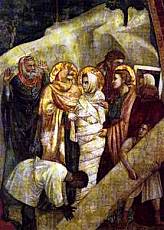
After several years in Italy and numerous tribulations I went to see a friend, Umberto Lago Suardi. His family is nobility but only he and his sister remain and they live in a castle outside of Bergamo. We entered the small church on the property and I was overwhelmed. Murals adorned the walls of the church, painted by Giotto, and I was moved. It turns out that this little town, 24 km to the northeast of Bergamo, was a customs point under the rule of Federico and Giotto di Bondone had spent many years in the area.

Suddenly, I realized the great opportunity I had missed in college and I began reading everything I could find about art, painters, sculptures, architects and artisans of every kind. Over the years it has helped change my perspective on life, on what is important, and what is not. It happened by chance, perhaps you will visit one of the places I have seen and the same will happen to you.

Tags:

Labels: , , ,

Read the Full Story...