Tuesday, November 06, 2007

Bottle of Ornellia 2005 sells at auction for $33,600 – Friends of Florence

I can imagine that many are checking their wine cellars right now to see just how many bottles of Ornellaia are on the shelves. Before you break you neck jumping down the stairs to open the doors of newfound riches, patience. Ornellaia is a wonderful wine. It is one of my favourites. It is not, for any year of production, a $33,600 wine. The sale took place at a Christie’s Auction in New York. The winners were a couple from Seattle and the proceeds go to the “Friend’s of Florence” to restore and maintain the entrance doors of the Battistero of Florence.

There are various non-profit organizations in the US dedicated to helping maintain the human treasures of Florence, Venice and Rome. From the Friends of Florence Website:

Friends of Florence is a non-profit 501(C)3 international foundation based in the United States. It was created to allow the citizens of the world to participate in the preservation and enhancement of this glorious city and the Tuscany region.

Through carefully selected projects, various works of art, architecture and literature will be restored, safeguarded or finally opened to the public. A committee of internationally respected experts and historians will guide the foundation in the selection of projects that will benefit from the foundation's work.

The great re-awakening of the human spirit from the darkness of the Middle Ages occurred in Florence. In the early 15th century, the study of antiquity - of the glory that was Greece and the grandeur that was Rome - became a Florentine passion, and with it carne a new respect for learning and a new-found creativity. The fruits of the great Quattrocento were boundless in Florence, making it the center of Western civilization for arts, architecture, philosophy sciences and political idealism. This small city became the emblem of humanism and gave the world such geniuses as Leonardo da Vinci, Michelangelo, Brunelleschi, Galileo, Dante, Giotto and countless others who created works and ideals which continue to inspire the world. As we enter the third millennium, it is ever more important that the legacy of Florence and the Tuscany region be preserved, enhanced where possible, and protected. Many of the unique treasures found in and around Florence are in danger of being ruined from neglect or sporadic preservation. The city itself is a work of art, rich in beautiful palaces, churches, museums, secret corners, and splendid gardens. All must be carefully protected so that Florence and Tuscany will remain a symbol of humanism and man's creativity and genius for centuries to come.


Current Projects include:

Sculptural Group Above the Door of the Baptistry
Ghiberti’s “Door’s of Paradise”
Twelve Caesars of the Medici Collection
Tribune in Uffizi Gallery

You can receive additional information on their projects, how to get involved and/or what is coming in the future directly from the group.

Tags:

Labels: , , ,

Read the Full Story...

Tuesday, December 26, 2006

Moda Ermanno Scervino – Women’s Fashion Winter 2007

Fashion always comes from the streets. Some designers have an uncanny ability to identify or even influence tendencies. Others are able to bring new sparkle to very traditional and classic styles. The Florentine stylist, Ermanno Scervino, is a designer that has street credibility. He appeared on the scene in 1997. Since then he has been dressing the streets of Italy. His ability to interpret tendencies is shown by his revenue growth. While still small in terms of the overall Italian Fashion market, in 2004 he more than doubled sales from 17 million Euros to 35 million in 2004. Since that time has be growing sales in double digits and if my experience is an example this year will be another year of record growth.

Raffaella and I were walking through a local department store here in Dallas and I noticed a couple. They seemed familiar yet just a bit out of place among the crowds. The clothes she was wearing were really cool; they just seemed to frame her perfectly. As we came closer we heard them speaking Italian. Yes, we were brash and stopped them right in the middle of the corridor. It turns out they are from Sicily and were visiting friends here in Dallas for a wedding. The clothes could have been Texan, suede and soft, brushed leather in natural tones, calf-high boots with tassels, soft, form fitting jeans with just a hint of the washed denim, as if she had had them for a lifetime.

As we chatted and organized getting together while they were here, I asked about her clothes. I know it is not appropriate but the curiosity was too great. I could not identify the designer. I even thought they might have purchased the clothes here in Dallas from some upcoming designer with a European flair.


The first part of the line uses soft fabrics and suede. It could be seen as a 1600s hunting or outdoor sport with a contemporary touch. The designs accentuate the female figure, accentuating the curves with heavier clothes or overlays in the top and bottom of the hourglass while maintaining the beelike waste. The footwear is an important part of this look. Mostly boots are used but heels are also applicable for the outfit without the jacket. I found the thigh high boots really interesting with the kneecap cover.


The next area I see would have been considered travel clothes in the 40s and 50s. Comfortable and clean lines with natural darker colors and heavier fabrics are the basic characteristics. In today’s world they would be appropriate in most office situations and excellent for weekend outings or vacations.


Finally the more formal wear, whether is be the knee or full length outfit, are soft and flowing with silks and chiffon. I find them just formal enough for most occasions but casual enough to be worn on just about any evening occasion and in some work environments.


Thinking about the entire line adjectives like free spirit, active lifestyle, and youthful, come to mind. Ermanno Scervino seems to understand the vibe that is on the street. I did notice that his designs were more prevalent in the central and southern cities and less in Milan. This could have something to do with the more casual lifestyle.

Tags:


Labels: , , , , ,

Read the Full Story...

Wednesday, July 12, 2006

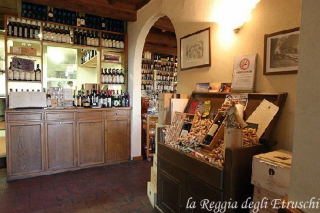
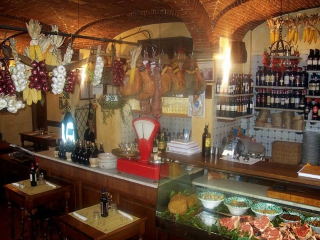
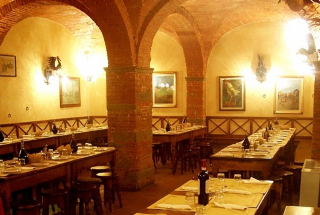
Ristorante La Reggia degli Etruschi - Eat and Drink well in Florence

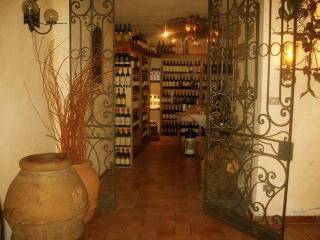
When your vacation destination is one of the top tourist destinations in the world it is very easy to spend a great deal of money and not have a great culinary experience. The Ristorante La Reggia degli Etruschi, just outside of Florence, is a little known restaurant with fantastic wine cellar. This is one of my favorite haunts, the food is genuine and savory and the wine selection is tremendous. Just about every nook and cranny of the restaurant is filled with bottles of wine from the Tuscan region. The view is suggestive, looking into the valley from the hills of Tuscany, but if the scenic view is the first thing that catches your attention this may not be the place for you.


Wine, wine and more wine. From the time you enter the small foyer bottles of Tuscan nectar fill your view. Solaia, Sassicaia, Brunello di Montalcino, the fabulous "Super Tuscans", tempt your imagination. The greatest worry for the night will be which one of these marvelous wines will accompany the traditional Tuscan dinner. If you can tear yourself away from the display of wines, this was always a problem for us, your table will have a beautiful view of the Tuscan valley. We always chose to sit outside on the covered veranda. The evening breeze is cool and the smells of the vineyards and lush farmlands complete the atmosphere.

The food is traditional Tuscan, no novel cuisine here. Simplicity and fresh ingredients put together to compliment each other. Every mouthful is an experience as each element discretely makes its presence known without dominating and then quietly subsides giving way to a new flavor. Plan to spend some time with the menu. The restaurant offers a smorgasbord of culinary ecstasy including Carne Chianina, Gnocchi, Pici, potato Ravioli, pasta with truffles, la Fiorentina, a selection of Tuscan cheeses and some really voluptuous desserts.

There are two ways to proceed when ordering dinner, choose the wine and then the food, or choose the food and then the wine. Either way Leonardo and his staff will be able to help you combine these Tuscan delicacies resulting in an unforgettable evening.

Restaurant La Reggia degli Etruschi
Via S.Francesco, 18
Fiesole (Firenze)
Ph./Fax +39 055 59385

Tags:

Labels: , , ,

Read the Full Story...

Tuesday, July 11, 2006

Antico Ristoro di Cambi – Home cooking in Florence

True Florentine home cooking can be found at the family owned and operated Antico Ristoro di Cambi. This is not a fancy place, no tablecloths or fancy glasses, just good regional cuisine and genuine Tuscan wines. The dark heavy wood tables and benches set the atmosphere. This is a place for the locals, very few tourists ever find their way to this hidden treasure-cove of local delights. Food quality is the name of the game here, you can choose your cut of meat directly from the front counter.


Antico Ristoro di Cambi was born in 1950 as a wine bar with some appetizers. Over the years they have added a few dishes however the menu’ remains very limited to about 10 local recipes. Not every dish is available every night. During the week the family will prepare two or three specialties each night. The lack of a traditional menu’ should not be a reason to not visit this restaurant. This is an invitation into a local family’s home where the table is shared with other guests and the portions are abundant. It is an experience in Tuscan life.

The main dishes are hearty, Ribollita, La Fiorentina, Grilled Sausage, Baccala’ in umido, Pappa al Pomodoro, dried meats, and desserts made in house. The kitchen is run by the women of the family and is spectacular. Some good local table wines and a few Super Tuscans round out the experience. If you want local life in Florence with real people and truly traditional food then this is the place for you.

Antico Ristoro di Cambi
Via S. Onofrio 1R
Zona Porta San Frediano
Tel: 055 217134


Tags:

Labels: , , ,

Read the Full Story...

Monday, July 10, 2006

Osteria Antica Mescita San Niccolò – Traditional Restaurant in Florence

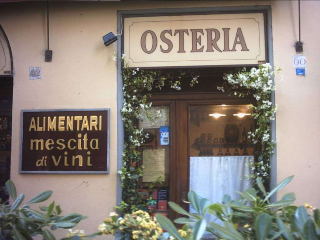
Osteria is a type of restaurant, often dedicated to the working class and rarely based on tourism. The Osteria Antica Mescita San Niccolo’ was a taxing station for wine until the 1800s. Foodstuffs were added to the significant wine cellar and taxing station became a store-restaurant for the locals. The cuisine is as antique as the building that houses the restaurant. The owners have faithfully remained dedicated to traditional Florentine cuisine. They offer Pappa al Pomodoro, Passato di Ceci con funghi Porcini, Ribollita, Trippa Fiorentina, Cinghiale, and il Coniglio briaco di Vernaccia.

The cellars were restored after the flood of 1966 and during the restoration work the crypts of the nearby San Niccolo’ church were discovered. The Prosperi family took over the restaurant in 1993 continuing the traditional dining. Overall the Osteria is one of the few surviving examples of typical Florentine restaurants. Here you can breathe the air of Old time traditional Florence. Wine flasks and bottles rest on the shelves. Vintage photographs hang from the walls in memory of a past time.


The Prosperi's have always been passionate about good Tuscan traditional cuisine combined with quality wine. The kitchen prepares new dishes daily with the best seasonal produce available on the market, using only super fresh ingredients and top quality meats. One of the characteristics of a quality restaurant is: Frozen foods are prohibited.

A visit to this restaurant will not disappoint. Whether a lunch buffet or menu’ alla cart this is an excellent place for a fun evening full of savory foods, robust wines and hearty people. The information is:

Osteria Antica Mescita S. Niccolò
Via San Niccolò, 60r - 50125 - FIRENZE
tel. (+39) 055.234.28.36

Tags:

Labels: , , ,

Read the Full Story...

Sunday, July 09, 2006

Duomo di Firenze – The Cathedral of Florence

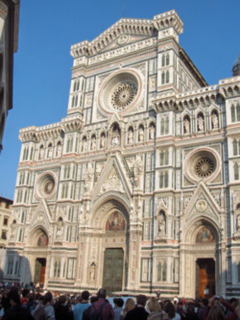
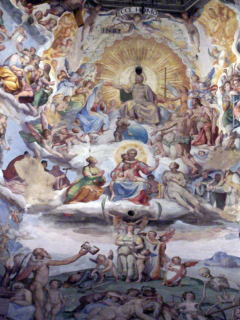
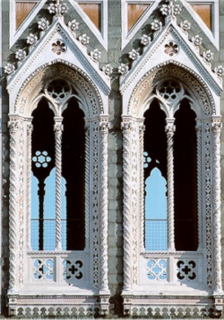
The Duomo di Firenze is one of the most frequented and popular tourist sites in Florence. The structure was built in the 1400s and the numerous works of art decorating the internal walls were executed in the 1500s. The most complete collection of stained glass from the 14th and 15th centuries is found in the Duomo di Firenze.

For many years we had a store just up the street from piazza Duomo. From Corso Cavour entering the piazza it is impossible to just walk by. Even from several hundreds yards across the piazza the beauty and artisan workmanship of the great masters is striking. From that distance the finite details are not evident but the harmonious lines and colors inspire a sense of awe. The list of master painters, architects, sculptures and stained glass artisans is impressive. Brunelleschi, Giotto, Ghirlandaio, Vasari, Zuccari and Bandinelli are just a few of the renaissance artists contributing to this massive accumulation of art and culture.

Visiting the Duomo di Firenze, the Battistero and the Torre di Giotto should not be attempted in one day. Even a most superficial walk through of each building will take several hours and will not allow time to absorb the beautiful subtleties of these masterpieces. I would split over two days the visits and definitely avoid the weekends. There is just so much to see that one can easily be overwhelmed. A guided tour of each of the buildings is the best way to go. Split the visits between two days and try to arrange a visit to the tower in evening. The view is magnificent.

The official site of the Duomo di Firenze is a great source of additional information although it does tend toward the religious side of things.

Tags:


Labels: , , , , ,

Read the Full Story...

Thursday, July 06, 2006

Palazzo Pitti Florence – Grandeur of a Royal Palace – Destination of Wonder

Palazzo Pitti is one of the marvels of Florence. It is a marvel for the unique and rare works of art it contains and it is a marvel for its grandeur. Over the centuries occasionally the numerous great talents of mankind find themselves working on the same project. Palazzo Pitti is one of these wonders. In 1440, Palazzo Pitti was designed by Brunelleschi for the Florentine trader Luca Pitti. This amazing work continued for 5 centuries. It was purchased by the De’ Medici Family in the 1500s and the Savoia family in the 1800s. During the Savoia family rule it served as the royal palace. Finally the palazzo was transferred to the State of Italy upon the creation of the republic.

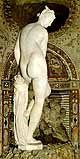
The Florentines rarely refer to Palazzo Pitti the royal palace by. They felt this diminished its true grandeur. Grand it is, covering 24 hectars, Palazzo Pitti houses numerous museums and galleries. The building itself is one of Brunelleschi’s architectural works of art. Raffaello and Tiziano adorned the walls with intricate and colorful mural. Boboli’s statues watch thoughtfully the gardens and halls and Studoli Lorenzo’s bronze Neptune commands reverence. Palazzo Pitti houses one of the greatest symbols of sensual persuasion, Giambologna’s Venere nuda.

Any trip to Florence should include a visit to Palazzo Pitti but for those with a true passion of art Palazzo Pitti could be a primary destination. Many afternoons I have spent meandering along the halls and in the gardens, each time amazed at how much I had missed the time before. Often I have found myself mesmerized by the use of color in this or that painting or amazed by the detail and insight of a sculpture. Florence has much to offer, Palazzo Uffizi, the Duomo and Battistero among others, but Palazzo Pitti is a “must see” destination.


Tags:


Labels: , , , ,

Read the Full Story...

Friday, June 23, 2006

Il Borro – Traditional Tuscany with all the bells and whistles

Located south of Florence close to Arezzo, Il Borro offers a unique opportunity to experience the Tuscan lifestyle in its many facets. Complete with a wine and culinary center, this agriturismo is an antique mountain village that has been completed renovated with the latest amenities.

A cool breeze filters down the valley from the higher mountains cooling the early evening air. The perfume of the forests and the vineyard’s warm bouquet penetrates the atmosphere. The 14th century buildings of the medieval town embrace the narrow stone paths as they wind across the antique center of the city. Brick arches span from one home to another, each framing a new view worthy of being immortalized by the artist’s imagination.

The setting sun radiates colors of orange and yellow illuminating the mountains that rise majestically in the evening sky. The thick foliage continues another 200 meters above the rooftops. The panorama is filled with mountaintops and green valleys, vineyards that climb the mountain slopes and Olive groves in the valleys. Faintly, in the distance, the bird’s calls echo across the valleys as they return to safety their nests hidden in the heavily wooden mountains. The colors are so vivid, the smells so persistent, and the dimmest sounds clearly reverberate in this paradise.

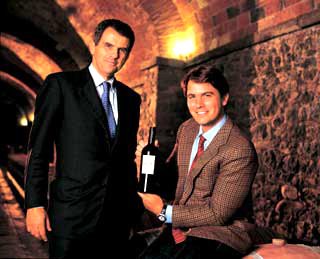
Days are rejuvenating; a trip to the winery, shopping in the open market, or a dip in the pool, all are activities that fascinate and tease the imagination. Leonardo, the director, is a gracious host and Salvatore Ferragamo is truly a gentleman, paying close attention to the guests as they chat about this and that over an espresso. Meandering along the inlaid stone streets, tightly woven around the corners of the buildings, back to the borgo reminds of a balanced life.

After several days out and about the local restaurants, the forno a legna is a welcomed amenity. The local bakery can supply the biga, pane madre, for Tuscan loaf bread. Fresh pasta from a nearby town, and a ragout prepared with fresh ingredients are the basis for a lasagna to be cooked in the traditionally ways. Newfound friends, hailing from countries across the world, share days of horseback riding, a trip above the valley in a hot balloon, cooking lessons with master Tuscan chefs, golf, hunting and tours of the winery tasting innovative wines of various vintages.

More than a vacation, Il Borro is an escape from the superficial and the sensationalism of our today. It is an opportunity to reconstitute both body and soul.

Tags:

Labels: , , , , , ,

Read the Full Story...

Wednesday, June 14, 2006

Capezzana Wine and Culinary Center - A new meaning for B & B

Agriturismo Capezzana, located just 15 miles outside of Florence, has it all, fantastic wines, fresh fruits and vegetables grown on the property, a great restaurant and a culinary school. I usually would not write about a place where I have not personally stayed but while researching the Ghiaie della Furba that I liked so much I was intrigued by this agriturismo where the wine is produced. I began sending emails and called some friends and it turns out that Agriturismo Capezzana is pretty well known and appreciated among my Italian food buddies. For the first hand experience we thank Giuseppe and his family. They provided a detailed description of their vacation.

The ride to Agriturismo Capezzana in Carmignano is an adventure in itself. Winding roads through the cypress trees in the hills of Tuscany is suggestive and relaxing. Visitors are welcomed through the arched trees into the courtyard in front of the XV century building. The Montalbano mountains spire behind the vineyards. Marble statues of Atlantis guard the entrance. Overlooking the rose garden, the rolling hills of Carmignano are clearly visible in the distance.


The estate includes a wing of guest rooms. Although not large, they were comfortable, but this is not the primary reason to visit Agriturismo Capezzana. The cellars are located in the primary building and a trip to the cellar usually brings with it the bottle for lunch or dinner. The restaurant is excellent. The food is traditional, no fusion cuisine here, just hearty Tuscan food made with the freshest of ingredients and prepared by masters.

The estate has a swimming pool and access to horseback riding and nature trails for hiking excursions. The proximity to Prato, Florence and Pistoia make this a great base camp for interesting day and evening trips restaurants and events in three major cities. It would also be possible to spend a day at the beach if want to spend an hour in the car.

Contessa Lisa runs the culinary school. She is considered one of the best cooks in Tuscany. Her school, instituted for food service professionals, provides in depth studies of the basics of Italian cooking and wines. Ingredients are fresh from the garden. The classes run from 1 to 5 days and include visits to local restaurants.

All in all this is a great destination that offers numerous opportunities for a wide variety of interest. The vineyards and winery are accessible and the wines produced are of very good quality. The surrounding cities offer numerous cultural events in the summertime and can be reached by car within a half hour. The real plus at Agriturismo Capezzana is the culinary school. This is an opportunity to understand the basic concepts of Tuscan cooking and the characteristics of local wines. You can find contact information here.

Tags:

Labels: , , , , , , , ,

Read the Full Story...

Monday, June 05, 2006

Palazzo Uffizi - Wealth and Power of Florence

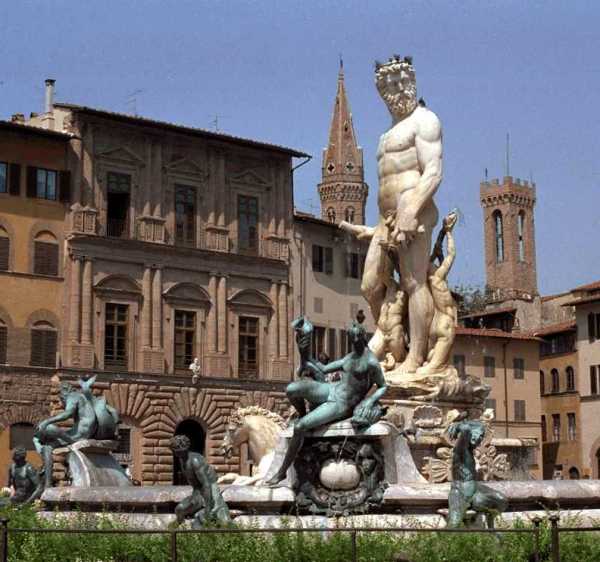
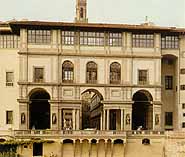
Florence is a beautiful city. A new treasure is waiting behind every corner. Churches, Museums, parks, normal buildings even your local pizzeria can hold some treasure if you keep your eyes open. Once a nation itself, a global powerhouse, great treasures from the 15th to 19th abound. It is only fitting that the public offices, or Palazzo Uffizi, from that period reflect the opulence of the period.

Designed in 1559 by Giorgio Vasari and completed in only 5 years, the horseshoe shaped palace connects Palazzo Pitti and Palazzo Vecchio and with a scenic view of the Arno, the river that runs through the center of Florence. This building was designed to hold the offices of the 13 divisions of the court. The entire first floor held offices for the artisans who masterfully worked metals, precious stones, tapestries, ceramics, and glass. The west end of the building contained the Treasury where the legal tender was produced and the Pharmacy where the tables of numerous medicines and poisons were painted on the walls and still visible today.

Many existing building were demolished to make room for Palazzo Uffizi however Vasari incorporated the small church from the Roman Empire into the new building. During the restoration of 1971 murals hidden under centuries of plaster and paint reveal images of the Florentia Romana, a local tavern, and a church of the Longobardi. Additional works of Botticelli (1481), and Andrea del Castagno (1450).

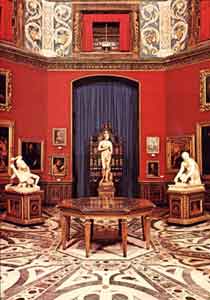
Following the death of Vasari the Gran Duca ordered that the corridor connecting Palazzo Pitti be adorned with murals depicting his growing dominance of Tuscany. Humongous murals, floor to ceiling, by Buontalenti, run the entire length of the corridor and later Buontalenti convinced the Gran Duca to allow him to paint the 3rd floor apartment. Two famous works, la Tribuna (1584) e il Teatro Mediceo (1586), were painted in these apartments.

Most recently the Friends of Florence Foundation, a group of American donors, paid for the restoration of Uffizi Gallery's finest rooms and its most striking sculptures. The Niobe Room's original 18th-century layout and opulence have been recreated over two years to produce a majestic international beauty that gives us the impression of being in Vienna or St Petersburg.

Its centerpiece, the statues of tragic mythical mother Niobe and her doomed family the Niobids, was found in Rome in 1583. Advisory members of the Friends of Florence Foundation include Zubin Mehta, Sting, Mel Gibson and Franco Zeffirelli.

Florence has so much to offer, great food, wine, fantastic people, and probably the highest concentration of art works in the entire world, so why spend the time to see some governmental offices. If it is true that our past molds our future, this building, that is a symbol of a dominant world power of over 400 years, can give us insight into how we should look at our world today. Take some time, walk through and maybe sit in one of the artisan shops. It is a great place to get our current life into perspective.

Tags:

Labels: , , , ,

Read the Full Story...

Saturday, May 27, 2006

The Mind of Leonardo – In Florence the Uffizi Gallery

We fantasize over great minds. Their intellectual capabilities are surely a link to some divine power. Their words hold messages that explain why we are here, premonitions to guide us into the future, and warnings of what is important. From Nostradamos to DaVinci our future can be discovered in the past.


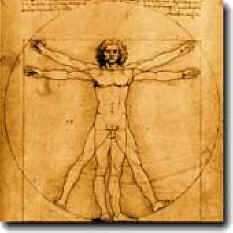
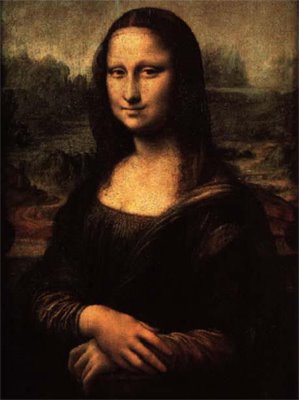
Leonardo DaVinci was a great man, an engineer, an anatomist, an inventor, an artist, a philosopher. His works of civil engineering are still used today to supply water to the city of Milan. His Monna Lisa is revered as one of the most intriguing portraits of all time and his studies of flight are one of basic premises of the helicopter. The basis for all his accomplishments is his understanding of forms, the geometric relationship of all things and motion.
Leonardo was the first to apply perspective and motion in paintings. For Leonardo painting was science and the application of mathematics was imperative in the representation of the world around him. Balance, color and depth were mathematical equations. He attempts to show the presence of these laws in all spheres of nature: from the human body to those of animals, from the branches of trees to those of rivers, from geometric shapes to those of fossils. This concept of the infinite malleability of forms is a salient feature of his entire activity as artist, designer of machines and investigator of the phenomena of the physical world.

We are fascinated with the fiction of the DaVinci code but there is an opportunity to see the works of Leonardo. An exhibit of the study of geometric forms and the Mind of Leonardo is open through January 2007 at the Uffizi Gallery in Florence. You can see the real thing, unabridged and without the dramatic representation of a fictional novel. In the history of man few individual’s accomplishments have spanned the eons of time. Leonardo is one of them and you can experience his genius first hand.

Tags:


Labels: , , , , ,

Read the Full Story...

Thursday, March 09, 2006

Easter in Florence – Scoppio del Carro

Florence is a beautiful city any time of the year. It has just about everything you could want from a vacation destination, good food, great wines, art, culture, fashion and literature. This antique city is rich in tradition and Easter is no different. The “Scoppio del Carro” reminds the Florentines of their past military prowess and deep religious roots dating back to the birth of the Catholic church.

The “Scoppio del Carro”, exploding cart, dates back to the times of the first crusade to the holy lands, 1099 AD. This crusade was to liberate the holy sepulture from the pagans. Goffredo di Buglione, Duke of “bassa Lorena”, laid siege to the city. Pazzino dei Pazzi was the first soldier to climb the city walls and held the Dukes banner for all to see. For this act of courage the Duke rewarded the soldier with 3 pieces of rock from Christ’s tomb.

Upon returning to Florence in 1101, the captain was greatly honored. Originally the relics were held in the church Santa Maria Sopra a Porta in Mercato Nuovo, later transferred the church San Biagio until it was closed in 1785. The relics were then transferred to the church Santi Apostoli where they still are protected today.


Originally on the Saturday before Easter Sunday, the Bishop would light a fire with sparks from the holy rocks, torches would then be carried throughout the city lighting a fire in every home. The burning flame would purify the home and those who dwelled there.

Over the years the celebration became more elaborate and festive. In the 1300s the torches were substitutes with a cart that would carry the holy fire in procession through the city. Shortly thereafter the fire became a fireworks display. The rights to lighting the celebration and the entire cost were on the Pazzi family. Since the cart would be nearly destroyed every year by the fires and fireworks, in 1494, the family decided to build an indestructible cart. This cart is still in use today, even though it has been restored several times in the past 500 years.

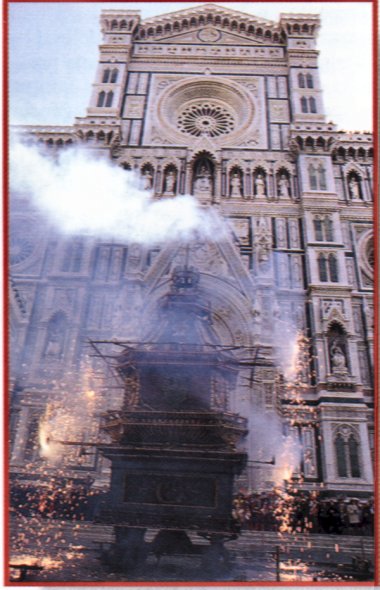
Presently, on Easter morning, the parade begins in piazzale del Prato. Pulled two white bulls, the cart is accompanied by military personnel, the city’s band, and the flag team of the “Calcio Storico Fiorentino”, the group Historic Soccer of Florence. The cart, named the “Brindellone”, moves through the streets of the city to the piazza del Duomo, between the “Battistero” and the Cathedral. The bulls are quickly moved away from the cart and a wire is drawn from the center of the choir to the cart.

While the cart is being prepared, the procession begins in piazzale del Limbo where the standards of the city of Florence and of the Pazzi family parade with religious and civic leaders to the Battistero where the Mass will be held. After Mass, at exactly 11:00, the choir begins singing “Excelsis Deo” and the dove, actually a rocket make to look like a dove, is lit. The screaming rocket flies along the wire to the cart and, if all goes well, the fireworks begin.

The cart is a mass of exploding bombs and rockets firing into the air. This symbolizes carrying the fire to the entire city, blessing and purifying the homes of Florence. Smoke envelopes the cart and the entire square as a kaleidoscope of colors pour from all sides of the cart.

The celebration of “Scoppio del Carro” is an attraction that brings tens of thousands of people to Florence every year from all over the world. It is an example of how culture and history are absorbed by the inhabitants of an area creating a link between the past and the present. Who we are, our faith, our paganism, our wars, our hopes, and our humanity are all rolled up into an Easter celebration, this is an appointment not to miss.

Labels: , , , ,

Read the Full Story...