Thursday, October 18, 2007

Easy Italian Recipes - Veal Tonne’ - Vitel Tonne’ Version 1

Some would think that Veal Tonne’ has French influences yet this is truly Italian. There is significant discussion regarding the regional origin. There are many who defend this recipe as Milanese, others sustain, with equal vigor, that Vitel Tonne’ is Piemontese, more specifically from the Langhe. I have even heard rumblings from the regions of Southern Italy about the paternity of this dish. Interestingly there are two versions. The one described here is the one that I found in most Milanese homes. The second recipe is the one I have found most often in restaurants. To you the decision of where this recipe found life.

The Italian homemaker would make her own Mayonnaise base. I have linked to the recipe to make mayonnaise however I have indicated the volume of finished mayonnaise in this recipe. Additionally the way the meat is cooked is different in the two recipes. This version uses boiled veal. The veal sirloin (some use tenderloin) is boiled with herbs and then the broth is strained and used for some risotto at a later date. This is a fast recipe because the meat is usually prepared over the weekend and kept in the refrigerator until used. The sauce must be prepared the same day.

Ingredients:

For the Veal
1.5 lbs (600 g) Veal Sirloin
1 quart (1 l.) salted water
1 Carrot
1 Stalk of Celery
1 Onion
1 Clove
¼ Lemon
1 cup White Wine
Salt

For the Sauce
2 cups Mayonnaise
¼ cup wine
8 oz Tuna (under oil)
2 Anchovies under salt (remove lisks and rinse away salt)
1 tbsp Capers in vinegar (drained)

Preparation: Prepare the meat when you have more time. I like to do these preparation jobs over the weekend. Keep the cooked Veal (not sliced) in the refrigerator. Before using let the Veal come to room temperature.

For the Veal

In a heavy pot place all of the ingredients and bring to a boil. Turn the heat down to low. Cover the pot and simmer for 1.5 hours. Once completed the time. Turn the heat off and let the meat cool in the broth. Do not remove until both the meat and the broth are at room temperature. Remove the meat and cut into ½ inch thick slices or refrigerate. Strain the broth. Pour the broth into a glass container and refrigerate for use later in the week.

For the Sauce

Stir the wine into the Mayonnaise. Chop the Tuna into small shreds. Add the Anchovies, and Capers. Stir in the Mayonnaise mixture very gently.

Presentation:

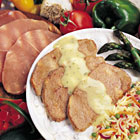
Cut the Veal into ¼ inch thick slices. On a serving platter lay the meat slices evenly and slightly overlapping. Completely cover with the sauce. Cover with aluminum foil and refrigerate until servings. This dish is served slightly cooler than room temperature.

Other Easy Quick Recipes


Tags:


Labels: , , ,

Read the Full Story...

Wednesday, October 17, 2007

Easy Italian Recipes - Roasted Chicken with Lemon

This recipe is fantastically simple and puts an interesting twist on just same old chicken. The original recipe requires that a whole lemon be inserted into the cavity instead of spreading fresh squeezed juice. This should not be done with today’s lemons. Most producers spray the lemons with a pesticide that remains in the peel and will be released into the chicken. I suggest roasted potatoes with the chicken. The potatoes can be baked with the chicken.

Ingredients:

1 whole chicken (about 2.5 lbs)
2 lemons (juiced)
¼ stick of butter
Salt and Pepper
Olive Oil

Preparation:

Preheat the oven to 375 degrees.

Rinse the chicken and remove any items that may be in the cavity. Brush the chicken, inside and out, with the lemon juice. Cut the butter into small pieces and place the butter in the cavity. Salt and pepper the outside of the chicken and brush abundantly with Olive Oil.

Brush a baking pan with olive oil and place the chicken in the middle. Bake the chicken for 40 minutes. Let cool for about 10 minutes before serving.

Other Quick Dinners


Tags:


Labels: , , ,

Read the Full Story...

Sunday, September 09, 2007

The Secret of How to cook Italian

A visit to Italy convinces most people that Italians eat really well. Everything, even the simplest steak on the grill, seems to taste better. The secret is simplicity, passion and balance. Italian cooking, as the lifestyle, is simple. First fresh ingredients are extremely important. Fresh bread is produced three times a day. Sunday, the bakeries are closed so Saturday a different type of bread is purchased, usually a Tuscan round loaf. It is not acceptable to put day old bread on the table. At least once a week most neighborhoods have open-air markets where fresh fruits, vegetables, farm goods and cheeses are available just outside your door.

Italian is very different than French cuisine. Italians believe, “If it has to have a sauce the basic ingredient is not very good.“ The French believe, “The sauce makes the food edible.” The table is sacred for both the French and the Italians. Inviting friends to dinner is a great compliment. It is opening the home and the heart to others.

Last night a couple purchased a cheese platter where Raffaella works. The young trophy something bounced into the store grabbed a linen cloth and returned to her vehicle. A few moments later she returned to the store, linen covered with mashed potatoes in hand, and paid for her tray. She explained that before picking up the tray she had purchased dinner across the street for close friends she was entertaining at home. I know you are thinking, “What is strange about that?”

While there are exceptions, most Italians would never do this. They would gladly go to the restaurant together but a dinner at home is a dinner at home. A dinner at home is much more valuable than a dinner at a restaurant because it requires thought, time and effort. By preparing a meal for your friends you are saying that they are important enough for you to dedicate your thoughts and time to prepare something special.

So what does this have to do with how to cook Italian?

Cooking Italian is conceptual. Here are some secrets to a successful dinner:

  1. Use only fresh ingredients, not pre chopped, diced cleaned or semi-homemade.

  2. Northern Italians use more butter, Southern Italians use more Olive Oil; margarine, spreadable hydrogenated something or other is a no no.

  3. Dedicate enough time to do the job right, marinate meats and fish with a bit of Olive Oil and some light herbs, garlic should be used sparingly and most often left whole to be removed before serving. Think about the ingredients you are putting together. If you see someone through a bunch of garlic in a dish, they are covering for the fact that the food tastes terrible.

  4. Do not worry about elaborate sauces. If the food is good a bit of lemon, or the residual juices from a slow cook will accentuate the natural flavors.

  5. Always choose your wine based on the food being served.

  6. Take your time. This is the gift you are giving your friends or family. This is what is of great value and makes the food so good. As I child I would always want my mother to make my school lunch peanut butter and jelly sandwich. Somehow it just tasted better. If you do not have time, go to the restaurant, the food will be hot and you can then retire to your home.


Tags:


Labels: ,

Read the Full Story...

Sunday, July 15, 2007

Sausage and Heavy Cream Sauce - Panna e Salsiccia

Panna and Salsiccia is shunned by the modern world. No self-respecting woman would prepare this for her man. It is taboo, mothers do not teach their daughters how to make it. It is known only to those older and wiser matriarchs of the province and to all men. It is a magic sauce. It is the true gateway to the heart, by way of the stomach, for any man. Sausage with Heavy Cream has been banned from the modern cooking. Too much cholesterol and too much fat have caused this dish to be on the fat police’s top 10 most wanted criminals. In these days of prohibition, men, when left to cook alone with their buddies, will quietly prepare this dish. There is no need to discuss what we want to eat. It just is understood.

The dish is known for the ingredients of the sauce because each region will use their favorite pasta. In the Marche it is Gramigna, Orecchiette in Puglia, Zitti in Lombardia, and Fusili in Avellino. Sausage with Heavy Cream will go well with any pasta including most types of ravioli or tortellini. It is heaven in a plate of pasta. There is a difference between men and women. Women do not have the same appreciation for Panna e Salsiccia. They think it is good but then the subconscious warnings about fat, cholesterol and carbohydrates cloud their senses and this dish slips into the forgotten recipes corner of their minds.

The more seasoned Matriarchs know that Sausage with Heavy Cream sauce can cure all ills with their man. It can overcome a damaged bumper or be the catalyst toward a new pair of Magli shoes. The recipe is pure simplicity. The goodness is from the ingredients. This dish requires wine or a really good beer. A simple non fruity, red table wine will do the trick. I made this last night, Raffaella had heard me speak of it but had never tried it. She thought it was, ok…


Ingredients for 4 people

1 stick (114 g) of butter
1 lbs (450 g) of your favorite style of pasta
1 lbs of Bratwurst (do not use Italian sausage in the US, it has fennel and other herbs)
200 grams of grated Parmesan Cheese or Grana Padana
1 glass of Dry White Wine
1 cup (235 ml) Heavy Cream
Fresh Ground Pepper
Salt

Preparation:

Place a nut of butter in a large skillet over medium heat. Remove the casing from the sausage. Break the sausage into small pieces and place in the skillet. Turn the sausage often. Do not burn the sausage.

While the sausage is cooking, fill a large pasta pot with water. Add three tablespoons of salt and heat the water to a fast boil. The water should come to a boil as the sausage is just about ready.

Add the remaining butter to the skillet and melt. Add about 10 grinds of pepper. Sautee’ for about 1 minute. Add the white wine to the sausage sauce and reduce to ¼ the original liquid. Sprinkle ¼ teaspoon of salt into the sauce and stir.

Add the pasta to the boiling water and cook for the time indicated on the box.

Add the heavy cream to the sauce and bring to a low boil simmer, stirring often. Stir in ½ of the cheese and continue to reduce the sauce. Taste the sauce for salt and pepper. Add to desired taste.

When the pasta is ready, drain it thoroughly and add to the skillet. Mix the pasta with the sauce and add the remaining cheese. Serve immediately with a simple but hearty red country wine.


Tags:

Labels: , , ,

Read the Full Story...

Friday, July 06, 2007

Insalata Primavera – Dandelion Salad

Summer is here and the garden flourishes. I love the summer. It is a time to prepare really fresh dishes, directly from the garden. The flavors of your garden are just so much more intense. Simple ingredients become a culinary festival. I saw a dandelion, Taraxacum Officinale in Latin and in Italian Tarassaco Comune, weed yesterday. I had a love/hate relationship with dandelions. I spent most of my Saturdays as a child removing dandelions from my yard yet when the flower turned into those balls of fluff, I would look forward to blowing them into the wind. I guess this means that I did a poor job removing the weeds in the first place.

Italy brought a new facet to dandelions. I was amazed to find them in my salad bowl. I looked in disbelief and asked if they were edible. I thought my friends were playing a joke, “Let’s see what we can get the dumb American to eat.” When they scarfed down the salad I realized this was no joke.

Tentatively I nibbled some of the leaves. I could not believe that this weed, I worked so hard to eliminate from the yard as a child, was actually good to eat. The taste is a bit bitter, very similar to arugula. This is a great salad. It is refreshing and has just enough energy to help you make it to dinner. It is important that the leaves are picked before the flower blooms. Once the flower blooms, the leaves will become very bitter. There are various versions around but this is mine.

Ingredients for 2 servings

¼ lbs. (100 g.) Dandelion leaves
1/8 lbs. (50 g) Radicchio
2 hardboiled eggs
1 small red onion
12 halves Walnut
Salt
Pepper
4 tbs. Olive Oil
1 tbs. Apple Vinegar

Preparation:

Cut the Eggs in quarters. Wash, dry and break the Dandelion and Radicchio leaves into smaller pieces.

Thinly slice the Onions and chop the walnuts into large pieces.

In a small bowl, add the Olive Oil, salt, pepper and Apple Vinegar. Stir the liquid together.

In a large bowl, mix together all of the ingredients, except the vinaigrette. Dribble the vinaigrette over the salad and toss the salad a couple of times. Serve with fresh bread.

Tags:


Labels: , ,

Read the Full Story...

Wednesday, June 20, 2007

Risotto with Zucchini Flowers

We have a few Zucchini plants in the garden. Zucchini and other squash are quite powerful plants. The rule is, “A few plants, lots of squash.” There is a way to keep the production in a relatively normal zone. When the male flowers blossom, eliminate about half of them. Yesterday we spent some time doing just that. Zucchini flowers are considered a delicacy in Italy. They are deep fried, stuffed, placed on pizza, or used as an ingredient in risotto. The flowers are highly desired but difficult to find because the flower begins to wilt as soon as it is picked thus cannot withstand normal channels of retail distribution.

Allowing the flowers to simply wilt on the ground would have been a sin. Raffaella pulled the recipe for a risotto from her hat of tricks and the flowers made their way into the kitchen. One of our normal cooking buddies, a truly great chef with a flair for French and Cajun recipes, offered to prepare grilled Halibut. He had never tried the Zucchini flowers but once he understood the nature of the dish, he decided that the fish should be as delicate as the risotto. The Halibut was prepared with salt, pepper, olive oil and lemon slices finished off with fresh chopped Italian Parsley. It was the perfect mix.

Our choice for wine was a light Pinot Grigio. Other great solutions would be Vernaccia, Soave, Gavi, Gaia & Rey, and Tocai Friulano.

Ingredients:

30 Zucchini or Zucca flowers
10 oz. (300 g) Arborio Rice
4 tbsp Butter
1 tbsp Butter
15 g powdered Saffron
1 small Zucchini 3-4 inches long
1 Medium Onion diced
1 cup Dry White Wine
1 quart Vegetable Broth
1 oz. (30 g) Parmesan Cheese
Salt and pepper to taste


Preparation:

Bring the broth to a boil and turn the heat to minimum.

The flowers must be fresh. Delicately open the flowers and remove the pistols with a pair of scissors. Rinse the flower under cold water and let them drain on paper towels. Set the flowers aside.

Melt 4 tbsp butter in a heavy pot over medium high heat. Add the diced onion to the pot and sweat the onions until transparent.

Add the rice. Stir the rice into the butter and onions coating the rice for about 1 minute. Separate the petals of the flowers delicately. Add the flowers and stir them together with the rice.

Pour the wine into the rice and stir quickly for 1 minute. Add 1 ladle of broth. When the broth begins to boil check the timer. It will now take 22 minutes to cook the rice. As the broth evaporates add another ladle of broth. Stir constantly the rice. Continue until the 17 minutes has passed.

Put the saffron and cook everything for an additional 5 minutes. Turn off the heat. Stir in the remaining 1 tbsp of butter and the Parmesan cheese. Let rice sit for 1 minute (mantecare). Serve hot in individual plates.

Tags:

Labels: , , ,

Read the Full Story...

Monday, June 11, 2007

Tuscan Chianti Beef Stew – Stracotto al Chianti Toscano

Our cooking buddies have a communal cellar. Like most of us they have been accumulating wines over the past 10 years. Recently we realized that some of the vintages were beginning to get up there in years. This is a good thing for complex wines but many of these wines are great dinner wines that should not be aged. We had already lost a couple of bottles to Alzheimer’s disease. We decided to check the cellar list and found that there were many 10+ year bottles of Chianti.


A wine that has aged too long is not a pleasure to drink but we feel it is a sin to pour them out. The search began for traditional recipes with Chianti. A couple of emails later and Stracotto al Chianti became our recipe for the day. I had never had this dish but further research revealed that this recipe is widely used in Tuscany. As I scanned the ingredients I realized that by making this dish I risked the wrath of Raffaella. The ingredients will add a touch of sweet to the sauce; something she does not like. Fortunately she was not in the kitchen while I put this together. About an hour into the preparation she tasted the sauce. Her face clouded as she stated emphatically, “This is sweet!”

The interrogation began about the ingredients and the preparation. Her mood remained decidedly upset as I explained the ingredients and the process. The dreaded declaration arrived, “You know I do not like sweet sauces with meat.”

William Congreve wrote:

Heav'n has no Rage, like Love to Hatred turn'd,
Nor Hell a Fury, like a Woman scorn'd.


What great insight from the 1600s.

Do not despair, as the sauce progresses, the flavors balance. While the sauce does not take on a spicy flavor, it is not sweet. The sauce is marvelously delicate. It is the perfect accompaniment to the savory meat that melts in your mouth.

Ingredients:

2 lbs Beef Stew meat cut into 1” cubes
Flour (to coat meat)
1 bottle 750 ml Chianti
1 cups beef broth
1 stick (114 g) Butter
2 tbs. Olive Oil
1 finely chopped large Onion
1 medium finely chopped Carrot
2 tbs. Raisins
2 tbs. Finely chopped Almonds
10 peppercorns
2 tbs. Finely chopped Pine nuts (Pinoli)
2 tbs. chopped Italian Parsley
1 clove crushed Garlic
Salt to taste

Preparation:

In a heavy pot clarify the butter over high heat.

Place the flour on a plate. Cut the meat into 1 inch cubes and coat the cubes in flour. Set the cubes aside on a baking pan.

Add the onion and carrots. Sauté the carrots and onion for about 2 minutes. Add the olive oil to the pot.

Sear the meat cubes in the hot butter. Do not over fill the pot. Place only the meat cubes to fill the bottom of the pot. Stir them once or twice to sear all sides. Remove the seared cubes, place them on the baking pan and continue with other cubes until all the cubes have been seared.

Once all of the cubes have been seared and removed from the pot add about a cup of wine to deglaze the pot. Reduce the heat to medium-high. Add the remaining ingredients and another cup of wine. Reduce the sauce for about 4 minutes.

Add the meat back into the sauce and cover with the remaining wine and broth. Once the liquid begins to boil, reduce the heat to low (simmer only) and cover.

Cook for 2 ½ hours, stirring every 20 minutes.

Remove the cover, turn the heat to medium low and cook for the remaining 30 minutes to reduce the sauce.

Serve over white rice, Parmesan Risotto, Gnocchi or Fresh Pasta.

Chianti is the wine of choice. We opened a Querciavalle 1997. For those with this wine in their cellar, it is time to drink this wine.

Tags:

Labels: , , ,

Read the Full Story...

Monday, May 21, 2007

Carne Chianina The king of the Bovine for the king of Steaks - The Florentine

Gourmet foods, great wines and beautiful lands are not the only reason to visit Tuscany. For those of us in the Southwest there is an additional attraction, the king of the bovine world, the Chianina. The origins date back well into the Roman Empire over 2200 years ago. The noble and maestros Chianina paraded with the Roman Legion. Their powerful stature leading the carts added to the air of dominance of the Empire itself. The porcelain white mantel made this beast of the farmlands a favorite among both the Etruscans and Romans. Two thousand years of breeding have not eliminated the prehistoric characteristics. The largest on record of this animal weighed in well over 4,000 lbs and was eight feet high.

Still today many farmers use the Chianina bulls in the deep valleys of Tevere and Chianina to till the lands where mechanical means cannot operate. No hormones are allowed in these animals and the animals graze for 3 to 7 years on the free range before making it to the butcher’s shop. Local recipes proudly indicate that they use Chianina. It is known world wide for its lean meat and sweet flavor. Others may have tasted Chianina without knowing it. The famous Florentine Steak can only be made from the Chianina.

The Florentine, or Fiorentina, in the US known as the T-Bone in its original dimensions can only be cut from a large animal. The steak must be a minimum of 2 lbs while the thickness is less the two fingers (about 1 inch). It is in the festival of the Tears of San Lorenzo in Florence that we find the origins of the steak. During the festivities the Fiorentini would roast veal quarters over an open pit flame as part of the celebration.

The preparation of the Fiorentina is simple. No marinating, no poking with a fork or pounding, just use a spatula and lift from underneath. Just before cooking prepare the steak with a bit of salt and pepper on each side. Over a vivid heat source, hot but not flaming, a steak is placed on the grill. The steak is seared and cooks on that side until the upper surface starts to glaze. The Fiorentina is then flipped and allowed to cook until the desired doneness is achieved. Let the steak sit for about 3 minutes before serving. Do not turn it back over, do not overcook. This method will lock the natural juices in the meat, accentuating the flavor.

Some great wines to accompany the Fiorentina are:

- Borgonero – Borgo Scopeto 2001 – Super Tuscan
- Brunello di Montalcino - Coldisole 2000
- Brunello di Montalcino – Manachiara Silvo Nardi 1997 DOCG
- Chianti Classico – Castello di Monastero 2001
- Chianti Superiore – Castello di Monastero 2001
- Ghiaie della Furba - Capezzana 2000
- Guado al Tasso Antinori
- Camartina 2001 - Querciabella – Super Tuscan without the bite
- Chianti Classico 2003 - Querciabella - Super Chianti from an Artisan of Wine
- Lodola Nuova 2000 - Tenimenti Ruffino - Vino Nobile di Montepulciano
- Modus - Ruffino 2000 – Designer wine from Tuscany
- Romitorio Di Santedame 2000 – Tenimenti Ruffino
- Le Pergole Torte – Montevertine - One of the best unloved Tuscan wines

Tags:


Labels: , , , ,

Read the Full Story...

Thursday, May 17, 2007

Osso Buco with red sauce

I know that most just want to read the recipe, know where it came from or why there are several versions of the same dish but I think food is part of life. As if our existence had several crossed together with weights on the ends. There we are, in the middle, trying to stay upright while the platform tilts one way or another. Food, wine, friends, work, travel, culture, education and relax are all things that make the platform swing. Recipes are tied to events, dinners with friends, or just time when we can quietly enjoy rich flavors and each other’s company. We are from Milan. In our section of the woods Osso buco is made with a white sauce and served with a bit of Risotto alla Milanese. When we told our cooking buddies that we intended to make Osso Buco, they immediately told us of how much they loved Osso Buco and the marvelous, velvety red sauce.

This is a sacrilege, although the traditional Milanese Restaurant Gran S. Bernardo prepares Osso Buco with red sauce. We cook, more than for the pleasure of preparing the perfect recipe, more for the enjoyment of our friends. Thus, out comes the Cucchiaio di Argento, the bible of traditional Italian recipes, and we look for a version of Osso Buco with red sauce. Several recipes were scanned and after a bit of discussion and hodge podge mix and match we came up with something we felt we be appropriate. No it is not significantly different from our traditions. Lemon is not part of this recipe and a bit of tomato sauce is added.

Ingredients:

4 Osso Buco
Flour to cover the Osso Buco
Salt
Pepper
50 g ( ½ stick )Butter
1 Onion
1 Carrot
1 stalk Celery
2 cups Full Bodied Red Wine
2 cups Chicken or Beef Broth
8 oz. Tomato Sauce
50 g dried Mushrooms (250 grams fresh mushrooms)

Preparation:

Flour the Osso Buco and set aside on a pan.

Dice the Onion, Celery and Carrot. Melt the butter in a large skillet over medium heat. Sauté the onion, celery and carrots until the onions are transparent but have not begun to change color.

Turn the heat to medium high. Add the Osso Buco. Cook for about 3 minutes on each side to give the meat a lightly brown color. Add the red wine. Reduce the heat to medium and add the tomato sauce, the mushrooms and ½ the broth. Salt and pepper

Once the liquid comes to a slight boil, reduce the heat to low. The Osso Buco should just simmer. Turn the meat every 15 minutes and cook for about 2 hours. Add broth as necessary. Taste occasionally for salt and pepper.

Remove the Osso Buco from the skillet. Pour the sauce into a mixer or use a soup mixer (boat motor) to reduce the mushrooms and any other vegetables still intact. Return the sauce to the skillet along with the meat and simmer for another 5 minutes.

Presentation:

Serve on a bed of Risotto alla Parmigiana or alla Milanese and sprinkle with chopped Italian Parsley (not necessary but look good).

Serve with a complex, full bodied red wine. Some great choices are Barbaresco, Barolo, Nebiolo, Amarone, or Refosco.

Tags:

Labels: , , , , ,

Read the Full Story...

Thursday, April 26, 2007

Shrimp Cocktail – Cocktail di Gamberi

Without a doubt this is one of the easiest antipasti to prepare yet, it has an air of exclusive aristocracy. My kids love it. They would have made entire lunches consisting only of this savory and fresh antipasto. It is also one of my secret culinary weapons when visiting friends and you want to prepare something fresh to go with a nice Vernaccia, Verdicchio or Vermentino. I have also found that most people have frozen shrimp in the freezer making this dish a perfect solution. There are numerous versions that range from gelatins to mousse. I learned this one from a good friend in Bergamo.

Ingredients:

5 medium shrimp per person
½ Romaine heart per person

Dressing for 4 people:

1 cup Mayonnaise
1 tbsp. Ketchup (I use tomato paste with salt, pepper and vinegar)
½ tsp. Tabasco
Salt and Pepper

Preparation:

Mix the ingredients for the sauce. Salt and pepper to taste.

Break the Romaine into bite size chunks and set aside.

In a medium size pot bring abundant salted water to a boil. Boil the shrimp, with the shells on, for 3 to 5 minutes, depending on the size of the shrimp.

Drain and remove the heads and the shell around the tails, leaving the last tailfins on.

Presentation:

Use parfait glasses. Place a dollop of sauce in the bottom of the glass. Fill to ¾ full with the Romaine lettuce. Place another dollop of sauce on the lettuce. Finally hang the shrimp around the rim of the parfait glass. Refrigerate for at least ½ hour before serving. If you want to make this early in the morning, keep the ingredients in the refrigerator and assemble at the last minute. Some people like to sprinkle crushed pepperoncino (dried chili peppers) on the top.

Tags:

Labels: , , , ,

Read the Full Story...

Friday, April 06, 2007

Spiaghetti alla Carbonara

It had been a long day working around the house with our cooking buddies. Unfortunately while the mind is willing the body is aging and certainly not as agile as just a few years ago. After a few glasses of Pinot Grigio, some salami and cheese, the question of dinner came to mind. We were tired, no one really wanted to cook but after a day in the sun we needed something flavorful and filling. Timidly, I suggested a stalwart of every Italian family’s dinner repertoire.

“Would you be interested in a rustic Italian dish?”


The Carbonara is one of the most well known dishes in Italy. From Cuneo to Pantelleria just about everyone will make some version of a Carbonara. As with most antique dishes there are several stories passed down over the generations about the origins. The first talks about the Carbonari, a group of French monks. The Carbonari were considered a heretic secret society much like the Masons and were hunted and killed by the Catholic Church. Another gives the paternity to Ippolito Cavalcanti, a chef from Naples. Ippolito Cavalcanti published his version in his cookbook. The most reliable seems tells of the society of coal producers and salesmen in Naples who would break the big pieces of coal into smaller pieces which were then sold on the streets of Naples to local families. The dish is popular because it is quick, nutritious, savory and made with ingredients readily available around the year.

This is not the original Italian recipe. We have changed the recipe for the US due to the extensive health problems, Salmonella and other bacterial viruses found in mega structures, of US industrial egg production facilities. In Italy the dish would not have heavy cream and the raw egg mixture would be added directly to the drained pasta. Some recipes will also use Pecorino instead of Parmesan cheese. I have also seen a few family recipes add flaked peperoncino when the dish is served.

Ingredients

2 tbsp (30 grams) butter
200 grams ham hocks (guanciale) use regular bacon if ham hocks are not available
Fresh Ground pepper
5 eggs
2 oz. (60 g) Grated Parmesan or Pecorino Romano Cheese
250 ml Heavy Cream
4 tbsp (50 g) butter
1 lbs (450 g) Spaghetti

Preparation

Cut the bacon into small pieces, about ½ inch wide.

Select a large heavy skillet. Over medium heat melt the 2 tbsp of butter with about 10 turns of cracked pepper. Once the butter is melted and beginning to clarify, add the bacon. Cook for about 5 minutes. Do not burn.

Remove the cooked bacon and pour the butter grease fat. Turn off the heat and set the skillet aside. Do not clean the skillet.

Boil the spaghetti or other pasta in abundant salted water. While the pasta is cooking, mix together, in a medium sized bowl, the eggs, Parmesan cheese, cream and a couple of turns of pepper. Whisk together until the mixture is smooth.

Three minutes before the pasta is ready, melt the remaining butter over low heat with about 10 turns of ground pepper. Add the egg mixture to the skillet, stirring constantly. The objective is to raise the temperature of the eggs without scrambling them. When the pasta is ready, drain completely. Pour the pasta directly into the skillet. Add the bacon. Stir everything together quickly and serve.

Presentation

Serve immediately in individual pasta dishes. Grind fresh black pepper on every plate. Add additional grated Parmesan cheese as desired.

Tags:

Labels: , ,

Read the Full Story...

Monday, March 19, 2007

Tagliatelle with Pesto and Crawfish

My cooking buddies from Louisiana will be up in arms about this one. Crawfish contained in traditional Italian cooking?

“Mon Cher, have you lost your mind?”

Italian Crawfish are cousins of the version so prevalent in the Southern United States. Unfortunately they are more susceptible to sickness from environmental changes. They are a protected species in all of Europe. Fortunately there is an abundance of Chinese and American Crawfish available, saving these delicate recipes from disappearing altogether. Crawfish are widely used in Friuli and Tuscany while this recipe is from southern Piedmont.

It is a perfect dish for the spring and summer. The pesto lends a savory balance to the light spring flavor of the crawfish. Appropriate wines: are Gaja Langhe Sauvignon Alteni di Brassica, Ceretto Blange, Felluga Terre Alte and Schiopetto Collio Tocai Friulano.

Ingredients for 4 people:
400 grams (about 1 lb) Fresh Pasta Tagliatelle
200 grams (about 1 cup) Pesto sauce
20 Crawfish
1 cup Fish Broth
1 cup White Wine
1 Scallion
Olive Oil
Salt

Preparation:

Dice the scallion. In a large skillet, heat 2 tablespoons Olive over medium heat. Add the scallions, sauté for 1 minute. Add the Crawfish, turning every 30 seconds, sauté for 3 minutes. Be careful to not overcook. Set the skillet aside for later.

Remove the shells on the Crawfish tails to the second joint behind the head. Keep the Crawfish whole and set aside. Remove the tails on 12 of the Crawfish and reduce the meat to pulp.

Add the pulp to the skillet and bring the heat to low. Add the Fish Broth and wine to the scallions and Crawfish pulp. Simmer the sauce for 15 minutes.

Cook the pasta in abundant salted boiling water for 4 minutes (follow the directions if using dried pasta). Strain the pasta and place in a large serving bowl. Mix in the Pesto sauce.

Presentation:

Place the pasta with pesto on the plate. Decorate each plate with two Crawfish and serve hot.

Tags:

Labels: , , , , ,

Read the Full Story...

Friday, February 23, 2007

Roasted Potatoes with Rosemary – Patate Arrosto con Rosmarino

When cooking for a family or a large number of people the idea is to have several dishes that are easy to prepare and can be prepared in advance. Oven roasted potatoes are a favorite for homemakers across Italy. Local recipes will be a little different. In southern Italy the potatoes should be blanched before roasting while in northern Italy they will be cut and roasted immediately. Either way, family and guests alike always appreciate roasted potatoes. I have also found that I must double the quantity when making roasted potatoes otherwise someone will go away not satisfied.

The preparation is extremely simple and most of the work can be done several hours in advance. Another great thing about roasted potatoes is that they can be kept warm without becoming mush even if they are ready too early or dinner happens later than anticipated. Roasted potatoes are great with both meat and fish, rounding out just about any meal. I would stay away from the roasted potatoes when the dish has pasta or rice as a base ingredient otherwise they will go with just about anything. You can also experiment with other vegetables with the potatoes. Southern Italians will usually like to add cubed bell peppers, eggplant, zucchini, and/or olives.

For a Sunday family lunch or a dinner party that will have your guests thinking you went to culinary school, prepare these potatoes.

Ingredients for 4:

8 Medium sized white pulp potatoes (I use Idaho Russets)
¼ Extra Virgin Olive Oil
3 twigs of fresh Rosemary
1 large or 2 medium cloves of Garlic
Salt
Pepper

At least 3 hours before cooking pour the olive oil into a bowl. Add the garlic, rosemary, about ¼ teaspoon salt and six or seven grinds of pepper. Cover with plastic wrap and let sit at room temperature.

At least ½ before roasting, and this can be up to 3 hours earlier, peel the potatoes and cut into slightly larger than bite-sized cubes. I use about 1 inch cubes. Place the cubes in a colander and rinse several times. Pour the potatoes into a bowl and cover with cold water.

Preheat the oven to 375.

Drain the potatoes and pat dry with a kitchen towel (you should not use softeners on kitchen towels). On a baking pan spread the oil evenly. Distribute the potatoes in the pan. Leave the garlic whole and place in the pan. Turn the potatoes over to coat in the oil. Strip the needles from the rosemary and distribute evenly over the potatoes. Salt and pepper again.

Set the oven time to 50 minutes and place the potatoes in the oven. After 25 minutes remove the pan and turn over the potatoes. Cook the remaining 25 minutes. Keep warm until serving. When serving remove the garlic.

Tags:

Labels: , , ,

Read the Full Story...

Friday, February 09, 2007

Filetto al Gorgonzola – Filet with Gorgonzola

Simplicity and great, fresh ingredients are the elements to some of the best recipes. A beef or veal filet, seared on both sides in dark butter and a sauce made with Gorgonzola, chopped walnuts and gin. The sauce reduced just to the right consistency velvety smooth, rich in flavor and a perfect balance with the succulent filet. Food is an important part of our life. We discuss new recipes and old favorites after dinner. Comments about the wine, can it be consumed alone or does it need food. Was this wine perfect with the meal or would something else be more appropriate? The dinner table adorned with a meal of balanced flavors and wines that accentuate the tastes facilitates great conversation.

The Filet with Gorgonzola is a dish that has developed in recent years in the areas around Milan where both the Filet and Gorgonzola are local favorites. It is a simple but exclusive recipe because the Filet must be top shelf and cooked to perfection. It is the perfect dish for special occasions when you want to make your partner feel like they are the most important person in the world. This is the perfect for Valentine’s day, anniversaries or just to say, “you are the greatest!”

Great wines with Filet with Gorgonzola: Amarone, Barbaresco, Barolo or Nebbiolo based Piemonte wines. John the Baptist of Italian wines suggests La Scolca Pinot Noir from Lombardia.

Ingredients:

4 ¼ lbs Beef or Veal Filets
½ stick (50 g) unsalted Butter
3 tbsp Gin
½ cup (50 g) chopped Walnuts
1 cup (100 dl) Heavy Cream
¼ lbs (100 g) Gorgonzola (crumbled)
4 tbsp Port
Salt and Pepper to taste

Preparation:

Preheat the oven to 150 degrees.

Use a large frying pan or skillet. It is imperative that the meat sit evenly on the surface. Add the butter and a few turns of fresh cracked pepper. If your grinder can change the grind use a slightly larger grind. Over Medium low heat sauté the butter until it turns nut brown.

Turn the heat to medium high. Place the filets in the skillet and sear on each side for 2 minutes (this will be rare), about 3 ½ minutes for Medium-rare.

Move the filets to a baking pan. Sprinkle the filets with gin, salt and pepper and flame. Cover with aluminum foil and place in the warm oven.

Reduce the heat under the skillet to medium low. Add the chopped Walnuts, the Heavy Cream and the crumbled Gorgonzola to the skillet. Stir together well.

While stirring add the port. Continue stirring until the sauce is reduced.

To serve, place the Filet directly on the plate. Dribble a bit of sauce on the meat and place a dollop of sauce on the side of plate.


Tags:


Labels: , , , , , , ,

Read the Full Story...