Friday, November 02, 2007

Where of Where have theTruffles Gone? Italian Truffle Harvest Report Fall 2007

Fall is such a great season. The harvests come in and the bounty of the earth can fully be appreciated. New wines begin to appear and the cool nights are perfect for the heavier meals and more complex wines. In the predawn quiet I am alone with my keyboard as note flashes on my screen and fills my soul with melancholy. The Truffles have abandoned us. Perhaps it is global warming [this would explain why Al Gore is so intense] or just the nature of things but Truffles just are not to be found.

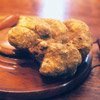
Italy's prized white truffles are so few and far between this autumn that prices have soared and some restaurants are being forced to take them off the menu.

White truffles, which are rarer and more pungent than black ones, are pricey at the best of times. But unusually dry weather this year has made it hard for the humidity-loving tubers to grow, making them even more exclusive.

At the Truffle fair in Alba prices are as high as 7,500 Euro kg. That translates to about $ 5,500 a pound. Just sniffing their perfume this year will cost you $50.

Experts say that the long hot summer coupled with steady winds in truffle-growing regions has meant the tubers have not had the underground conditions in which they develop best.

Nestling in the roots of about 50 trees - mostly oaks but also hazels, poplars, mulberries and willows - truffles are rooted out by specially trained dogs.

The average weight of the few white truffles harvested so far this year is only 150 grams, while in other years 300 grams has not been unusual.

Despite the high prices this year, the white truffle's appeal appears undiminished. As proof of this, truffle farmers note that for the first time ever there will be a delegation of Chinese buyers at Florence's international truffle auction on December 1.

Tags:

Labels: , ,

Read the Full Story...

Wednesday, September 12, 2007

Piemonte is Wine, Castles, and great Food – Hotel Castello di Sinio

Piemonte has it all; great wines, extravagant culinary compositions, cheeses, tartufo and culture. Usually you will have to visit at least a couple of different locations to get the full immersion in true Italian life. In the land of Nebbiolo, Barolo, Barbaresco and Barbera you can find it all together at the Hotel Castello di Sinio. Hotel Castello di Sinio is a renovated Medieval Castle nestled in the hills of the Langhe.

The XII century castle maintains the allure of times past while offering modern amenities. The hotel has 18 rooms furnished with epic furniture. The floor to ceiling stonewalls and heavy chestnut beams create an atmosphere of opulence and protection. Beds are all extra large with double mattresses and are fitted with down comforters, one for spring and one for winter. All rooms have large private bathrooms with spacious glass shower stalls, beautiful stone tiles and completely modern fixtures and electricity. You will find we have the most up to date conveniences such as individual room heating and air-conditioning, satellite TV, direct dial telephones, Internet & fax to make your stay ultra comfortable and hassle free.

The restaurant provides traditional regional cuisine with the flair of a King’s court. Denise and Jay, the restaurant owners and chefs, open from Thursday through Sunday. Denise tells of their passion:

“Our menu selections tend to be limited but are always prepared with the finest ingredients we can find. While the fare is very, very traditionally Piemontese it almost always holds some surprises of less well known recipes or combinations that have been inspired from research and always based on precedence. From ancient Piemontese rural recipes that we love resurrecting to hidden mountain valley traditions to the cuisine of nobility that comes straight from the royal court of the House of Savoy (the long time rulers of Piedmont), we strive to add a memorable dimension to your Piemontese enogastronomic experience.”

The wine cellar includes some of the best wines in the world. Interestingly the hotel has brought in Wine Specialist and Author KERIN O'KEEFE. Once a month she takes hotel guests to the major vineyards and producers in the area. Hotel Castello di Sinio is located right in the heart of the Barolo and Barbaresco wine producing areas. The area is home to about 750 wineries that produce 2 of the 10 most important wines in the world. The Castle is located within 5 to 10 minutes of all the major Barolo producers and within about 20 minutes of all the major Barbaresco producers.

The Hotel Castle di Sinio is the perfect destination to live and learn the Piemontese lifestyle. It is a great base. Within a few minutes by car there are 100s of marvelous unknown restaurants and 100s of wineries. Cultural events like the symphony and opera are just a few minutes away in Alessandria. The views of the hills of the Langhe are truly unique. It is a great place to hide from the world and rejuvenate the soul with great food and wine.

Hotel Castello di Sinio
Vicolo del Castello 1
12050 Sinio (CN)
Piedmont, Italy
Telephone: 0173.263.889

ags:

Labels: , , , , ,

Read the Full Story...

Saturday, July 14, 2007

Agriturismo Villa la Favorita –Alba – Wine, honey, and Cucina Piemontese

Piedmont is a great fall and winter vacation destination. The Italian Alps just a short drive away, some of the best wines in the world concentrated in a small area, honey farms on most every hill and some of the most refined Italian cuisine with wild game, hearty roasts and sauces, tartufo and cheeses that will knock your socks off. If that were not enough there is an agriturismo, located about one mile from the city center of Alba, that offers all of this in one place. Agriturismo Villa la Favorita is a little known agriturismo on the road to Cherasco.

The primary residence was built in the early 900s and recently restructured to permit guest. The agriturismo is located on 10,000 mt2. Most of the land is planted with fruit trees and grapevines. This is the land of Nebbiolo. Villa la Favorita produces Nebbiolo d’Alba and Grignolino Piemonte. This is a family owned and operated agriturismo. Signora Roberta greets her guests with a wonderful and comforting smile. A quick tour around the kitchen and common areas and it is off to your room, one of only six, with a view of ancient Alba.

The day’s activities start with a luxurious breakfast of fresh fruits, obviously from the farm, warm breads and other local sweets. While you are enjoying your coffee on the lemon grove terrace you can plan a trip to the winery, a daytrip to Barbaresco or Barolo, a day in the vineyards, a visit to the honey production facilities, or rent bikes or scooters to check out Alba. How about a day with Sally? Sally is a truffle dog. Most of the year she is a playful companion but from September to December she will accompany you in search of the best truffles in the world.

Be sure your plans include returning to the Agriturismo by early evening. Villa la Favorita offers cooking classes for groups of 4 to 8 people. The recipes are traditional Piemontese and will be your dinner accompanied by the agriturismo’s wine. If this were not enough you are just a hop, skip and jump away from Barbaresco and Barolo.

Villa la Favorita is a great little place made better by the presence and passion of the owner. It is an opportunity to immerse yourself in the culture of Alba and enjoy the balance of the land, the food, the wine and obviously the new friends you will make.

Tags:


Labels: , , , , ,

Read the Full Story...

Thursday, June 28, 2007

Dolcetto d’Alba Enzo Boglietti 2005

We stopped by friends just for a quick hello and the rains came. Flash floods are common here in Dallas when it does rain so we decided to drink a glass of wine while we waited for the bad weather to pass. We usually will drink a Pinot Grigio as an aperitif but the section of the cellar cuddling our bottles of white was unusually barren. Al delved into the cellar, emerging with a bottle of red. His choice was perfect, a young Dolcetto d’Alba by Enzo Boglietti from 2005. Traditionally we reserve red wines for dinner but a young Dolcetto d’Alba could be mistaken for a new wine.

I found Dolcetto d’Alba Enzo Boglietti 2005 to be fresh and a bit fruity. It was surprisingly smooth with a pronounced flavor of Bing Cherries. A young red will often have an underlying acidity, a characteristic pleasingly absent. A year in the cellar should allow this wine to mellow and become a fantastic dinner wine. Young, as it is, Dolcetto d’Alba Enzo Boglietti 2005 will be perfect with fish recipes without cream sauces, white meats and grilled vegetables. We broke out some dark chocolate. Without a doubt this combination was right on target.

I always look for other’s reviews when writing about a wine. Village Corner wrote this review in January.

"WT012407-14. 05 DOLCETTO D’ALBA, ENZO BOGLIETTI - (ITALY) Sweet and polished fruit, dense, ripe, plummy. Ample oak. Warm spices. Ambitious./ Again, plentiful oak. Black currant and black cherry fruit flavors. Great acidity. Zesty, flaired style of the varietal. Ripe and racy, with a lively edge. Very assertive and penetrating. A classy presentation with varietal faithfulness and fine oak extras. 16.3+. "

I do not agree with the wide range of adjectives and did not find either the acidity or complexity they indicate but we both agree that this is a fantastic little wine to keep in the cellar. It can hold many positions. It can be an aperitif for those who do not drink whites, a red wine with fish or white meats and age elegantly for a couple of years for more savory dinners.

Grape: Dolcetto d’Alba.

Color: Intense ruby red.

Bouquet: Young and fruity.

Flavor: Bing Cherries with a hint of tannins.

Alcohol: 13.5%.

Serving Temperature: 16-18 c.

Aging: 2 to 3 years maximum.


Tags:


Labels: , ,

Read the Full Story...

Wednesday, November 15, 2006

Dolcetto D’Alba – A Red Wine genuine as the land itself

Red wines, White wines, Rose’ wines there are so many choices. Italy alone produces over 2,000 varieties of wines. Everyone in the world is producing wine. Some of these wines are good some are not. The difference is the reason for which the wine is made. Many experts will say that the industrial techniques used today make better wines. The flavor, from year to year, is more consistent. They are not cloudy, they can be made faster, cheaper, better. It reminds me of the soundtrack for the Six Million Dollar Man, obviously followed by the Bionic Woman. Certain parts of the body may have been stronger and faster but what separates Man from Beast, the capability to reason, cannot be changed. To think of it, I am reminded of athletes on steroids, sure they may hit the baseball farther but they grow breasts and their ‘palle’ shrink. Perhaps we are not as advanced as we think we are. Perhaps, this is just a thought, the techniques and processes developed over thousands of years of passionate artisans are better than what we have created in the last years with all of our technological breakthroughs.


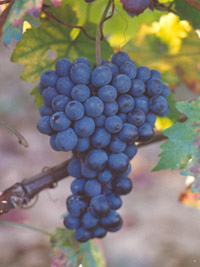
Dolcetto D’Alba is both a vine and a wine. Grown, produced and bottled in a small area in Piemonte, land of Nebbiolo, Barbaresco, Barolo, Barbara, Arneis and Moscato. Dolcetto means ‘a little sweet’ however this wine is anything but a sweet wine. It is not widely sold outside of the region although it does have its passionate fans. Dolcetto is an antique vine. Grown early in the Roman Empire, Dolcetto is a farmer’s wine. It is an everyday wine, often bottled at home or directly by the local trattoria and served in bottiglioni, 1.5 liter bottles with a pressure cap.

Its color is deep ruby red with intense purple highlights in the foam that forms when pouring. The bouquet is that of fresh wine, intense and fruity. The flavor is that of mature fruits, Bing Cherries and dark Prunes. The taste is that of the earth, dry and full bodied, slightly bitter with a hint of acidity and a harmonious finish. In Cuneo it is served slightly below room temperature. I have seen the bottle placed under running well water about ½ hour before serving. Not as cold as a white, maybe just a couple of degrees cooler than an aged red.

This is not an industrial wine. Its flavor will fluctuate from year to year but it will always be good. It is one of those wines that you drink with dinner, you never really notice the wine but everything just seems right. Best of all it is a good value. A full bodied red wine that is priced like a white. Dolcetto is not spectacular, nothing to write a book about, just a good, everyday wine. Pair this wine with just about any fall or winter dish. Red meats, roasts, pasta with red sauces are all good matches.

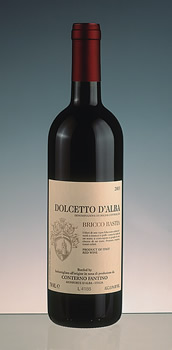
I have tried the Prunotto, Bricco Bastia by Conterno Fantino, Bricco Maiolica and the Elvio Cogno. They are good, good to the last drop.

Tags:

Labels: , , ,

Read the Full Story...

Tuesday, June 20, 2006

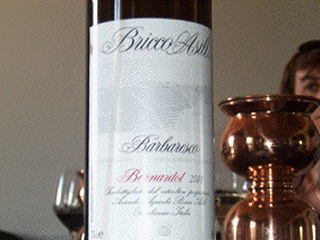
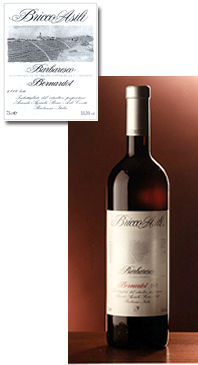
Bricco Asili Barbaresco Bernardot 2001 – A perfect wine for a savory meal


Bricco Asili Barbaresco Bernardot 2001, owned by the Ceretto group, is a great wine. To understand why this wine is perfect for wild game, strong aged cheeses and savory red meats I want to take you through our experience. Bricco Asili Bernardot is a new wine for us although we were fairly confident that it would be a good choice because it is part of the Ceretto family and a Barbaresco which is one of our favorite wines.

Rarely do we wait for a red wine to decant properly before tasting it and this time was no different. About 5 minutes after popping the cork both Raffaella and I had a half glass in hand. We sniffed and sipped. Immediately we picked up a taste of mature fruit, probably dried prunes, and a bit of tannins. This wine needed to breathe.

We set the glasses aside and chatted about the preparation of the Pheasant. About ½ hour later, as Raffaella began cooking dinner, we sipped a bit more on our half-filled glasses. The mature fruit taste had become dried flowers. We thought and the first thing that came to mind was Chamomile, rather pronounced but not dominating. The tannins had subsided a bit and an aftertaste of citrus became evident. At this point we were somewhat concerned about our choice of wine for dinner and in unison commented that the Ceretto Monsordo we had a few night earlier was a better wine.

Raffaella placed the Pheasant on the table and we sat down to dinner. I filled both our glasses. The Pheasant was lovely, savory, not dry and the sauce was a delicate balance to the wild fowl. Another sip of wine, I thought, “wow the wine is good.”

I looked at Raffaella and could see that she was thinking the same as she quickly took another sip as if to confirm what her mouth was telling her. Another bite, another sip of wine and our discussion about the wine swung into full force. The Pheasant was marvelous but we were complete taken by the transformation of this wine. Each sip completely cleaned the palate, accentuating the flavor of the Pheasant as if each bite were the first. By this time we were both in agreement that the Monsordo would not have been a good match for the wild fowl and how wrong we had been with our initial considerations of this wine.

By the time we had finished dinner the wine had mellowed considerably. A slight hint of tannins and while the Chamomile was still the primary flavor it no longer was as evident. Interestingly as we continued to sip our wine after dinner, each sip brought back the sensations of the Pheasant and the Bay leaves. It was as if our dinner continued, without the calories or the sensation of eating too much.

Our experience is a testimony to the importance of choosing the right wine to accompany dinner. I would not offer this wine for before dinner drinks but this is a great wine, perfect for a hearty or savory meal.

Grape: Nebbiolo.

Color: A brilliant ruby color, with orange highlights in the fingernails

Bouquet: Rich and complex, ripe fruit and liquorices, balsamic and a finish of delicate oak.

Flavor: Earthy, tending toward dried flowers with a hint of Chamomile.

Alcohol Content: 14 %

Serving Temperature: 18-20 c.

Decanting: 1 hour.

Pouring: No special conditions.

Glass: use a clear wide bellied, deep, stemmed glass. This will allow the wine to continue to breath and will release its aroma as you move the glass toward your mouth. This will allow the wine to continue to decant.

Tags:

Labels: , , ,

Read the Full Story...

Saturday, June 17, 2006

Monsordo Bernardina Ceretto 2000 – Designer Red Wine

Monsordo Bernardina 2000 by Ceretto, an Italian red wine with an excellent price/quality relationship. This designer wine is part of an innovative project Ceretto began in 1987. Very similar to the concept of the Meritage wines initiated in the US, Ceretto believed it was possible to introduce new vines even into the Alba area and create a quality wine not based on percentages of grapes but on the mixed final product. Monsordo is an Italian Meritage of excellent quality.

This wine is a break from Italian tradition for quality wines. The process is quite interesting. Four different grapes are grown in the same vineyard, the traditional Nebbiolo and the new entries Pinot Nero, Cabernet Sauvignon and Merlot. The 4 varieties are fermented separately. A common methodology is pursued; that is, a thermo-controlled fermentation in stainless steel tanks for 12-15 days, while transfers and punch-downs are taking place.

After the draw-off, the wines are allowed to breathe for 2-3 days. Then the wines are transferred to small barrels, where fermentation begins. Once this important bio-chemical transformation is complete, the blending takes place. The individual wines are then tasted and mixed to find the right balance. The wine never has the same percentages; rather, the proportions of each wine vary from year to year, depending on each grape's character in a given vintage. Then 16-18 months of refinement are required before the wine is bottled.

Raffaella prepares Gnocchi every week and this was Gnocchi day. Sausage, fresh peas in a heavy cream sauce a balanced but structured wine would be appropriate. We had been looking forward to trying this new Ceretto wine from Piemonte and this was a great opportunity. Raffaella was cutting the Gnocchi into small pieces with a pastry knife as I popped the cork. I smelled the cork quickly and brought it to her. She interrupted her preparation briefly, took a deep sniff and her eyes lit up. Raffaella’s reaction is kind of a dynamic wine spectator scale. The more excitement in her eyes the better the wine. If someone were to witness us during this process they would surely think we were trying to block some type of nosebleed with the cork.

Structured red wines require a bit of time to breathe, losing a bit of the bite from the tannins and balancing the flavors. Rarely do we allow the wine sufficient time before our first taste. This time was no different. Two glasses poured as the toc toc toc of the gnocchi being drained in the ladle signals time for dinner. A quick sip, a moment to reflect, and yes we have another winner. Monsordo Bernardina by Ceretto will be a perfect compliment to our dinner!

However unusual the process, the wine is great. It was encompassing, slightly tannic, and structured. The Nebbiolo and Cabernet Sauvignon balanced perfectly for a full-bodied, encompassing, velvety and soft sensation. Monsordo Ceretto 2000 can be found between 30 and 45$ depending on the location. Although it is a bit higher in price than what we would consider an everyday wine, it does merit regular consumption and should be a part of every cellar.

Grape: Nebbiolo, Cabernet Sauvignon, Merlot and Pinot Nero.

Color: A deep ruby color, with orange highlights in the fingernails

Bouquet: rich and complex, clear notes of rose and violet, and a strong finish of spices and vanilla.

Flavor: Mature fruit, peaches, cherries, prunes, raspberries, juniper with hints of orange blossom transforming into a finish with a distinct flavor of leather.

Alcohol Content: 13.5 %

Serving Temperature: 18-20 c.

Decanting: ½ hour.

Pouring: No special conditions.

Glass: use a clear wide bellied, deep, stemmed glass. This will allow the wine to continue to breath and will release its aroma as you move the glass toward your mouth. This will allow the wine to continue to decant.

Tags:

Labels: , , , , ,

Read the Full Story...

Wednesday, January 25, 2006

Alba – Tartufo, Wine, and Beautiful Women

The heavy sweater is perfect tonight. The days are still rather warm but in the evening the air cools considerably. The air is filled with the perfume of tartufo. This is the season. I have always loved tartufo and during my years in Senigallia I had the opportunity to visit a very unusual restaurant. It opens in October and closes in May. The owner has decided that he will only serve the locals so he closes for the entire tourist season. In month of October he only serves plates with tartufo. The Marche have the red tartufo, it is great but does not have the same intensity of white tartufo. Still, I was hooked, risotto with tartufo, tagliattelle with tartufo, omelets with tartufo, and mushrooms with tartufo!

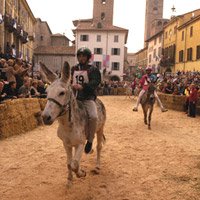
When I talk with most Americans about tartufo they talk about France and pigs, but the true home of white tartufo is Alba. The Italians use tartufo dogs, not pigs, to find their tartufo. This is such an important event that there are 3 weeks of festivities around the fair of tartufo. The international market for tartufo has its base in the fair of tartufo in Alba. “I trifolao”, or “those who search for tartufo” for us non Torinesi, survivors of nights deep in valleys and secret caverns present their white gold on the tables of the markets of the fair. These treasures of the earth are ready to excite our senses and accentuate the flavors of typical piemontese cuisine.

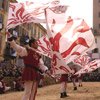
The week before the fair of tartufo there is the contest of “La Bela Trifolera”. We have been doing some window-shopping in the city center while we wait for the local beauties to show their stuff. The parade continues through the antique city center. The air has a bite to it and every once in awhile a shiver runs down my side. Alba is a beautiful city, the buildings near the castle are hanging the banners from the 1600s when Alba was the most powerful town in the region. You can see the influence of the kingdom of Genova with whom the Albesi had a close commercial and military relationship.

We decide to walk to dinner, taking in the remnants of Roman architecture from 100 BC. The wealth of this medieval town is evident in the rich architecture spanning 700 years, the castles, the churches with breathtaking affresco, and the exclusive shopping. The annual fair of tartufo does not start until next week but the restaurants are all serving local specialties. We choose a small osteria in piazza Savona. The waiter brings us the menu’ however we immediately let him know that we want whatever they feel is best.

“Tajarin”, a local pasta, with a delicate mushroom sauce and grated tartufo followed by “Coniglio all’Arneis”, rabbit in an Arneis sauce. We choose, to accompany this delicate, yet savory meal, a 1997 Barbaresco. We have eaten too much, fortunately the hotel is just down the street in Corso Asti; we need our rest. The weekend holds visits to the wineries of Barbaresco, Barolo, Barbera and Roero Arneis and next week the Fair of Tartufo. This is the way to visit Piemonte, late September and early October in Alba, the fair of tartufo and visits to the wineries, life is tough…

Tags:

Labels: , , , ,

Read the Full Story...