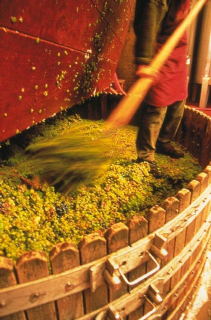
Saturday, March 03, 2007

Pierbacco – Restaurant Wine Bar – Experience the Balance of Food and Wine

In the Tuscan region, on the coast, is the town of Castiglione della Pescaia. Most likely this destination will not be on your vacation itinerary but you should think about this one a bit. Aside from the great views, marvelous beaches, fantastic sailing and sumptuous wines, the food is an experience in provincial Tuscan cooking. Tuscany has many marvelous restaurants and Agriturismo but Pierbacco in Castiglione della Pescaia has an interesting twist. Just like our wine and cheese place in Rome, Pierbacco is known for its selection of wines.

The cellar offers wines from the entire Italian peninsula. It is an opportunity to consume fresh fish, perfectly prepared, with just the right wine. Often our dinner is more about the wine than the food. Pierbacco has a tasting room where you can initiate your evening with appetizers and some little known wine, expertly chosen by the competent staff. If you are still hungry, move on to the dining area for Mazzancolle in Crosta or Filetto di Orata with cherry tomatoes and olives. This is definitely not the place to start your diet. Conclude the evening with a selection of desserts and pastries masterfully served with a wide selection of dessert wines.

Pierbacco is an experience in culinary passion. I am all about the food and wine and this is what Pierbacco means. If you have a question about how something is prepared or what that particular flavor is, do not be afraid to ask. Perhaps you just want some pointers on Italian cooking the chefs will be talk and perhaps let you see how they prepare things. The atmosphere is relaxed but refined. The staff is friendly and knowledgeable. These characteristics make Pierbacco a marvelous stop during your stay in Tuscany.

Ok, enough about the traditional eat here, visit there. Pierbacco is an example of what makes Italy so interesting for a growing number of Americans. It is the vision and passion of family. Pierbacco is an attempt to make really good food and pair it with a fantastic selection of wine. It is the future for their children. It is family relayed over generations. There are thousands of marvelous places to eat in Italy, thousands expressing the passion of life. Pierbacco is the not famous. It is not the place where thousands will come from around the world. Pierbacco is a great place to experience the culture and history of Castiglione della Pescaia.

Corso della Libertà 24
58043 Castiglione della Pescaia (GR)

Phone: +39 0564 933522

mail: info@pierbacco.it

Tags:

Labels: , , ,

Read the Full Story...

Thursday, February 08, 2007

Monreale - Palermo - The Pearls of Sicily

The Pearls of Sicily are locations that are known worldwide as places that offer a unique vacation experience. Monreale, just outside of Palermo, is one of the top vacation spots in Sicily and to hear some, in the world. Monreale is located on the slopes of Monte Caputo and dominates the valley home of the citrus groves of Palermo in the “Conca d’oro”. Since the time of Arab domain, Monreale has been an important strategic location. It controls the only passage from the Port of Palermo into the center lands of Sicily. It gained further importance during the Norman rule when Gugliemo II was in a fierce political battle with the Archbishop of Palermo Gualtiero Offamillio. The Norman built a cathedral and monastery, today known worldwide as one of the most important examples of Norman architecture, and fortified them with “fighting Monks.”

The trip from Palermo is brief. The view is extraordinary winding through the valley and up Monte Caputo. This is one occasion where renting a car can be a good idea. Personally I would ask the hotel to arrange a driver but the drive is marvelous.

The history and culture of Monreale is rich in deep. Every corner of this beautiful city provides an opportunity to immerse yourself in another time. The Cathedral of Santa Maria la Nuova is an interesting stop. The cathedral is home to the international competition of church choirs. A visit during this competition will give you goose bumps no matter what your religious tendency may be. Monreale is a tourist destination, so stay away from the cheap souvenirs.

Monreale is known for its ceramics and Mosaics. Pieces of ceramic tiles and stones are positioned together creating beautiful, elaborate works of art exploding with color. The masters of Monreale were employed in the villas of the wealthy from Morocco to Rome. Today some of youth of Monreale have taken up the antique art, learning from their fathers in long apprenticeships. It is fascinating to watch these artists work. If you are “simpatico”, that is the artist likes you, he may sell you something he is working on. Do not be offended if the artist does not sell his workmanship. It is all about passion and very personal.

The local foods and wines are the true protagonists of Monreale. Sicilian wines from the inner valleys and hills of Sicily make their way onto the tables of the restaurants indicated simply as Vino della Casa, often served in glass pitchers. Be sure to try the Panelle, Pane di Monreale, Reginelle con Sesamo, Quaresimali with Almonds and the Algerini with powdered sugar. Numerous stands and kiosk are located on the street corners selling these traditional Sicilian treats. I usually stay in Palermo but try to eat at one of my favorite places, the Taverna del Pavone close by the Cathedral. The owner/chef is Marcello. He prepares traditional Sicilian dishes where the Arab influences are easily identified. It is an experience in culinary vacationing.

Tags:

Labels: , , , , , ,

Read the Full Story...

Wednesday, December 06, 2006

Passion for Life – Passion in Wine

Recently Raffaella and I, along with a friend, had the opportunity to participate in the pre-opening presentation of a new Central Market. Central Market is a homegrown version of Whole Foods. Each has their strengths. We shop Whole Foods for meat and Central Market for Cheese and wine. Both stores have fresh fruit and vegetables, attempting to source locally, where possible. The presentation was done very well. It is most likely apparent that I strongly support any attempt to improve the quality of food and to bring the production of our food sources back to a local level.

As we walked through the store, danced to the Jazz band and marveled at the mimes, we met some interesting people. People passionate about their life. One such gentleman, a computer software salesman, had just started a small winery in Oregon. As we talked and he expressed his dream to create something of value, I told him of a good friend, a powerful investment banker, who, after 9/11, left his investment career and started a winery in Maryland. He felt life meant more than just accumulating numbers in a bank account. He and his family wanted more. His winery is successful. He produces a quality wine sold only in local restaurants.

This gentleman asked me what I thought of his idea. I tried to express what I had learned from the family producers in Italy. I encouraged him not to try to compete with the Gallo or Yellow Tail type producers. Their model will always be the McDonald’s concept. The same thing every year, lower the quality to produce consistency at a cheap price. A newcomer cannot compete in this market.

Wine is a combination of good land, a good growing season, knowledge, and a tremendous passion. I suggested he forget the industrial production methods, risk the wine clouding a bit, take more time, and always work for the best quality he can produce. In this way he acquire a following, even in the years when the weather is not favorable. Most importantly he has to love what he is doing. Each harvest is a new child to be nurtured, followed with fatherly attention, and loved for its natural characteristics.

This morning Italian Wine Guy wrote about a couple of passionate winemakers from Veneto. Without knowing them personally I can see their passion in the photographs, I understand their way of life and what makes them tick. They are the artisans, the masters. They are not the most profitable of wineries, nor the most famous, but they, or should I say their grandchildren, will be there, producing quality wines, long after the Yellow Tail and Gallo have been forgotten.

Quality of life is about balance. Good food, good wine and good friends are what make us happy. They are our memories, the things we hold on to in difficult times. Quality of life is passion for who you are and what you do. Good wine, which cannot be rated on some arbitrary wine spectator scale, is a compliment to a balanced life. Are you doing what you are passionate about?


Tags:

Labels: , , , ,

Read the Full Story...

Wednesday, November 29, 2006

Schioppettino – Heirloom Red Wine of Friuli

Schioppettino is a marvelous red wine from the hills of Friuli. It is the perfect combination for the hearty red meats and wild game of Friulana recipes. In the 80s this wine was all but lost. There were even “Experts”, who I will leave unnamed, who promoted the expansion of the hybrid grapes over the “indigenous wines of little value.” Just seventeen years ago, the master sommelier considered Pignolo, Refosco di Faedis, Refosco di Rauscedo, Ribolla nera (Pocalza or Schioppettino), grapes of little value. I guess this should give an indication about how valid the international ratings are.

Schioppettino or Ribolla Nera is grown primarily in Prepotto, near Udine, and a small area around the little town in the hills of Friuli. This vine was almost extinct during Italy’s movement toward huge volumes, industrial processes, and lower quality wines of the 70s/80s. By the early 90s many of these industrialists saw their sales plummet and their companies bankrupt but the damage to the indigenous vines had already occurred. A few family owned wineries, relatively small in volume but big in expertise, including my favorite Ronchi di Cialla, kept the vines alive and did not follow the latest fad of the “Experts.”

Scoppiare means to explode. Schioppettino is the wine of a thousand little explosions. The fermentation of this heirloom red wine is completed in the bottle. This traps CO2 in the wine, similar to the Prosecco or Champagne processes, in the wine. This is a simple wine with bubbles and high acidity. It is produced in such limited quantities that few international importers will consider stocking this wine but its taste of wild berries and acidity make it a fresh compliment for Deer, Lepre, Wild Boar and other provincial recipes. A fantastic table wine with a reasonable cost, this can be an everyday choice for savory or gamey dishes.

Do not forget the “Festa del Schioppettino” held annually the last week in April!

Grape: Schioppettino also known as Ribolla Nera.

Color: bright red with a hint of violet towards the edge.

Bouquet: wild blackberry and raspberry.

Taste: dry, zesty, with low alcohol content, pleasant to drink, bubbly and inviting.

Alcohol Content: from 12.5 to 13.5 %

Serving Temperature: 16-18 c.

Decanting: None.

Pouring: No special indications.

Glass: Red wine glass.

Aging: This wine can age but is ready to drink once it hits the shelves.

Tags:

Labels: , , ,

Read the Full Story...

Wednesday, November 22, 2006

Ribolla Gialla – A little known Connoisseur’s delight

Ribolla Gialla, known as Ribuele to the Friulani and Re’bula to the Slovenians, a Heirloom Wine from the NorthEastern Italian region of Fruili is a gem of a wine with a taste of Oak, Chestnuts and Acacia flowers. Not much is written about this antique wine. Its lineage is traced back to the 1300s but this wine is reserved, quiet and grown only in the Oriental hills of Friuli. It is thought, because the origins of this vine is clouded in the fog of time, that the grape was brought to Friuli during the Roman Empire and that its progenitor is Avola vine.


Historians believe that Ribolla Gialla is, in fact, indigenous. Their studies indicate that Ribolla Gialla already documented in the XII century is actually the “Rabiola”, a wine widely consumed during the reign of the Serenissima of Venice. In the 1300s, this wine crossed the borders of Friuli. Both Austrian and German Connoisseur heralded the “Rainald” as a marvelous wine.

Ribolla Gialla is of limited production. It can only be grown in its native soil. The region stretches from Tarcento to Istria. It must be grown on the hillsides and will not grow in the plains of the same regions. Experts do not fully understand why the vine is so tied to the soil of this region. They believe that it must have something to do with the microelements in the soil and the distinct climate formed on the slopes of Collio.

This wine was almost lost to humanity in the period from WWI through WWII. Friuli was an intense hotbed of fighting. It acted as a defense between Italy and Austria. The results was the almost complete annihilation of the region, including the vineyards. It was not until 1968 that Ribolla was producing sufficient quantities to be recognized as a DOC.

Thank goodness for the passion and fortitude of the Friulani who rebuilt their lands and restored their heritage. In every sip of Ribolla Gialla you experience the character of the Friulani. Passionate and complex, Ribolla Gialla is a perfect match for velvety soups, before dinner drinks, fish entrées with sauces and fresh cheeses.

Grape: Ribolla Gialla.

Color: Deep straw yellow, with slight greenish highlights.

Bouquet: Chestnuts, Oak and Acacia Flowers.

Taste: Dry, zesty, with average alcohol content, pleasant to drink and inviting.

Alcohol Content: from 10.5 to 11.5 %

Serving Temperature: 10-12 c.

Decanting: None.

Pouring: No special indications.

Glass: White wine glass.

Aging: Not applicable.

Some great Ribolla Gialla Producers:

1° - Collio Ribolla gialla Doc Tercic Matijaz
Località Bucuie, 9 - 34070 San Floriano del Collio (Gorizia)
tel. 0481 884193 - fax 0481 884193

2° - Collio Ribolla gialla Doc "Gmajne" Primosic
Via Madonnina d'Oslavia, 3 - 34070 Oslavia (Gorizia)
tel. 0481 535153 - fax 0481 536705

3° - Collio Ribolla gialla Doc Pascolo Giuseppe
Località Ruttars - 34070 Dolegna del Collio (Gorizia)
tel. 0481 61144 - fax 0481 662163

4° - Collio Ribolla gialla Doc Il Carpino
Via Sovenza, 14/a - 34070 Oslavia (Gorizia)
tel. 0481 884097 - fax 0481 884205

5° - Collio Ribolla gialla Doc Attems
Via Giulio Cesare, 36/a - 34070 Lucinico (Gorizia)
tel. 0481393619 - fax 0481 393162

6° - Collio Ribolla gialla Doc Venica & Venica
Località Cerò, 8 - 34070 Dolegna del Collio (Gorizia)
tel. 0481 61264 - fax 0481 639906


7° - Collio Ribolla gialla Doc Ronco di Zegla
Località Zegla, 12 - 34071 Cormons (Gorizia)
telefono 0481 61155 - fax 0481 61155

8° - Collio Ribolla gialla Doc Draga
Località Scedina, 9 - 34070 San Floriano del Collio (Gorizia)
tel. 0481 884182 - fax 0481 884182


9° - Collio Ribolla gialla Doc Terpin Franco
Località Valerisce, 6/a - 34070 San Floriano del Collio (Gorizia)
tel. 0481 884215 - fax 0481 884215

10°- Collio Ribolla gialla Doc Ronc Alto
Via Montarezza, 33 - 33048 Dolegnano (Udine)
tel. 0432 757173 - fax 0432 757690

Tags:

Labels: , ,

Read the Full Story...

Wednesday, November 15, 2006

Dolcetto D’Alba – A Red Wine genuine as the land itself

Red wines, White wines, Rose’ wines there are so many choices. Italy alone produces over 2,000 varieties of wines. Everyone in the world is producing wine. Some of these wines are good some are not. The difference is the reason for which the wine is made. Many experts will say that the industrial techniques used today make better wines. The flavor, from year to year, is more consistent. They are not cloudy, they can be made faster, cheaper, better. It reminds me of the soundtrack for the Six Million Dollar Man, obviously followed by the Bionic Woman. Certain parts of the body may have been stronger and faster but what separates Man from Beast, the capability to reason, cannot be changed. To think of it, I am reminded of athletes on steroids, sure they may hit the baseball farther but they grow breasts and their ‘palle’ shrink. Perhaps we are not as advanced as we think we are. Perhaps, this is just a thought, the techniques and processes developed over thousands of years of passionate artisans are better than what we have created in the last years with all of our technological breakthroughs.


Dolcetto D’Alba is both a vine and a wine. Grown, produced and bottled in a small area in Piemonte, land of Nebbiolo, Barbaresco, Barolo, Barbara, Arneis and Moscato. Dolcetto means ‘a little sweet’ however this wine is anything but a sweet wine. It is not widely sold outside of the region although it does have its passionate fans. Dolcetto is an antique vine. Grown early in the Roman Empire, Dolcetto is a farmer’s wine. It is an everyday wine, often bottled at home or directly by the local trattoria and served in bottiglioni, 1.5 liter bottles with a pressure cap.

Its color is deep ruby red with intense purple highlights in the foam that forms when pouring. The bouquet is that of fresh wine, intense and fruity. The flavor is that of mature fruits, Bing Cherries and dark Prunes. The taste is that of the earth, dry and full bodied, slightly bitter with a hint of acidity and a harmonious finish. In Cuneo it is served slightly below room temperature. I have seen the bottle placed under running well water about ½ hour before serving. Not as cold as a white, maybe just a couple of degrees cooler than an aged red.

This is not an industrial wine. Its flavor will fluctuate from year to year but it will always be good. It is one of those wines that you drink with dinner, you never really notice the wine but everything just seems right. Best of all it is a good value. A full bodied red wine that is priced like a white. Dolcetto is not spectacular, nothing to write a book about, just a good, everyday wine. Pair this wine with just about any fall or winter dish. Red meats, roasts, pasta with red sauces are all good matches.

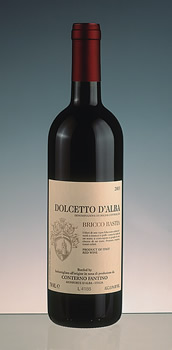
I have tried the Prunotto, Bricco Bastia by Conterno Fantino, Bricco Maiolica and the Elvio Cogno. They are good, good to the last drop.

Tags:

Labels: , , ,

Read the Full Story...

Tuesday, November 14, 2006

Sant’Ambrogio – La fiera dei Obej Obej – Vino Brule’

Che Bello, Che Bello, is the name of an antique tradition of Milan. Dating back to the early 1500s, Sant’Ambrogio, the Patron Saint of Milan, the Bees, Producers of Honey and Producers of Wax, has been a day festivities. The 7th of December is one of the most anticipated days of the year. The 8th is the Immacolata, a national holiday. Each city also celebrates its patron saint by closing the offices and putting on Sagre and Fairs. The Sagra of Milan is the Obej, Obej meaning how beautiful, how beautiful. The fair has been located in the square in front of the Basilica of Sant’Ambrogio for the last 400 years but this year will be moved to the square in front of Castello Sforzesco.


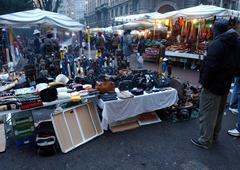
Two consecutive days of holiday, not in the month of August, are just the occasion for a great celebration. Many Milanesi will hit the Italian Alps for some skiing, others will make their way to Liguria for the milder weather, but many of Milan’s 3 million inhabitants will remain at home. It is estimated that in the 3 days of the Sagra more than 1 million people will visit the thousands of bancarelle, street tables, showing their goods. New items, old items, antique books, mirrors and paintings, there are foods of every type, designer clothes, and handwritten and illustrated books.

The Sagra dei Obej, Obej has its own song, proudly exhibited by the native Milanese during the festivities. There is a difference between those whose family hails from inside the circle of the 92 and the Provincial Milanesi. Of course there are the Brianzoli, who call themselves Milanesi but are not. It is in the dialect of Milan and often can be heard at the traditional pubs:


oohhh beej ohh bejjjj
le la fiera di quei più se bei
oohhh beej ohh
bejjjj
ghe nell'aria un profum di tortei
ghe una via piena di pittur
le una festa per i colur
per i rottamate , e per i strasce de milaannnn
de bellè ghe ne gran burdell, se ne ne incutra te spenda poc
e ghe pur
quel del sucher filattttttttt
etc etc etc …
oohhh beej ohh bejjjj

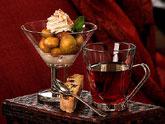
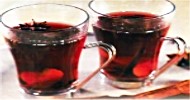
There is also vino Brule’, a welcomed drink during the cold Milan December. Vino Brule’ is an experience. The humidity is always a bit high and when the cold wind blows off the Alps just 40 km to the north, your bones chill. Vino Brule’ is the solution. It is hot, spiced red wine. If in Milan, this tradition is a must, no matter what your age.

Ingredients:

1 liter Red Wine
1/3 cup (100 g.) Sugar
3 Cloves
¼ Nutmeg
1 stick of cinnamon
Peel of 1 lemon

Preparation

In a medium pot pour the wine over medium heat. Stir in the sugar. Add the remaining ingredients. Let the mixture come to a boil. Once the sugar has completely dissolved, remove from the heat and pour the mixture through cheesecloth. Serve hot!

Tags:


Labels: , , , ,

Read the Full Story...

Sunday, November 05, 2006

New Wine – Vino Novello – What is it?

New wine, Vino Novello, Beaujolais Nouveau are all names for farmer’s simple pleasure. Vino Novello goes on sale on November 6 and will be available through February. Beaujolais Nouveau goes on sale the 3rd Tuesday of November and will be available through Easter. Aristide, an Italian wine site, goes into excruciating detail concerning how new wine is made and the legal definition of new wine. Vino Novello also has its own site for the annual Festival in Lecce.

Let me tell you how I learned about Novello. Every year in February I would travel to various wine producing areas around northern Italy. My favorite areas, most likely because they were the first, were around Asti and Alba. After visiting numerous producers and tasting even more varieties of homespun farmer wines I would order a damigiana, that is a 55 liter flask, of wine. Some years I would order just Barbera and Barbaresco. As the years passed and I learned more about wine, I would end up purchasing as many as 5 damigiana of different varieties.


My wife’s extended family members were big Barbera drinkers. They drank Barbara from the province of Alessandria but, if I insisted a little, Giusepe would accompany me wherever I wanted to go. Private vineyards, limited production, knowing the farmer and his passion for wine I would carefully choose my wines. Several weeks later, on the back of a flatbed country truck, my wine would arrive. Down into the cellar it would go and the Almanac would come out. Giuseppe would carefully scan the cycles of the moon and the weather patterns, getting daily information on atmospheric pressure, position of the moon, and wind. While he meticulously plotted the data, I began washing the wine bottles. Between the two of us we needed about 600 750 ml bottles and 50 1.5 liter bottles.

Washing bottles is not an easy task. A large oak barrel is placed in the center of the cellar over a drain. Then the barrel is filled with clean, very hot water, one bucket at a time. A frame is placed over the top of the barrel with a hand wound pump and bristle brush pointing upward. The empty bottles that have been religiously stored in the cellar after their contents consumed are individually place on the brush. Now comes the fun part, turning the hand crank pumps water into the bottle and rotates the brush, scrubbing and rinsing at the same time. Once the bottle is clean the bottle is placed on newspaper, neck down, to drip dry. This process must be completed at least one week before using the bottles, as any residual humidity would ruin the wine. It cannot be done more than 3 weeks early, as this would allow some dust to enter the bottle.

Needless to say this is an incredibly wet and dirty job. The bottles are covered with dust from the walls of the cellar and cobwebs are everywhere. Cleaning is done in the cellar, where, while not as cold as the outside, the temperature is still only about 43 degrees F. This is the passion for wine. Although I did not produce the grapes, I did follow the process, choose the wine, taste hundreds of samples, clean and process the bottles and in the just the right moment bottle the wine. The wine was mine! I would proudly announce it as such on every occasion.

Yes, the day of the moon and the weather, on the day you bottle, can be the difference between a good wine and a great wine. Giuseppe would determine the 3 day period of the moon, and we would watch the weather, no wind and a stable atmospheric pressure are extremely important.

So what does this have to do with Vino Novello?


No matter how much wine you prepared in March by October, the wine was gone or at significantly low levels. This is just before the season when red wine is a must for all of the hearty foods. Yes, you could introduce white wine but, for most farmers, white wine is for women and children. Placing a white wine on the dinner table just would not be right. Thus, the advent of Vino Novello.

Vino Novello is an antique wine although, only known among farmers until the 30s when, the farmers of Beaujolais decided to commercialize the product. Their wine, Beaujolais Nouveau, was a tremendous success. Vino Novello is made from a different process than normal red wines. Some even question if it is wine at all. The difference is in the fermentation process. The grapes are placed in large barrels or vats. They are then closed off and the oxygen is eliminated by pumping in CO2. The natural yeast migrate from the skin of the grapes into the pulp looking for water and oxygen and the fermentation takes place.

All in all, Vino Novello goes from grapes to wine in about 20 days and has a kicking minimum alcohol content of 11 % per volume. What it does not have is tannins. Tannins are the primary preservative in wine. No tannins, the wine will go bad in a short period of time. If the bottle is opened it must be consumed. Vino Novello is appreciated by red wine drinkers with limited supplies of last year’s wine and particularly by those who love white wine but do not like the bite of strong reds.


I consider Vino Novello as grape juice with alcohol.

Generally it is very fruity, sometimes tending toward sweet, and goes down real easy. Often served colder than room temperature Vino Novello can bite you without any signs along the way. One of those wines that seems to go on forever during dinner, so good, and then you try to get up from the table and stumble over your chair.

Vino Novello must not be conserved. It will go bad. In Brianza the last day to consume Novello is “I Giorni della Merla”, the days of the Crow said to be the coldest day of the year. In the rest of Italy, most will agree that Easter is the last day to consume new wine. It is not available until November 6 and will carry the current year as the harvest. So have some fun, pretend you bottled your own wine in March and need something to make it last, drink a bottle of Novello with a Chicken Cacciatora or other hearty meal and have a great evening, preferably at home.

Tags:

Labels: ,

Read the Full Story...

Thursday, November 02, 2006

Italian Grape Harvest 2006 – Best Quality in Decades

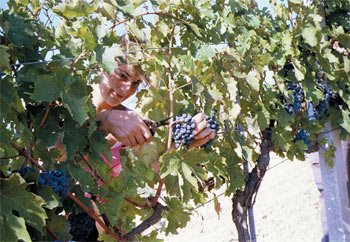
From Cuneo to Trieste and south to Trapani, the 2006 Harvest in Italy has produced the best quality of grapes in decades. According to some, the best quality ever. Quantity is up only between 5-10%, depending on the area. This is unusual because the climatic conditions that create a great grape also create an abundant harvest, 50-60% above normal. I believe the limited production is due to self-discipline by the growers. In fact Gianpaolo Paglia of Poggio Argentiera wrote about how the producers thinned the vines in August.

Terry of Mondo Sapore discusses mass marketing and the innate health benefits of wine, and Italian Wine Guy experiences A Universe of Joy walking in the vineyards. There is something about the vineyards and the harvest. It empowers us, makes us feel invincible and at the same time evidences how unimportant we are. The harvest gives us hope and embraces us and makes us feel secure. It brings us close to mother earth and reminds us to be good stewards of our talents, for all things are fleeting. We are simply a blink of the eye in the time of things and somehow the harvest reminds us that no matter how important we feel we are, we cannot control or change the most important element to our existence, the harvest. Yes we may think that investment banking, President of the US, CEO of GE are the most important things man can do, but I suggest, what would these people do without the harvest? Perhaps they would eat some Artificially Hydrogenated Petrol?
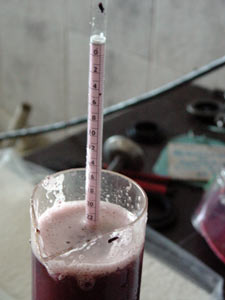
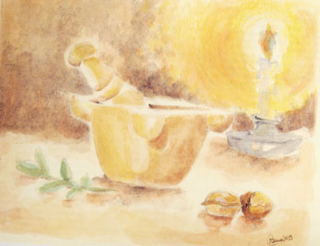
Good wine is natural product. The quality changes from year to year due to the sun, the rain, and the wind. Many industrial producers have attempted to eliminate the ups and downs of the quality of the harvest by oxygenating, filtration, industrial yeasts, adding flavored wood chips, adding sugar and pumping the fermentation process. I see these wines like McDonalds Hamburgers, consistently bad at a low price, across the nation. You do not expect a great hamburger but you know you can go to a McDonalds anywhere in the US and it will be the same bad experience.

I feel that Italian producers are generally avoiding the industrialization of winemaking although the new wave of Designer Wines is definitely a step in the direction of other wine producers in the US, Australia and even France. The 2005 sales data proves that quality wins over quantity as Italy is once again the #1 exporter of wines to the US with 30% of all imports and growth of 9% over 2004 values. But I digress, back to the 2006 grape harvest.

The Italian 2006 Wine production may be the best quality in the last 100 years and may be the best for the next century. It is possible that future years may have a great harvest like this year but, the continuing pressure to industrialize the winemaking process may not allow those future harvests to produce their potential. This may be the year to stock your cellars with the wines you want to have in the future for a special occasion. A chance to taste the Bacco's nectar, as only the Gods can. This is the year to find the wines that will be worth hundreds of thousands of dollars in 50 years. Nature is fickle and times change, unique wines do not happen every day and this year is the year that all levels of wine will produce their best.

The Russian Federation seems to understand that this is an important year. A group of 7 top level individuals have been touring the various regions over the month of October, meeting meticulously with the winemaking cooperatives even in the smallest of areas. The national agencies are all whispering about this year’s quality. The excess wine, usually destined for ethanol production, will not be distilled this year. Gambero Rosso, the primary guide to quality of food and wine, is already taking a position on this year’s wine, even before the Must is prepared.

Save your money, do your research and remember, 2006 on the bottle of Italian wine means something.

A special thank you Poggio Argentiera and Massa Marittima for the photographs.

Tags:

Labels: ,

Read the Full Story...

Tuesday, October 17, 2006

Pigato Bianco 2004 - Colle Dei Bardellini (IM)

Great destinations are the sum of the local experience. It may be the food, the wine, the people, great service, an unusual and unique location, or a feeling of general well-being. Liguria is my favorite place to live in Italy. It is close enough to Milan for work while the climate is beautiful and then there is the sea. The turquoise color water, the cool breeze year round and the small towns built on the cliffs that seem to fall into the sea.

One of the things I do not associate with Liguria, is wine. Liguria is located south of Piemonte and west of Tuscany. You would think that there would be the best of both worlds. I already know that some will immediately talk about Santa Margherita Pinot Grigio. I will not comment on Santa Margherita because I only write about things I like. To the west of Genova there are several vineyards growing the Piemontese Nebbiolo and to the east the Sangiovese from Tuscany. They are ok and with a hearty dish can be appropriate for a table wine, but when I am in Liguria I drink only whites.

It just seems more appropriate to drink white with the cucina Ligure. Whether the meal is Pesto or some great fish based meal, the Heirloom wine from Liguria seems appropriate. Pigato is my choice. Liguria, primarily, produces two whites, Vermentino, which is most often associated with Sardegna, and Pigato. Pigato is not well known and most likely if you see it on the wine list you will not recognize it but this heirloom vine is as unique as it is rare.

The other day was my birthday and Raffaella prepared Ravioli of Asparagus and Chicken in a velvet tomato sauce, an exclusive dish, originally made famous by Angelo Paracucchi and his restaurant in the province of La Spezia, but derived from a local Ligura recipe. We had a couple of bottles of Pigato Bianco 2004 by Colle Dei Bardellini in the cellar, the perfect wine for this traditional dish.

Pigato is a close cousin, perhaps sibling, of the Vermentino grape. It is believed that the vine was introduced into the area surrounding Savona in the 1600s. It is grown only in this limited area and takes its name from the rust colored spots that form on the grape just before harvest. A perfect compliment for numerous dishes including: Mushrooms salads, Stuffed Onions, Crespelle with Mushrooms, Onion Soup, Fresh Pasta or Gnocchi dishes with Pesto, Pasta or Risotto with Mushroom, Shrimp and fish.

Pigato is a dry white wine with a slight acidity but still encompassing leaving an aftertaste of citrus and honeysuckle. While I would not drink this as a standalone it would be a good match for Focaccia Genovese.

Grape: Pigato – Up to 5% can be another white grape as long as it is grown in the same vineyard.

Color: Hay yellow.

Bouquet: Fruity, dominated by apricots and peaches.

Taste: Dry but soft and encompassing. A hint of citrus and peaches followed by a mild but persistent flavor or honey and sage.

Alcohol Content: Minimum 11 %

Serving Temperature: 10-12 c.

Decanting: None.

Pouring: Pour slowly with a 15-20 degree inclination.

Glass: White wine glass.

Aging: Not applicable.

Tags:

Labels: , ,

Read the Full Story...

Sunday, September 24, 2006

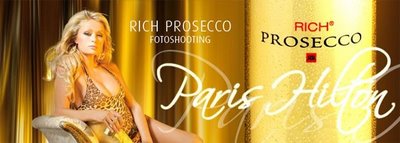
Paris Hilton and Prosecco in a Can!

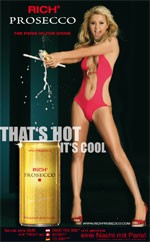
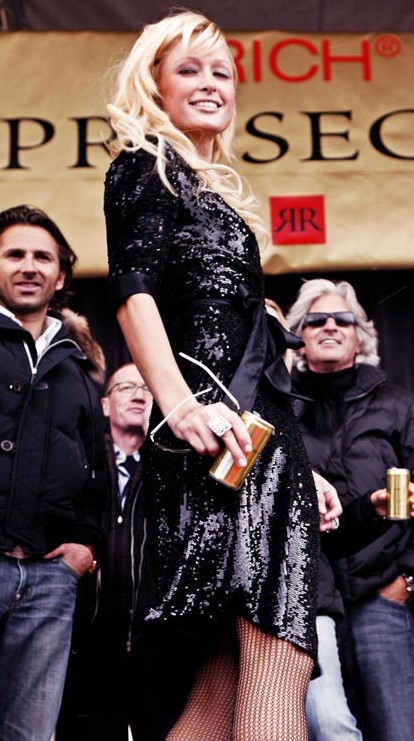
No, Paris Hilton has not be liquefied and bottled for consumption of the mass markets, even though I believe many would like to see that, obviously each individual for different reasons. An Austrian company has taken a lesson from the book of success written by American Businesses, “How to effectively make money through false advertising.” In order to get around EU laws protecting quality products and trademarks the Rich Corporation purchased grapes grown in the Prosecco region of Valdobbiadene and Conegliano and created a wine spitzer carefully naming it, “Sparkling beverage.”

To increase the success of this product the company hired Paris Hilton as the spokesperson, creating an aggressive ad campaign with sexy pictures of Paris Hilton drinking the beverage in a gold can with a straw. The only places I have seen sparkling beverages consumed with a straw, are strip bars across the world. The strippers, who get paid to drink some poor quality champagne with clients, swirl the paper covering on the straw to eliminate the bubbles since they make a percentage of the purchase price of the bottle. Drinking several bottles of bubbly wine in an evening would bloat them enough to rival the biggest of whales!


It is not surprising that the Italian association of wine producers is condemning this product and will move for tougher legislation to eliminate this type of bastardization in the future. I do not see this as a problem in Italy, wine spitzers are a great success with 18-24 crowd but they are not confused about the difference between a wine and a spitzer. It is outside of the European community that the problem may have long term, devastating effects on the producers of Prosecco. Remember this stuff is like Coca Cola with alcohol.

Next year you can expect to find the RichProsecco in all of the hip bars. A word of thought, as you are swirling and sipping this Prosecco spitzer someone will most likely ask you to dance, not on the dance floor but on the table, dollar bills in hand. If your boyfriend offers you a Prosecco in a can, he is most likely trying to tell you something.

Tags:

Labels: , ,

Read the Full Story...

Tuesday, September 12, 2006

Valcalepio Rosso – Blue Collar Wine

The Valcalepio wine region runs east from Como, along the base of the Italian Alps, to the western border of Franciacorta, or the small mountain lake Iseo. I lived in this region for an extended period of time. At one time I was even considering the purchase of a small vineyard and 1700s country house located in the surrounding hills of Lake Iseo at about 600 meters. Bergamo is a hard land, with hard working people and the best “muratori”, brick masons, in Italy. They are known across Italy for their great experience and hardworking attitude and for being, let’s say, brash.


Bergamaschi are no nonsense, value is what you can eat or what covers your head. While tutoring young kids in my early days I was often the last chance for 14-15 year old kids to stay in school. If they did not show a sincere desire to get good grades they were either laying bricks, farming, or working in the manufacturing plants. Their wine is the same. Any given vineyard will have about a 50-50 split of Cabernet Sauvignon and Merlot. This area is subject to tremendous variations in the climate. It is right at the foot of the Alps, the evening breeze flowing out of the Alps during the hot summers was heavenly, but the temperature changes can be extreme.

The environment is not a problem for the great Bergamaschi del Valcalepio. They want a great table wine and more importantly a potent and sweet grappa. They do not need to make a $300 bottle of wine. They want a fantastic $5 bottle table wine to drink after an excruciating day of hard labor. This wine is not modified to be more marketable, the Bergamaschi couldn’t care less, so whatever the season produces is what goes into the wine. Valcalepio will be 25-60% Cabernet Sauvignon and the remaining Merlot. You could say this was the first designer wine. Valcalepio is not well known, even in Italy. Raffaella has never tasted it and her family is from an area only 40 km (28 miles) to the south.

I would be surprised to read a positive review by one of the “important wine people” when discussing Valcalepio. It is just not what they are looking for, although it has an ancient pedigree, it is not suave. Valcalepio is a table wine, variable from year to year, inexpensive, no big marketing campaigns, and the wine is usually produced in a shared winery. Many local farmers support a common infrastructure, bring in their grapes, produce their wine and then take it home. The winery’s infrastructure is then ready for the next farmer. Sometimes groups of farmers will pool their harvest and make a common batch of wine. Either way Valcalepio is just too common to be part of the big name producers.

This is our fortune. Lack of coverage keeps this wine genuine and inexpensive. Valcalepio is a perfect everyday table wine for the hearty dinners of Casoncelli, Maialino all’ Olio, Polenta Taragna, Luganiga, Salamelle and Taleggio, which are part of the Bergamasco lifestyle.

The ten day Sagra dell’uva of Trescore Balneario finished yesterday, the production of the wine has begun, and in just about 15 days the first Vino Novello will be available. Vino Novello is the new wine. It can be consumed until the first hard freeze and is stored in clay vats in the mountain farmhouses. Tradition serves Vino Novello in porcelain bowls on cool autumn nights.

My time in during the harvest was all too brief but it was enough to determine that this will be a good year for Valcalepio. The Vino Novello is worth a taste should you be in the area before December and the regular production will be bottled in March. If you can find a bottle it is an opportunity to try a genuine farmer’s wine, not the royalty of the wine industry, instead the wine of the working man.

Grape: Cabernet Sauvignon 25-60% - remaining Merlot.

Color: Deep red.

Alcohol Content: Minimum 11.5 %

Serving Temperature: 16-18 c.

Decanting: None.

Pouring: Pour slowly with a 15-20 degree inclination.

Glass: Red wine glass.

Aging: Not applicable.

Tags:


Labels: , , ,

Read the Full Story...