Monday, October 08, 2007

Chiaranda’ - Contessa Entellina – Donnafugata

Sicily brings us a Chiaranda’, blend of Chardonnay and Ansonica, an autochthon grape of Sicily. The blend creates an interesting combination of flavors and sensations. Chiaranda’ is a white wine with the body of a red. A full bodied white with dominate tastes of mature yellow apples and high acidity. Less dominant undertones of mature peaches coat the palate. The acidity leaves the mouth clean and ready to taste another bite of food.

Chiaranda’ was first produced in 1992. Ansonica is widely produced as a farmer’s table. The Chardonnay mellowed the wine and added hints of Vanilla and Peanut Butter. Chiaranda’ is a relatively potent wine. The warm Sicilian sun gives Chiaranda’ a constant 13,5-14,0 % alcohol content. Chiaranda’ is a great selection with regional Sicilian dishes like “Cous Cous” (remember Sicily was under Arab rule for several centuries), Pasta alla Norma, Mushroom Casserole, Slow cooked and Roasted Pork and Turkey, and obviously fried and baked fish with savory sauces.

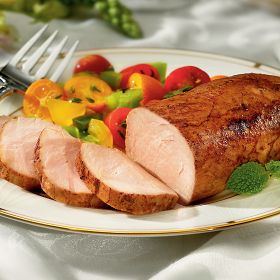
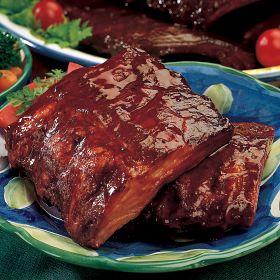
Crown Pork RoastPORK CHATEAUBRIANDSMOKED PORK LOIN RIBS

Donnafugata participates, with Chiaranda’, in the Wine for Life program. Wine for Life is a non-profit that raises money for AIDS care and research.

Grapes: Ansonica 50% Chardonnay 50%.

Color: Intense Yellow

Bouquet: Mature Yellow Fruits.

Taste: Savory full body of Mature Yellow Apples, then mature peaches. Hints and a
finish of Vanilla and Peanut Butter.

Alcohol: 13.5%

Serving Temperature: 11-13 c.

Other Sicilian Wines:

Rapitala 2005 Nuhar - Nero d'Avola Red Wine
Spadina 2003 Nero d'Avola - Red Wine

Tags:

Labels: , ,

Read the Full Story...

Tuesday, October 02, 2007

Pinot Grigio delle Venezie DiFlora 2006 IGT Whole Foods – Great everyday white table wine


The dollar falls resulting in higher prices for European goods. My favorite wines are caught up in this mess. Most domestic wines do not do it for me and I do not want to give up my bottle of wine at the dinner table. Whenever wine is missing it just seems wrong. The more famous Italian white wines available in our local market are too “pushed”. The acidity is too high or they tend to have an underlying sweet base. I like my Pinot Grigio dry and clean. As I have seen MezzaCorona slide higher I have been looking for a substitution. Raffaella and I were shopping at our local Whole Foods and we had a pleasant surprise.

A Pinot Grigio delle Venezie, private lable, was sitting anonymously in the cooled wine section. It was $10 for a 1.5 liter bottle. DiFlora, a name that we had never heard of but if you do not try new things you will not find that great value of an unknown product. Once everyone knows about it invariably the price will rise. I bought two bottles. Raffaella prepared Risotto with Asparagus and Scampi. This would be the perfect chance to try this wine.

DiFlora Pinot Grigio delle Venezie 2006 IGT, a Whole Foods private lable, is a clean, dry Pinot Grigio. It has a mild bouquet of peaches and mature pears. On the palate this wine tends toward mature yellow peaches and has a clean finish. Amazingly the acidity found in most low cost Pinot Grigio is missing. There is just enough bite to clean the palate. I also have what I call the morning after test. Many wines are hard to digest. You can still taste the worst parts of the wine the morning after or your head is in a slight state of confusion. My friend, John the Baptist of Italian wines, says I may have an intolerance of complex sugars found in many “forced” wines. No matter what the reason my morning after test tells me whether or not a wine is produced by traditional or contemporary methods.

This is a great wine for the price. It is the perfect solution both as an aperitif and with light meals. The alcohol content clocks in at 12% so be careful when drinking this chilled wine on warm summer nights. This wine goes down so smooth that you may not realize when you have had too much to drink.


Tags:

Labels: , , ,

Read the Full Story...

Thursday, September 20, 2007

SCIACCHETRA' – A rare and unique white wine

Do not look for this wine on the US or international markets. Sciacchetra’ by Der Vin Bun is exclusive and rare. The latest vintage released only produced about 140 bottles. The number is correct, 140 0.75 liter bottles. The waiting list for this wine is just over 2 years. Sciacchetra’ is not a new comer. The same family has produced Sciacchetra’, in the same way, for over 150 years. Over the years, nobility and the famous alike have sung praises to this hidden jewel of the Cinque Terre in Liguria.


“The grapes are of antique gold, flavoured by the cool sea breeze and dried by the sun’s warm kiss.” The vineyards cling to the cliffs of Liguria overlooking the Mediterranean Sea. Production starts only after a group of elderly Sensata go into the vineyard to taste the drying grapes. The Sensata are local wine experts, a title usually passed from father to son. Only after their blessing can this unique wine be made. Very few bottles ever make it out of the Cinque Terre but there is a way to taste this wine and perhaps negotiate a bottle.

The Der Vin Bun also rents out a small apartment which is little more than a hotel room at 380 square feet. A restaurant, also tied to the vineyard is located underneath. A visit to the Agriturismo di Volastra could result in a bottle of this heirloom wine of the Cinque Terre.

Schiacchetra’ is a slightly sweet white wine. The color is that of antique gold with amber highlights. It is made with the autochthon grape Bosco (70%), Vermentino (20%) and Albarola (10%). Figs, candied oranges and apricots dominate its perfume. On the palate it tends to be slightly sweet with salty undertones as the wine sits in the mouth. The flavour of Schiacchetra’ is surprisingly persistent for a white wine.

I would drink this wine with savoury cheeses (creamy gorgonzola), white pasta and gnocchi dishes, baked or grilled fish and many pesto based dishes.

Grape: Bosco (70%), Vermentino (20%) and Albarola (10%).

Color: Antique gold with amber highlights.

Bouquet: Figs, candied oranges and apricots.

Flavor: Complex with a tendency toward sweet with underlying salty tones.

Alcohol: 14.0%

Serving Temperature: 11-13 c.

Glass: White wine glass.

Tags:

Labels: , ,

Read the Full Story...

Saturday, September 01, 2007

2007 Italian grape harvest down 13% - Wine prices to rise 20%

The lover of old world wines in America is under siege. The falling dollar has significantly increased the cost of imported wines. Mother nature has given the wine lover another blow. The 2007 Italian grape harvest was the earliest in 70 years and the quantity is down 13%. The 2006/2007 winter season was one of the driest in 20 years followed by the hottest April in 50 years. Then came August with its torrid heat and the result is an early harvest and a reduction in the quantity of as much as 50%.

In this scenario not all wines suffer. Prosecco registered increases as high as 100% but success stories are few and far between. The Association of wine producers assures us that the quality is excellent however my experience is that when the weather does not cooperate the harvest is not as good. If the 2007 Vintage follows historical patterns some of the best Italian wines will not be produced. It also means that production runs will result in fewer bottles. Lower quantities will most likely result in higher prices. Things just are not going our way.

Do not despair. This is the sure way to know that your wine is made by authentic methods with heirloom grapes. This is the real stuff. True quality sometimes will cost a little more. The 2007 Vintage of 2007 may produce some very unique wines, something that cannot be repeated again until another unusual season comes along. So try the wines. If you find something you like a great deal you want to buy some extra bottles and put them away.

Tags:


Labels: , , ,

Read the Full Story...

Friday, August 10, 2007

Fake Prosecco and Pinot Grigio on the Market – Protecting Quality 2007

Thanks to the great Italian wine bloggers Aristide and Lizzy, the wine journalist, for the information necessary this article.

Italian wines are the best wines in the world. I have not tasted all the wines in the world and I am not saying that there are not some fantastic wines produced in every country. I am saying that Italy has the strictest legislation in the world designed to protect the quality of wine and the consumer from corporations who, rightly so, are only interested in making a buck. The legislation regarding alimentary and wine products allows me to say, blindly, when there are two products sitting on the table, one from the US and one from Italy, the Italian product is better. Most of the time I will be right following this assumption. This is not to say that Americans do not know how to make a great product. I have tasted some marvelous California wine. Making a good product with quality ingredients is not the most profitable way to run a company and our government does not think that alimentary quality should stand in the way of corporate profitability.

When I see events like this, in Italy, I am both disappointed that a few unscrupulous and greedy people would harm such an important Italian industry and heartened that the laws on the books actually are there to be enforced. In an operation, which began in 2005, Italian authorities have discovered fraudulent companies providing grapes and wine of unknown origin to a dozen “victims” who sold the wine on international markets. The investigation uncovered a business of 3.2 million .750 liter bottles of Prosecco and Pinot Grigio and confiscated about 1 million bottles ready to be sold.

The “victims” are:


  • Banear Scarl - Treppo Grande (UD)

  • Beringer - Mercatale Val di Pesa (FI)

  • Gallo Vineyards - USA

  • La Sociale s.u.r.l. - Brisighella (RA)

  • Le Rive Az. Agricola - Ponte di Piave (TV)

  • Nuova Commerciale - Ovada (AL)

  • Rossetti Srl - Cerreto Guidi (FI)

  • Schenk Italia Srl - Ora (BZ)

  • Sektkellerei Schloss - Germania

  • Sektkellerei Herres - Germania

  • Terrazze della Luna - Trento

  • Vedovato Mario - Trebaseleghe (PD)

  • Vive Srl - Azzano X (PN)


Yes, you see correctly the names of two wines famous in the US and the promoters of the Paris Hilton Prosecco in a can. The authorities are quick to say that the “victims” were unknowingly purchasing the “two buck chuck” and selling it as two of the best white wines on the market. The Italian bloggers, as am I, are a bit more cynical. The thought process is simple,

“These companies knew what they were buying or they are totally incompetent when it comes to grapes and wine.”

Whether these companies were intentionally defrauding the consumer or incapable of telling the difference between a Prosecco grape and Petite Arvine is not important. It is important that we consumers know that when we purchase Gallo or Beringer we are not getting Prosecco or Pinot Grigio. We are buying “two buck chuck” even though it may cost $20. As the investigation proceeds we should see other names appear since the labels under which these wines were distributed has not been completely discovered.


Tags:

Labels: , , , , ,

Read the Full Story...

Wednesday, July 18, 2007

Italian Grape Harvest 3 weeks early in 2007

Whether climate change or a cyclical rotation of weather patterns, the temperature in Italy is significantly higher than normal. Grape harvest will come about 3 weeks earlier this year due to a warmer than normal winter and a scorching hot summer. This year the harvest will begin earlier than any year in the past 30 years. The Italian Wine Union believes that the quality will be good and in some cases exceptional however 2007 will be remembered as the year of pest attacks.

Volumes will be slightly down over 2006 and sugar contents higher resulting in wines with higher alcohol content. In 2003 the harvest and resulting wine was ok. 2003 was also a year very similar to 2007 with an early harvest and high sugar content. While the Wine Producers are talking about good to exceptional I would think that the 2007 wines will be fair to moderate, just like 2003. This further supports my suggestion to buy Italian 2006 vintages (considered the best in the last 100 years) across the board.

Wine is a natural product. It is the result of land, competency, and luck. This should not be taken to indicate that you should not purchase 2007 wines, simply that they will, most likely, not be the same level as 2006. The lower end wines will suffer less since they are not looking for the subtle complexity of flavors evident in a great aging wine. If the producers of the high-end wines realized the weather patterns early enough they will have reduced their production per acre thus maintaining quality.

I think this will have two different effects on prices although I defer to Italian Wine Guy for a more competent view of pricing. The first is that lower end wines, those under 25$ for reds and 18$ for whites, will decrease or maintain current pricing. For the higher end wines, those above 50$ for reds and 25$ for whites, prices will increase and volume will significantly decrease. I am not sure how prices will react on those great medium-priced wines I love so much.

If you have already planned your wine vacation to coincide with the harvest, there is little to do. If you were not thinking about visiting some of the vineyards because your trip was too early this may be a great opportunity.

The harvest of the so-called early grapes - Chardonnay, Pinot Bianco and Primitive - is now expected to begin in early August. August, rather than September, will also see the harvest of most of the wine crop, including Trebbiano, Sangiovese, Barbera and Merlot grapes. The harvest of late-maturing grapes, which are usually picked towards the middle of October, is now expected some time in September.

These include the Aglianico, Nebbiolo, Cabernet and Raboso varieties.

Tags:


Labels: , , ,

Read the Full Story...

Saturday, May 05, 2007

Verduzzo Friulano – Autochthon White Wine from Friuli

Verduzzo, Vermentino, Verdicchio, Vernaccia, all are difficult names to remember, all are white wines and they all sound a little alike. So they must all be the same. Nothing could be farther from the truth. To add to the confusion Verduzzo Friulano is made both as a dry white and refined sweet wine. Verduzzo Friulano is an Autochthon wine dating back into ancient times. Once widely grown in Northern Italy today it is primarily grown in the areas of Friuli Venezia Giulia and the northeastern section of Veneto. The dry version is grown in the plains for Friuli and is called Verduzzo Verde (green) while the sweet version, harvested later in the fall is grown in the hills and is called Verduzzo Giallo (yellow). Both versions are highly coveted by the locals of northeastern Italy. Usually the sweet version will be called by the name of the region in which it is grown while the dry Verduzzo will indicate that it is Verduzzo Friulano.

A marvelous dinner could include both wines. The dry Verduzzo with fish, omelets, white meats and delicate risotto, perhaps made with asparagus and shrimp. A Verduzzo Giallo like Ramandolo or Tarcento, both from the eastern Collio could accompany fresh cheeses and desserts. Many Friulani will also serve Verduzzo Giallo with cookies at 5 pm instead of tea.

Verduzzo will rarely price above 25$ and is a great wine to have in the cellar. Often people will by the same wine, year after year, their cellar will be full and the wines will peak without ever making it to the table. The real connoisseur will have several different wines in the cellar and understand why this particular wine is the right choice for the meal.

The dry Verduzzo Friulano is a full wine, slightly acidic and fruity. The taste is apples, apricots, pears, and nectarines.

Grape: Verduzzo Friulano.

Color: Intense Yellow tending toward green.

Bouquet: Elegant bouquet of Apples and Pears.

Flavor: Full flavored, Apples, Apricots, Pears and Nectarines.

Alcohol: 11-13%.

Serving Temperature: 8-10 c.

Glass: White wine glass.

DOC and DOCG made of Verduzzo Friulano

VENETO: Lison-Pramaggiore Verduzzo DOC, Piave Verduzzo DOC.

FRIULI VENEZIA GIULIA: Colli Orientali del Friuli Verduzzo friulano DOC, Colli Orientali del Friuli Ramandolo DOC, Annia Verduzzo friulano DOC, Aquileia Verduzzo friulano DOC, Latisana Verduzzo friulano DOC, Isonzo Verduzzo friulano DOC.

Tags:

Labels: , , ,

Read the Full Story...

Thursday, April 19, 2007

Vernaccia di San Gimignano San Quirico 2005

Spring has sprung and in the cool evenings we have begun cooking with friends traditional Italian recipes. Our group is divided into those who cook, those who bring the wine and those who eat. Last night Raffaella prepared Cozze Marinara, in English Linguine Mussel Marinara. Most Americans think that Marinara is a tomato based sauce however this is not my experience. Marinara means from the Sea. I prepared a Shrimp Cocktail while Raffaella scrubbed the Mussels. A Pinot Grigio made the preparation a lot more fun.

We had advised our Sommelier, the gentleman who maintains the wine cellar for our dinners, that white was the weapon of choice. Unfortunately I have been somewhat disappointed lately with the local selection of Italian wines, not finding the great selection that we would expect from the #1 exporter to the US. He pulled out a Vernaccia di San Gimignano San Quirico 2005. Vernaccia is a great wine with both Sea Fish and Shell Fish. It is flavorful yet delicate with just enough acidity to clean the mouth without dominating a delicate fish sauce like Marinara.

Gimignano, in the province of Siena, is known as the medieval Manhattan with its tall block like towers. It is not very well known outside of Italians but is a neat little vacation destination. Vernaccia is produced only in Gimignano thus the production is relatively limited. It may not be easy to find Vernaccia but it is worth the effort. An additional note is that Vernaccia di San Gimignano San Quirico 2005 is made with organic grapes (as defined under recent Italian legislation).

Grape: Vernaccia di San Gimignano.

Color: Intense Yellow tending toward green.

Bouquet: Intense and elegant bouquet of bitter almonds and ripe fruit.

Flavor: Mature peaches, almonds and exotic fruits. Simple structure but persistent flavor.

Alcohol: Minimum 12%.

Serving Temperature: 10-12 c.

Glass: White wine glass.

Other Producers worth checking out:

Vincenzo Cesani, Tel. 0577.955084
Guicciardini Strozzi-Fattoria Cusona, Tel. 0577.950028
La Rampa di Fugnano, Tel. 0577.941655
Montenidoli, Tel. 0577.941565
Pietraserena, Tel. 0577.940083

Tags:

Labels: , , , ,

Read the Full Story...

Thursday, April 12, 2007

Fiano di Avellino – Flavorful White Wine from Campania

Italian Wine Guy has just returned from Vinitaly 2007. He writes of many things, positive and negative, about the tendencies in the Italian Wine Industry. I found his comments about the Campania wines interesting. Campania has seen a tremendous increase in both the quality and quantity of their wines over the last 20 years. While some producers have taken the industrial production road most are producing traditional wines with autochthon grapes. Fiano di Avellino is one of those wines, not very well known, but a great white wine to accompany dinner.

Fiano di Avellino is an antique wine. In Roman times it was called “Vitis Apiana” or the Vine of the Bees. It seems that local bees prefer the flower of this vine. King Ferdinand of Sweden, in the XVIII century, loved this wine, ordering 3 barrels a year. Traditionally most wines were sweet or bubbly. This made Fiano di Avellino the popular choice of women and wine novices. Centuries of craftsmanship have resulted in a flavorful, dry white wine. Fiano di Avellino is a great accompaniment for cheeses, velvet sauce dishes, baked and grilled fish, mollusks, white sauces, fowl and white meats.

Grape: 85% Fiano, 15% Coda di Volpe, Greco, or Trebbiano Toscano.

Color: Intense Hay Yellow.

Bouquet: Mature fruit, Peaches and Tropical Fruits with a hint of toasted Hazelnuts.

Flavor: Soft, initially a hint of peaches and exotic fruits neutralizing the alcohol base.

Alcohol: Minimum 11% to 12.5%.

Serving Temperature: 8-10 c.

Glass: White wine glass.

Tags:

Labels: , ,

Read the Full Story...

Thursday, April 05, 2007

Falanghina – White Wine from Campania – Heritage disputed

A wine lover’s dream, Falanghina is a balanced and savory white wine. When dining in Lazio and Campania the wine served on your table will most likely be a Greco di Tufo or a Falanghina. Today it is accepted, among Italian professionals of the wine industry, that Falaghina is an autochthon wine of Campania. This does not mean that wine lovers and local growers from many southern regions agree. The war over Falanghina reached its peak in the late 1980s as numerous growers and regional associations claimed the rights to Falanghina. Campania raised its shields and took a defensive posture but the questions were valid. Strangely enough Falanghina does not appear in ancient texts. It is as if Falanghina, during the Roman Empire known as Falernum Gauranum, was merely a people’s wine not worthy of the tables of the nobility.


On May 11th, 1990, the province of Benevento proved that Falanghina was, in fact, part of its culture and history. The local farmers showed limited exuberance, exclaiming simply, “Falanghina is ours!” Fortunately a few winemakers showed more vision and tenacity. Falanghina had become an addition to other wines, no longer the protagonist in its own right. Now that the origin of Falaghina was determined they revived the failing vineyards and instituted the antique procedures necessary to the production of the Falanghina of Campania. Sennio Beneventano and Campi Flegrei were among the producers who invested, let’s say even gambled, their fortunes on Falanghina. The long process of restoring this grape to its original status lasted almost 10 years. Numerous wines were introduced resulting in a wide variety of Falanghina with slight variances due to the local method of production or a slightly different blend but with Falanghina as the Prima Donna.

Falanghina is fresh and dry while encompassing the mouth with its balanced flavor. This makes it an appropriate wine for dishes with mollusks, grilled and fried fish, Calamari in sauce, and, for the traditionalists, Mozzarella di Bufala.

Grape: 90% Falanghina, 10% other white grapes grown in the region (most DOC and DOCG will produce a 100% Falanghina wine).

Color: Hay Yellow with green highlights.

Bouquet: Cut Flowers and Green Fruit.

Flavor: Persistent taste of Granny Apples.

Alcohol: Minimum 11% to 12.5%.

Serving Temperature: 8-10 c.

Glass: White wine glass.

Tags:

Labels: , ,

Read the Full Story...