Caffe’ all’Italiana – How to make Italian Coffee
written by David Anderson limited rights reserved ViewItaly.blogspot.com
 It is impossible to think about Italian culture without images of friends sitting around the table sipping a small cup of coffee after dinner. A good coffee is an important part of any gourmet meal. Many would think that the culture of coffee is a Mediterranean thing but American’s love for quality coffee is evidences by the success of Starbucks. Starbucks is nothing more than the Italian Bar without cigarettes and panini. Starbucks coffee is quality coffee, how dare you compare Starbucks to Italian coffee? Sacrilege! Starbucks is a very good coffee, the espresso machines are imported from Italy and with the new automation even the most unprofessional barman can make a good coffee. The coffee Roast is an Italian roast and the water temperature is controlled electronically. In the US Raffaella and I use Illy Caffe if we can find it for the espresso machine or a Medium roast house brand for the Moka.
It is important to understand what makes coffee good. Intuitively we see the small dose of concentrated coffee and think, “Too much caffeine, I can never drink more than one of those in a day.”
 Coffee is another example of quality over quantity, where balance is healthy and quantity hurts you. The flavor of coffee is in the wax. As hot water flows over the ground, first the wax is dissolved but very little caffeine is released. Once the wax has been eliminated no additional flavor is added, while the amount of caffeine extracted increases exponentially with every drop. If the water temperature is too high the same thing happens, the wax is immediately removed and can be broken down or burned, leaving that bitter taste. To get the best coffee, the temperature must be moderate, the water flow controlled and the flow stopped before all the waxes have been removed from the bean. The final touch of a great coffee is the custard colored foam that floats on the top in last few seconds. The foam can be created adding junk but in an Italian coffee this is the final burst of steam that bubbles down into the cup.
There are 3 principle methods for making Italian coffee. They are, the Espresso machine, the Moka, and the Napoletana.
 The Napoletana is made up of two parts separated by a basket filter. The basket is filled with a dark roasted finely ground coffee. The lower portion is filled with water while the container that receives the coffee is on top. The water is then brought to boiling temperature, the heat turned off, the caffettiera is turned upside down. The water slowly filters down through the coffee grinds. The process is very similar to the percolator coffee pot. The resulting coffee maintains the full flavor of the coffee without all the caffeine. With this process it is almost impossible to burn the coffee. In Southern Italy sugar would be added to the coffee before serving. If you are in a southern Italian home and do not like sweet coffee you must tell the hostess to pour your coffee before adding the sugar.
 The Moka is probably the most widely used home coffee maker in Italy and the top company is Bialetti. If you buy a Moka do not skimp, buy a Bialetti. In fact, for many people the words Moka and Bialetti are synonyms. Starbucks has called one of its products a Moka. This means absolutely nothing and has nothing to do with the type of coffee from a Moka coffee pot. The Moka is made up of 3 parts. They are: the water tank where the water boils, a metal filter that contains the coffee grounds with a tube that fishes boiling water from the heat tank, and on the top a reservoir that receives the coffee. When the water comes to temperature the pressure forces the water up the filter tube, through the coffee and into the reservoir. In this process the amount of time the hot water is in contact with the coffee grounds is about 1 minute, higher than the other processes. The resulting coffee is stronger, with a medium body and an intense aroma. It will take about 6 grams of coffee with a medium roast for a 40-50 ml coffee cup. That is the size of the Italian coffee cup.
Of all the Italian coffee makers the Moka releases the most intense perfume. Recently we lived in a high rise building. Our neighbors would sometimes knock on the door at 4:30 AM for coffee. They knew I was up because the smell of the coffee would permeate 3 floors. When making Moka many people make the mistake of turning the heat too high. Moka is the most susceptible to burning the coffee. Use medium or medium low heat. It will take 5 minutes longer but the coffee will be much better.
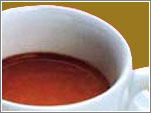
 The mythical Espresso of worldwide fame represents Italian coffee. The creamy, custard colored foam, floating on top. The hot ceramic cup contains the true black gold of Italian coffee. The espresso machine was invented by a Neapolitan who believed the process to make coffee with his home Napoletana was too slow. He took his idea to an engineer from Milan. The first commercial version of this great invention was presented at the 1855 Universal Exposition in Paris but it was not until 190 that the machine was actually produced for commercial purposes. In 1946, Achille Gaggia invented the current version of the espresso machine.
 The coffee produced is concentrated, creamy, and has an intense aroma. The espresso machine uses distilled water, heated to about 190 degrees F (90-94 c) under pressure. The water is in contact with the coffee ground only 15-30 seconds. Espresso can be very good or it can be extremely bitter. If the water is too hot the coffee tastes burned, if it is too cold the coffee is bland and the greatest mistake when making espresso is allowing too much water to pass through the coffee. The coffee grind for the espresso machine must be “for espresso” otherwise the water will not be able to extract the aromas and flavor. Use a high quality coffee. Finally an espresso machine must be used to make good coffee. If you do not intend to make coffee every day do not buy an espresso machine.
Tags: Coffee Food and Wine Moka Espresso Starbucks Italian Vacations Illy Caffe Travel Italy
Labels: Coffee, Gourmet Foods
posted by Travel Italy at 11:02 AM
|
9 comments