Saturday, April 22, 2006

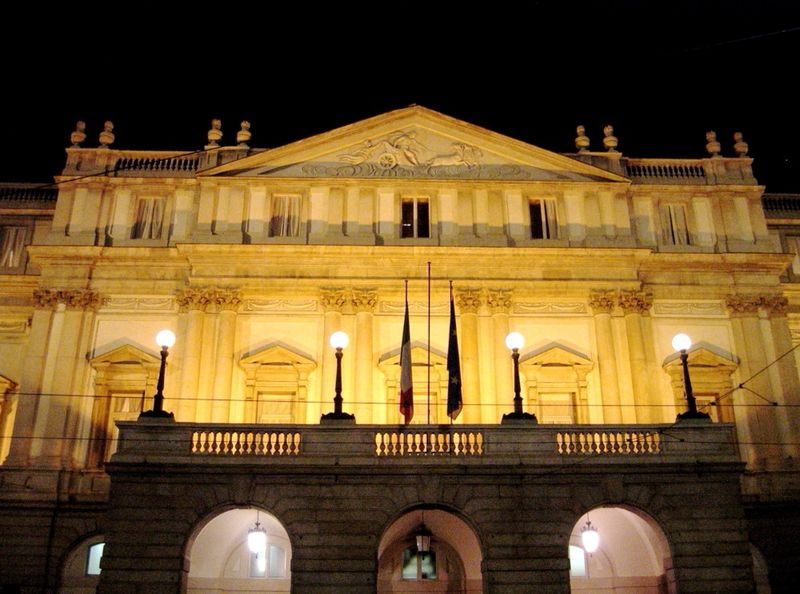
Teatro della Scala – The Scala Milan

Over the years I have had the opportunity to visit the Scala in Milan on numerous occasions. The Scala is truly a work of art both in architecture and acoustics. Unfortunately I have not had the opportunity to visit following the recent renovation but Raffaella and I were fortunate enough to be present at the last concert before it closed for 3 years.

It is late, the meeting lasted too long however there was no way to get out without offending someone. When we were in Boston, we attended a presentation of Othello. I thought it would be less formal than Italy so I dressed in a dark, double-breasted suit. When our host picked us up and he was without a tie I immediately recognized that I was overdressed. It was a real eye opener, the presentation was pretty good, although it was a very unique interpretation. Over dressed was an understatement; some people were in shorts and a t-shirt. I think that dress is a form of respect, whether you go to a restaurant, a show, or just a visit to a friend’s home I believe that how you dress indicates your expectations of the environment you will be in and the experience you will have. Fortunately this is Milan, Raffaella found my cleaned and neatly pressed tux hanging in the closet, housekeeping brought it in while we were out.

From my double-breasted suit to my Canali tux is not a short process. I usually wear Canali or Armani because their cut is more “comfortable” thus inline with my physique, or should I say lack of it. It takes some time to get ready, Raffaella is always fabulous but decides to change also. We have to be careful about the time, if you are late to the opening at the Scala they will not allow you to enter the main seating area. It is extremely important to be a bit early.
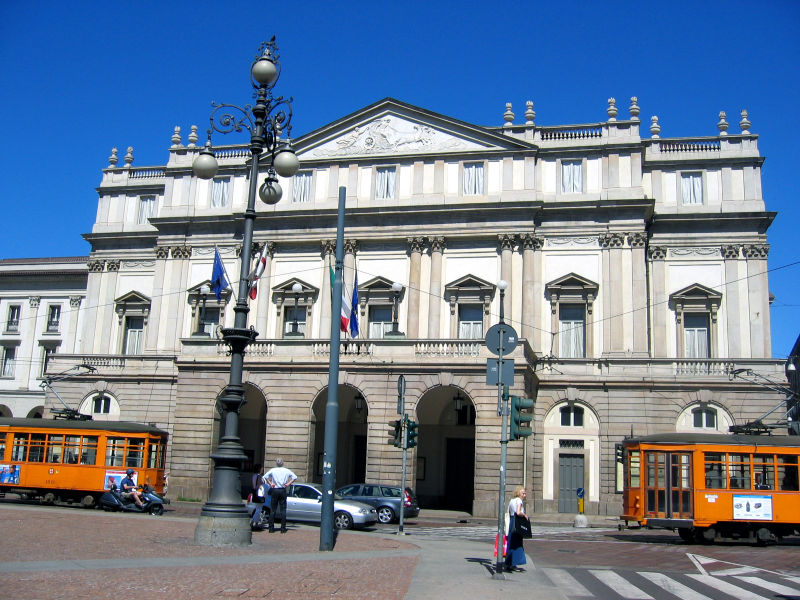
We have been looking forward to this concert. Riccardo Muti has been on top of the world for some time but we had never heard his concerts live. This is also the last concert at the Scala for several years. The Scala is undergoing its first renovation since Maria Teresa of Austria had commissioned its construction in 1778. We have been to the Scala several times and visited the Museum on different occasions however we were concerned that following the renovation something might be different.
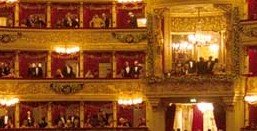
The cabbie quickly transports us to the entrance. Fortunately cabs have reserved streets and access to the busy city center of Milan. The first lights down is occurs as we enter the main seating area. Entering the scala is returning to the 17th century. Before taking my seat I take a long look around the theater. I am always overwhelmed with the beauty of the Scala, the workmanship of the molding, the heavy cloths silk and wool fabrics used for the drapes, the gold inlays contrasting the red silk wall coverings and the white painted molding, generate images of those working by hand carving the wooden structures.
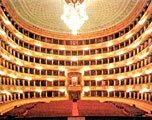
The oval structure with 8 to 12 seat booths along the exterior surround the floor seating and finish adjacent to the stage. The first several floors are private seating while the upper floors are called the “Colombai”, or where the doves sit, better known in US arenas as the nosebleed section. A beautiful crystal chandelier hangs over the center of the floor seating sending streams of bright light throughout the room.

The second lights down breaks my concentration and I quickly sit. The orchestra is tuning their instruments. The resonance of the tuning process becomes more and more harmonious and slowly dies into silence. Mr. Muti steps onto the stage to an uproar of applause. Muti has been a fixed presence at the Scala for many years now and deeply loved by Milan. Silence falls as the director turns toward the orchestra. A crescendo of soft tones emanates from the strings. Soft but penetrating, the acoustics of the Scala are impressive.

The orchestra continues, images of Othello appear as Muti guides the musicians through a moving rendition of the opera. The music inspires passion, conflict, mistrust, treachery, fear and triumph. Placido Domingo, performing his 211th rendition of Othello, does not waiver but it is apparent that he no longer has the range of his younger years.

Adrenalin speeds through my veins. The music surrounds and encompasses. The orchestra plays, their movements seem almost eclectic, each artist overcomes personal confines to create a masterpiece. Tears well up in my eyes, followed by goose bumps running the length of my back. As the theater becomes silent and the lights appear as lightning in a dark night the audience erupts in a roar of applause strangely resembling the thunder after a lightning strike. Petals of white roses float onto the stage from the box seats as the audience continues in a fifteen minute applause. This is an appropriate salute to the grand dama the Scala, to her present conductor and to the great tenor Placido Domingo.
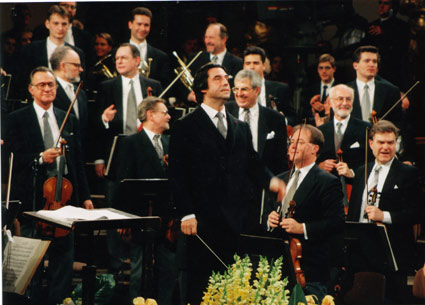
I admit I love music, so I am surely biased. The Scala is the perfect enclosure to stage a strong orchestra performing classical music. The architecture is linear, the workmanship clearly of master artisans, the design an acoustical wonder. A visit to the Scala at any time is a marvelous experience but viewing an opera or a classical concert can be a life-changing event. Except in the month of August the Scala will host numerous operas and concerts through the end of the year.

Tags:

Labels: , , , ,

Read the Full Story...

Monday, April 03, 2006

Opera at the Arena of Verona – Aida

The dispute with Telecom Italia over the services we could sell or not was creating serious financial problems for the company. All this talk about free market and deregulation was just that, a bunch of jabber. The market could never be deregulated as long as you were required to purchase your primary goods from the monopolistic competitor. Three financial controls, by the outside auditors, in 6 months were driving me insane. Another hour or so and everything would be ready for Tuesday’s meeting but I am distracted.

Saturday in the office is always quiet and I still have several hours before meeting Luisa in Verona for dinner. She had received tickets to the Aida and her boyfriend was in New Zealand windsurfing so I became the lucky candidate. I always enjoyed the opera; music has a profound effect on me. I could never really understand why but music penetrates me to the core. The few times I have watched an opera I find myself completely immersed in the period, feeling every emotion, every surprise, and coming away drained emotionally.

The trip to Verona takes about an hour from Seriate where the offices are. My mind is completely occupied with the various situations that need to be resolved for the company and before I realize it I arrive at the restaurant. Verona is an antique city and the city center has numerous unpretentious restaurants that seem to be cut into the foundations of the Roman architecture. Flat pane glass with a small patio in front closed in by potted evergreens. The evening is warm and the primary traffic has left the city so we take a table outside on the patio.

Luisa is concerned about my demeanor. She is my CPA and handles liquidations for the court in Udine and knows well the things I have to take on in the next weeks. We have been friends for a long time and she can tell that I am preoccupied with other things. In the style of an Italian woman she redirects my attention to the food, the wine, and stories of her boyfriend windsurfing. The opera begins at 9:15, just after dark, so our time is limited. Dinner turns into a couple glasses of wine and some fantastic snacks with salmon, primo sale, tartufo, and some dried meats.

We decide to walk to the Arena, just outside the city center. A cool breeze flows down from the mountains as we stroll toward the old walls. The lights of the Arena are clearly visible like the beacon of a lighthouse. Like moths to a bright light in the night, individuals and groups flutter closer to the Arena. Teenagers, with more piercing than visible skin, walk next to businessmen in suit and tie. Women adorned in the latest fashion and girls in tight jeans with tattoos mingle, not talking together but moving toward the entrance.

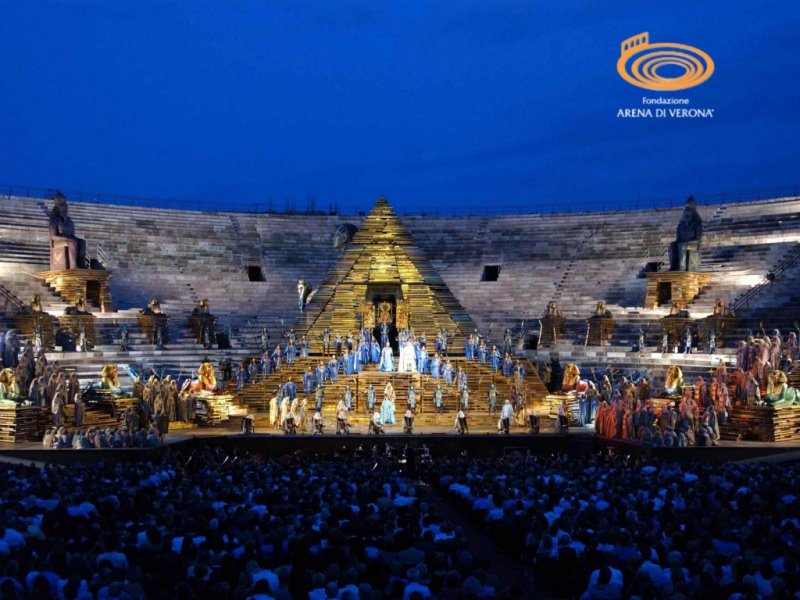
Luisa had great tickets; in the middle field about 10 rows back. The stage is huge, although dark. The orchestra practices their scales clearly audible over the noise of 20,000 people filing in to find their seats. The massive walls surrounding the field made of heavy block rocks eliminate the modern world. In the cool night breeze you can smell the antique boulders that make up the outer walls. The stage, that spans the width of the field, is dark. Flashes of light appear and disappear like fireflies as the stagehands position the final props.

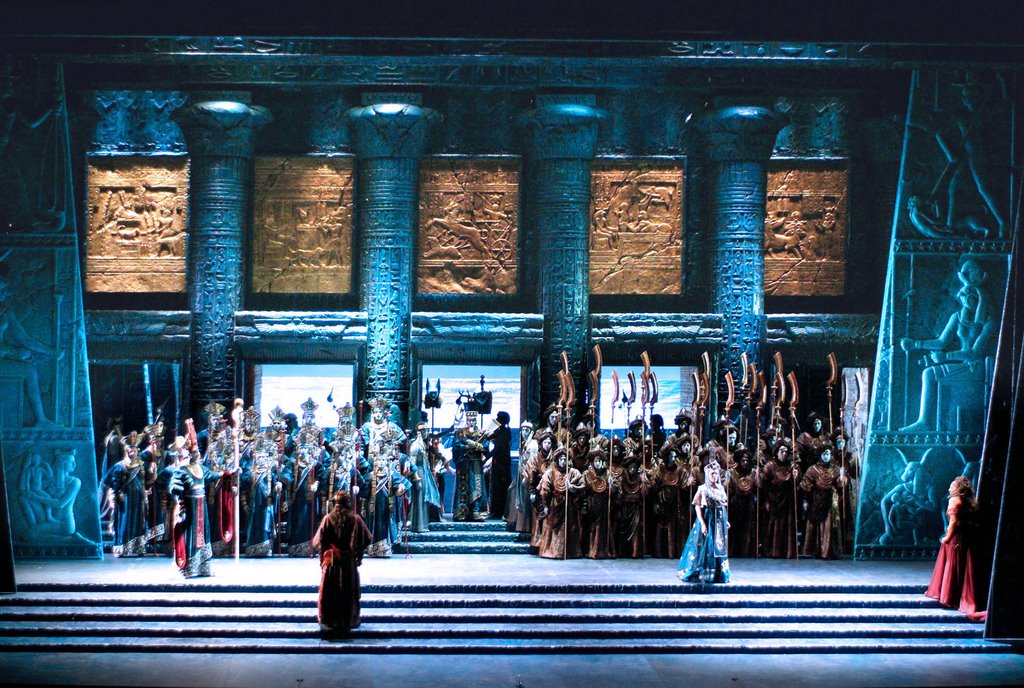
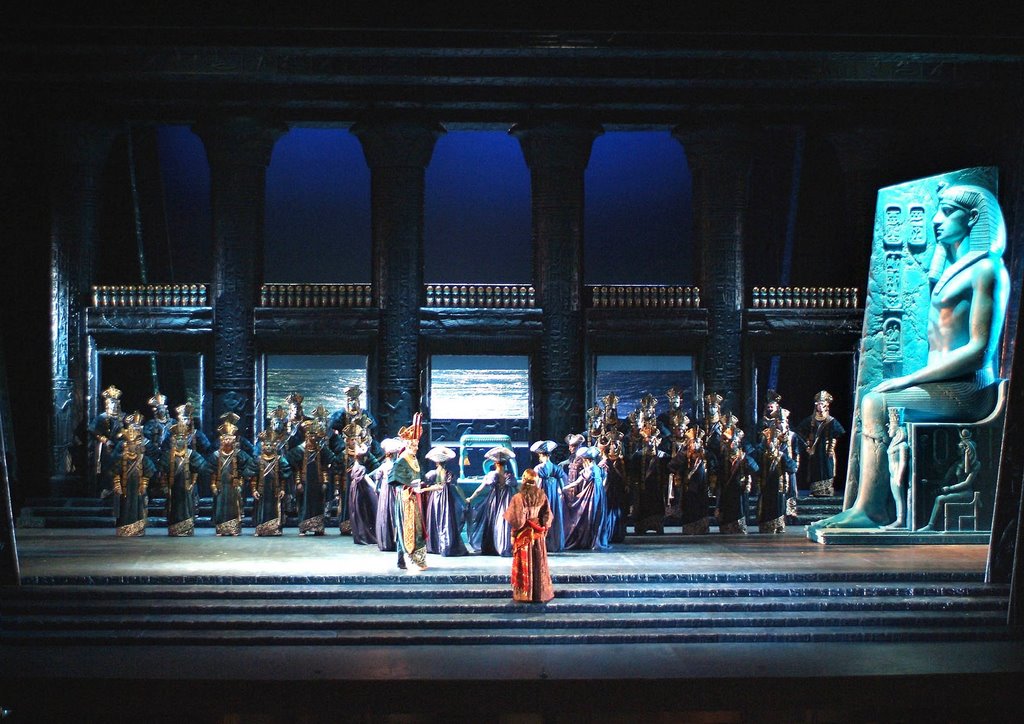
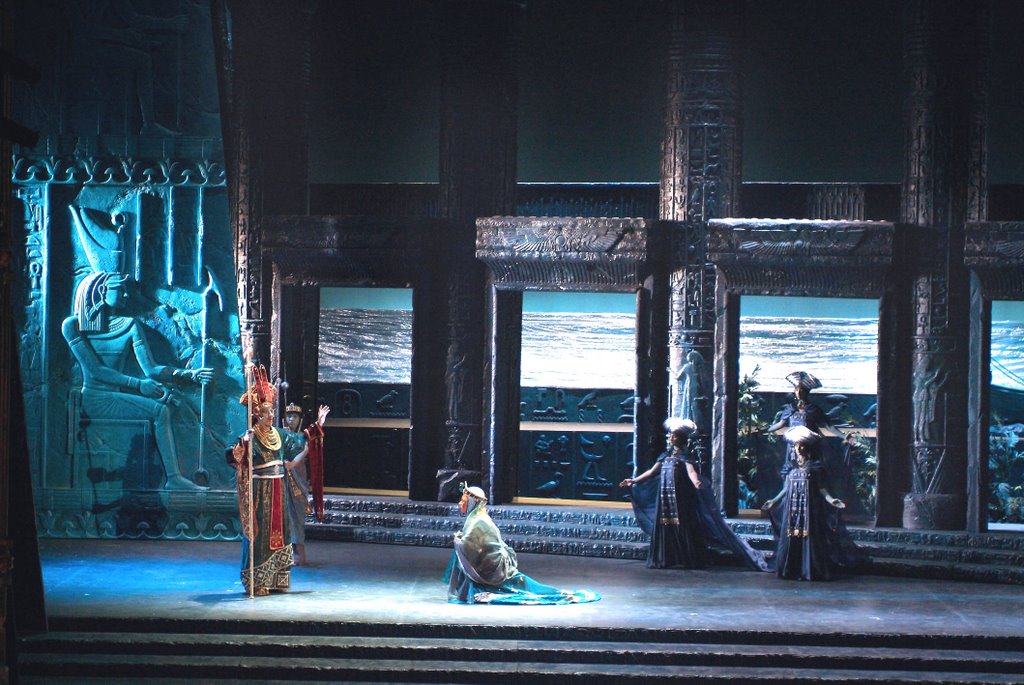
The lights, in the seating area, dim. The crowd silences as the orchestra begins to place. The stage lights reveal enormous statues on either side while in the background temples, monuments and pyramids. The scene takes place in Menfi, Egypt.

The principle characters Ramfis, the high priest, and Radame's, captain of the Pharos armies are discussing the probable attack from the Ethiopians. Radame's desires to be named the warrior to lead the king's armies into battle against the Ethiopians. The princess of Ethiopia, Aida, has fallen into the hands of the Egyptians and Radames loves her. If he could lead the king's armies and return victoriously he could then return Ethiopia to the princess where he would be king. However Radame's also has a story with the princess of Egypt, Amneris. Amneris is deeply in love with Ramades but suspects that he also has a story with slave, Aida. Suspicion and mistrust are evident as Amneris befriends the slave to uncover the truth. Aida responds with subtle words of affection while she launches looks of both an enamored lover and interrogative detective.

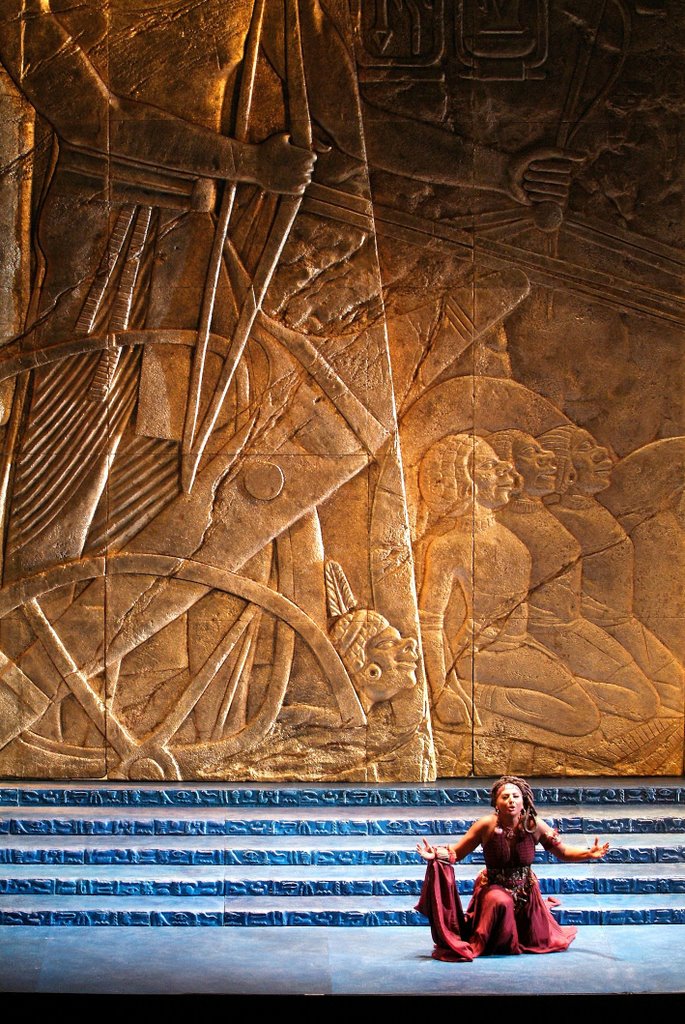
A messenger arrives. The forces of Ethiopia, lead by Almoners, have left their encampments and are marching on Tebe. It is war. The music pounds the crescendo of both pride and fear. The king calls his guards, captains, ministers and priests to announce his general. It is Ramade's! Aida is torn between the insane love of her terrible enemy and the love for her father. She prays to her god Numi to pity her and to send her love home victorious. Amneris hears the prayer and realizes that she truly has a rival.

As the lights darken on the first act, I sigh in relief, realizing that many had the same release. Luisa is tense as we talk in anticipation about the developing contrast. What would Amneris do? Would Ramade's return alive? Would Egypt fall?

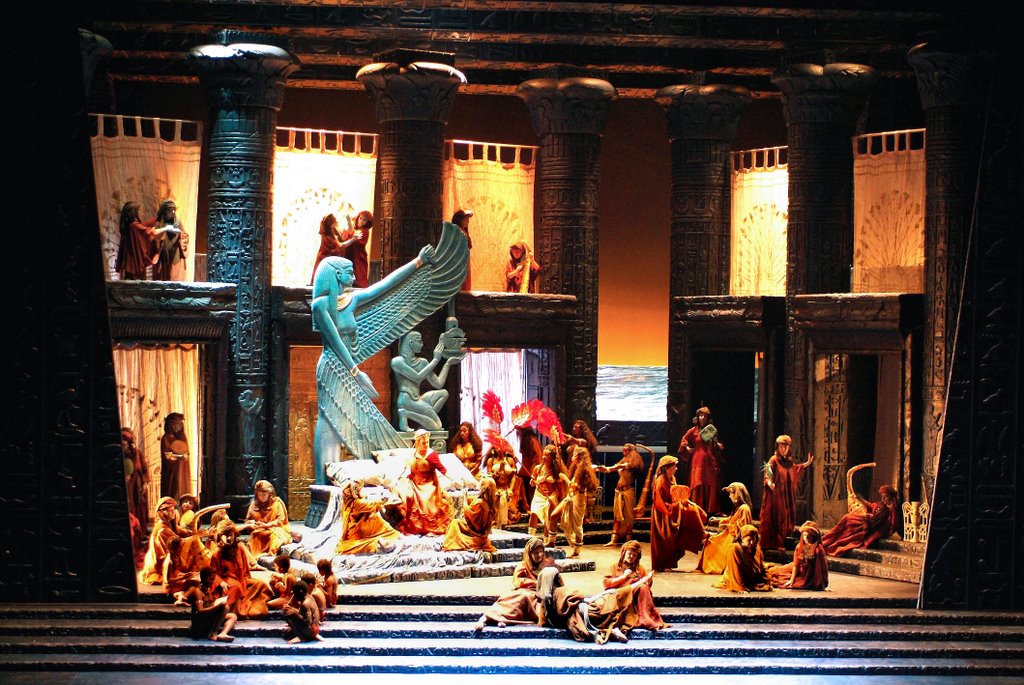
The lights in the amphitheatre dim again and the scene on the stage has changed. In the apartment of Amneris young Ethiopians slaves are dancing for the princess. She is preparing for the Egyptian Victory celebration. Aida enters the room and Amneris cannot resist the temptation to confront her rival. Amneris expresses condolences for Aida's pain of the loss of the armies; with guile she lies to Aida and tells her that Ramade's has also been killed in battle. Aida's heart is broken and openly mourns his death. Amneris humiliates Aida and threatens her life causing Aida to beg forgiveness.


The party begins, the trumpets call the people to the celebration and the people arrive to honor their king. The "Glory of Egypt", Amneris, sits beside her father on the thrown. A parade of the troops with banners flying, sacred vases and statues of the gods precede the dancing slaves bearing the spoils of war. The people exalt as Ramade's, their hero, makes his triumphant entrance. Amneris places the crown of the Victor on Ramade's and the king promises to grant him any desire he wishes.

In the tradition of true warriors Ramade's asks that all of the prisoners be summoned and requests they be granted life and freedom. The prisoners unite with Ramade's and beg for mercy. Ramfis, although he recognizes how powerful this army is, cannot refuse the request however to guarantee the peace decides to keep Aida and one warrior as prisoners. This warrior is Amonasro, father of Aida, who hides his identity and states that he, himself, has buried the Ethiopian king who was killed in battle. However this is not the only gift, even though undesired, given to the hero. He is betrothed to Amneris, who is joyous over her victory in love. Solemn tones fill the air as Aida cries over her cruel destiny and Amonasro swears revenge and the lights dim.

The quiet waters of the Nile, granite rocks spaced with palm trees, the temple of Iside looms in the background against the horizon. A boat sits quietly on the bank. The high priest captains the boat while Amneris implores the gods to protect her upcoming nuptials. On the same bank, Aida awaits the arrival of Ramade's, lamenting her homeland. Amonasro hides in the shadows. He has convinced his daughter, threatening her, to deceive her lover to save her people. A new war looms on the horizon. The Ethiopians are ready to attack the Egyptians with every means. Aida must induce Ramade's to reveal the battle plans of the Pharaoh’s military. Aida is languishes in the conflict as she meets her lover. As she talks of their future together, she also must obtain the information requested by her father.

When Amonasro hears the information he needs, he reveals his presence to the surprised Ramade's. Amonasro tells Ramade's that he is indeed king of the Ethiopians and tries to convince Ramade's to join the cause. Amneris, doubtful of her promised husband's intentions, follows Ramade's and hears all. She tells the high priests of the treason committed and the true nature of the prisoner, Amonasro. Tension mounts as the guards search for the prisoners as Ramade's helps them to escape. Ramade's turns himself in to the Ramfis, ready to pay for his crime.

I feel a pain in my arm. Thinking that it is simply transference from the opera I pay no mind but as the lights dim on the stage I realize that it is Luisa who is gripping my arm and her fingernails are just about cutting my skin. Slowly she releases her claws and apologizes, indicating that she was carried away by the drama.

The lights come up on the final act. Beautiful and spacious rooms in the palace of the king of Egypt, ominously evidenced are the doors on the left side that lead to the dungeons. Amneris, torn between her broken pride and her love of Ramades, calls for the fallen general to be brought before the court. She wishes to save her love, her happiness and her future marriage long awaited. Ramades, however, is resigned to his fate and no longer wishes to hide his love for Aida. His only thought is of Aida, the slave he freed who is now to return to her people. The high priests want to execute the traitor; Amneris curses herself for the jealousy she was unable to control: she begs and pleads for the life of Ramades. Ramades does not defend himself and the sentence of death is pronounced!

The focus moves to the golden temple reflecting the light of the volcano; underneath, the crypt in which Ramades will be buried alive. The high priests close the entrance and as the last brick is laid to seal the exit, Radames calls the name of his love for one last time. As in a dream, Aida appears, but it is not a vision, she has come to die with him. The lovers embrace, united without remorse, and leave the cruel world that has condemned them. Amneris prays at the tomb of her love, begging for peace.

The lights come up on the audience. All around applause explode. With tearful, yet joyous, faces the crowd calls “Bravo!” As I returned home I realized that I had completely forgotten about all the work I had to finish. I was emotionally drained but content, renewed and refreshed. Opera is sung in Italian, but it is not necessary to speak Italian to gain from this experience. The scenery, music, and atmosphere carry you into another world. Although you can enjoy opera anywhere in the world, participating in Italy at the Arena or at one of the great opera houses is at a much higher level. It is well worth an evening and will broaden your mind.

Tags:

Labels: , , , ,

Read the Full Story...

Friday, March 31, 2006

Arena di Verona – The Amphitheatre of Verona

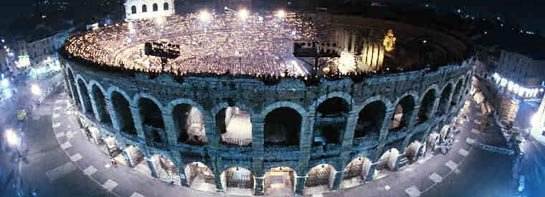
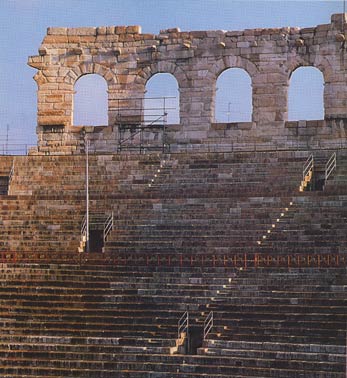
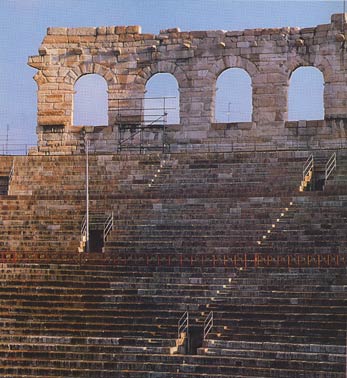
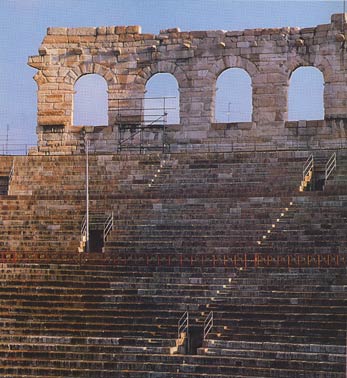
The “Arena di Verona” is the third largest Roman amphitheatre in Italy, superceded only by the Coliseum in Rome and Anfiteatro in Capua (Campania). Built in the first century A.D. the Arena is still fully functional. Initially it was estimated that the Arena would have held 30,000 people while today it seats about 22,000.


The Arena was built outside of the original city walls because the main attraction was the gladiator. It was feared that bringing all of the people into the inhabited areas could have created unrest and congestion. During the sixth century parts of the outer walls of the Arena were disassembled for building materials. The great earthquake of the twelfth century finished off the outer ring leaving the existing structure.

During a modern renovation, the 1800s, a complete hydraulic system was found under the main field along with numerous rooms and staging areas. The artifacts found were collocated in the Museo Archeologico del Teatro Romano. This is another destination well worth visiting if you have the opportunity to see the Arena.

Today the Arena is famous for its opera season. The wide stage and natural setting make the Arena perfect destination for the most elaborate scenes of the great opera companies. In 1913 the Arena became the premier stage for both opera and symphony; the Arena’s unique dimensions are the perfect compliment for the elaborate scenes of the Aida.

This year’s season begins the 24th of June and ends the 27th of August. If you are in Italy during the summer this is unique experience that cannot be matched in a different location. Whether or not you appreciate opera, this experience will remain impressed forever on your soul and is well worth your time.

The various presentations, dates and the actors can be found through these links:

Cavalleria rusticana/Pagliacci
Aida
Carman
Tosca
Madama Butterfly

Tags:

Labels: , , ,

Read the Full Story...